Editor by LAI WEI 33870474

Picture by Gilles Sabrié for The New York Times
Jin Xing, 53, a television host who is often called China’s Oprah Winfrey. She as China’s first one and so far only – transgender celebrity, JINXING is seen as a progressive icon in many ways. She transsexual operation in 1995, becoming the first person in the country to do so publicly. Even though the stigmatization of the LGBTQ community was prevalent in the crowd – and still is today – she went on to host one of China’s most popular talk shows.
JING XING was born in 1967 in Shenyang, northeastern China, to a military officer father and a translator mother. She wrote in her memoirs that because she loved to sing and dance. At the age of nine, she was recruited into an army singing and dancing troupe. JIN XING writes that her mother objected to this choice, not on the basis of gender, but because she wanted her to continue her formal education. Both boys and girls could gain prestige by dancing in the army, where the arts were seen as an important propaganda tool.
As a teenager, Jin won a scholarship to study dance in New York. In 1991, The New York Times called one of her performances “astonishingly confident.” After living in the United States for four years, she embarked on a European tour – learning French and Italian in addition to the English.
However, In 1993, at the age of 26, she returned to China ready to come out as transgender.
That might not be so unusual in China, where traditional gender norms are still deeply embedded, especially among older people. Except Ms. Jin is no typical Chinese star.
Jin said that although she had known she was female since she was six years old, she did not want to announce it until she was fully prepared.
Jin said that while she has known she was female since she was six years old, she didn’t want to announce it until she was completely ready. Sex reassignment surgery, while legal, has been widely criticized. She decided to stay before becoming one of China’s most famous dancers.
Jinxing’s considerations seem to be correct. Although she suffered some attacks after transgender surgery in 1995, the public reaction was largely supportive.
In 2013, JINXING first became famous on television , when her sometimes caustic comments about contestants on a dance show earned her the nickname “Poison Tongue.” In 2015, she brought her popularity to the Gold Star Show. With her guests, she is enthusiastic and gossipy.

Jin Xing and co-host “Jin Xing Show” Shen Nan. The Jin Xing Show
“At the time, all my girlfriends joked me that China would never let you talk,” Jin said, recalling the first time she shared this goal with them. “How can you be transgender enough to do TV?
But while Jin’s extraordinary life story has made her almost mythic, it has also made her, for some, one of the most elusive figures in Chinese pop culture.
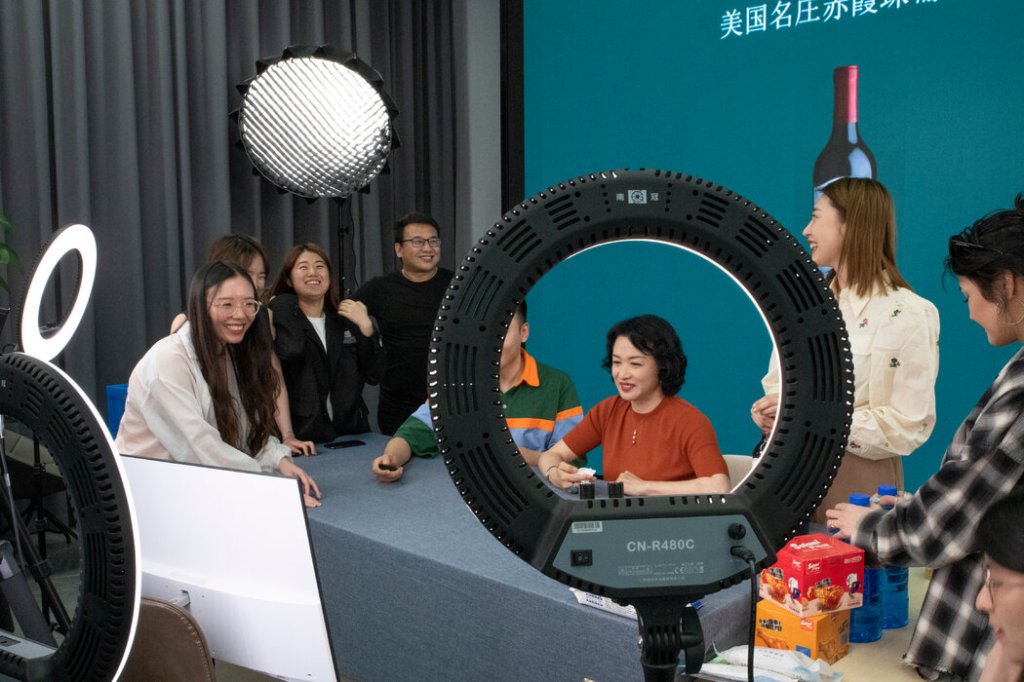
In addition to her TV appearances, JINXING also carries the goods on her webcasts. Gilles Sabrié for The New York Times
Although hailed as a pioneer in the LGBTQ community, she not only rejected the role of a pacesetter and criticized activists who, in her view, only wanted special treatment. “Respect for anyone is something you earn yourself, not something you ask society to give you,” she said.JIN has also drawn fierce criticism for her attitude to femininity. In a memoir published in 2013, Jin wrote that a “smart woman” needs to make her partner feel that she is “the little woman who needs him.” In the Gold Star Show, she told actress Ye Xuan that she would not feel complete until she had a child.
JINGXING was incensed that she was called a conservative. She said that if she were a male chauvinist, she would live as a man. She denounces sexism in employment and criticizes China’s Women’s Day as an empty commercial holiday. In May, she appeared in a Dior campaign to celebrate women’s empowerment, in which she said the most important thing any woman can do is to remain independent.
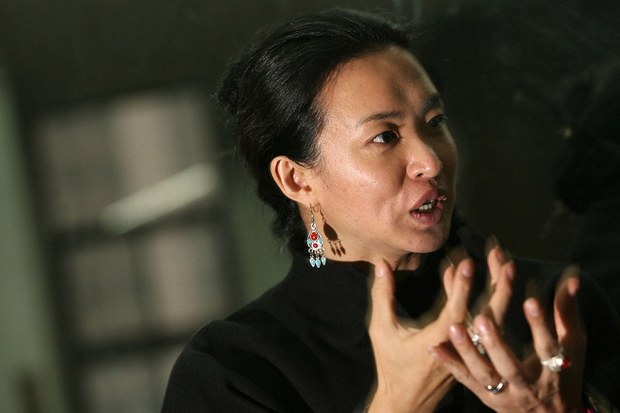
AFP photo
However, she admits that she doesn’t want to subvert the rules set by men, just help women navigate them better.
“According to the percentage of politicians around the world, the percentage of leaders around the world, what percent of them are female kings and presidents and chairwomen, and it’s still not predominantly male-dominated,” Venus said. “If men go to conquer the world to prove themselves, women can conquer men to prove themselves.”
A scholar of queer culture in China at the University of Nottingham in Britain, Hongwei Bao said that in some ways China was more accepting of transgender people than gay people. In the 1980s and 1990s in particular, surgery was seen as a means of therapy that allowed transgender people to live within the dimensions of traditional gender roles.
But others point out that many people in China have become more accepting of transgender people. They all spoke of the hope that Venus – though her presence was essential to this acceptance – would no longer be the sole representative of the group.
Reference:
JOY DONG, 2021, https://cn.nytimes.com/china/20210716/china-transgender-jin-xing/
 Digital Audiovisual Media Class Blog
Leave a comment