‘The hood was on its own, abandoned at every level. Fight the Power was
the anthem of the streets’ – (Beaumont-Thomas, 2016)
Rap was rising out from the Disco crash rubble as a taboo to those who didn’t understand its origins. Beaumont-Thomas denotes the racial tensions thriving at the same time, hip-hop kids wearing clothes backwards getting chased by the police and relatives withering in the crack epidemic. The hood and its people had been abandoned and Fight the Power was its guiding light. Producer Hank Shocklee mentions how it was made for Spike Lee’s ‘Do the Right Thing’ (1989), a hard-hitting portrayal of the racial tensions in the neighbourhoods of Brooklyn. Both the film and music video exhibit racial tropes of realism to elucidate the truth of the targeted and abandoned streets of New York. The majority of the video is kept on the street as it conveys where the heart of the struggle takes place, mirroring the film. Its lack of post-cinema and editing emphasise the importance and unfiltered truth about the real struggle black communities were facing. The choreographed masses acts as a toast to the unity of thought in speaking out about their intolerance of government lies.
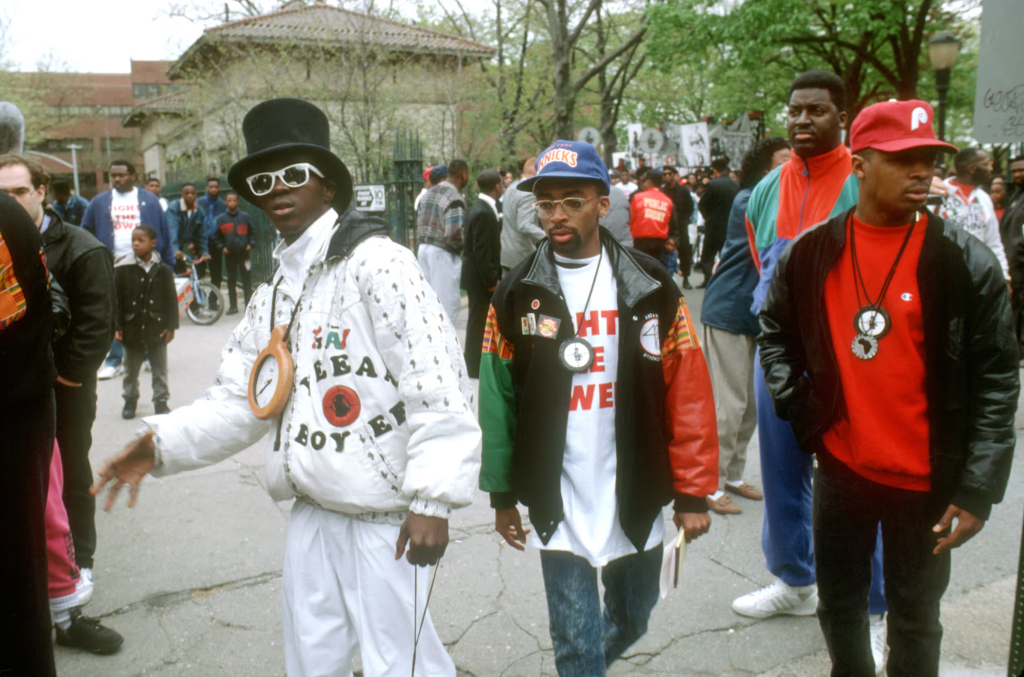
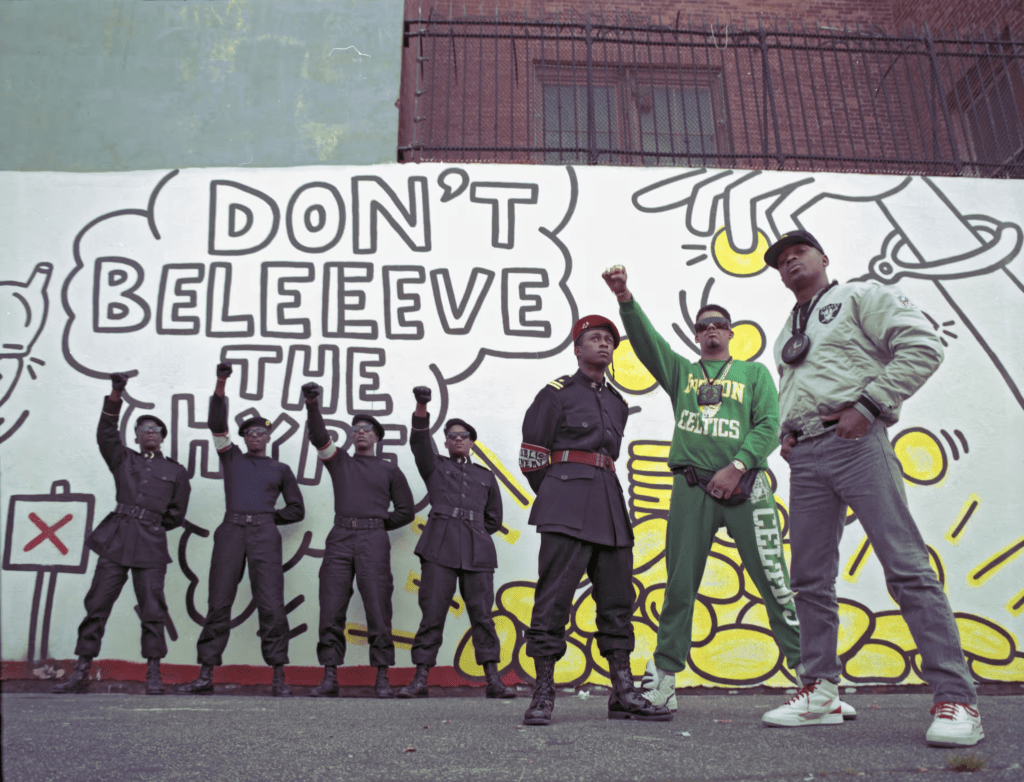
Vocalist Chuck D reflects on the battle with the government with its power structures create and sustain systemic racism and blaxploitation. He expresses the deep-rooted nature of the racial problem, arguing he feels he will always pose a threat to those in power, ‘my skin has been seen as more hostile than anything I could say. Black people, our skin is noisy.’ Regardless, they embrace their culture and empower their historical resistance to exploitation and political abuse with reference to the Black Panther movement in their clothing. He continues, ‘it was enhanced by a video… had a film behind it’ as well as a whole movement from New York, illustrating its immense cultural value and influence as it punches its way into the political sphere.
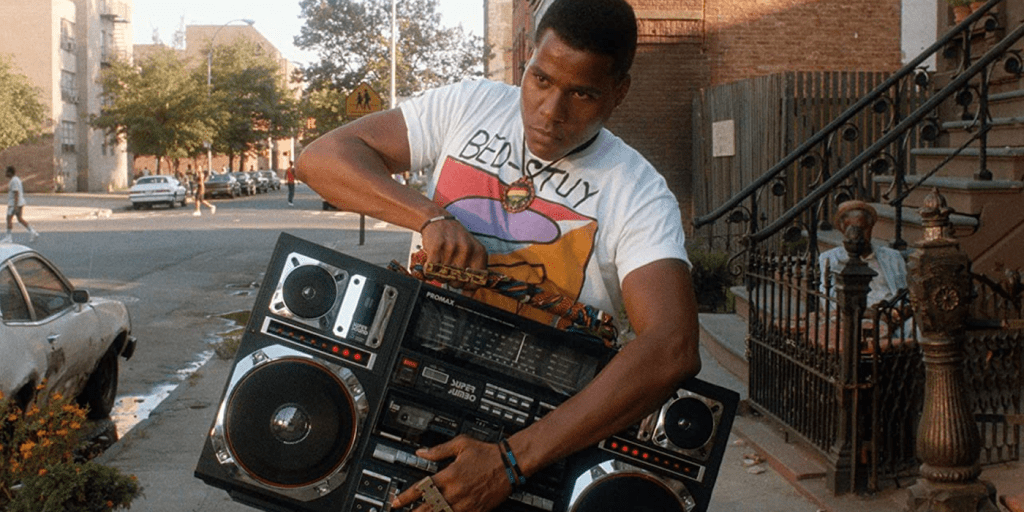
Lynskey also refers to the anthem as the ‘heartbeat of the movie’ with its surprising number of plays, including it as the opening, which embeds it in the films political direction. Lee also makes it the theme for the character Radio Raheem (Bill Nunn), constantly blasting it out of his boombox. His devastating death from police brutality is an upsetting yet powerful embrace of the anthem where people were prepared to fight to their last breaths for justice. The consistency of outspoken surrounding people during these events is a powerful reflection of the importance of communities who refuse to remain quiet at times of government.
The combined driving force of both Lee’s ‘Do the Right Thing’ and ‘Fight the Power’ provide a multimodal political message which explores a narrative of mistreated and misrepresented black communities whose struggle breeds deep in the New York streets. The realness exudes and spreads like a burning flame as the people send back the fire thrust upon them, burning stronger and brighter. The message was clear that the people from the street would bang their ‘African war drums’ as they prepare to fight their oppressors, a fight they treated as they ‘were already winning’.
References:
https://www.bbc.com/culture/article/20241025-should-there-be-a-ban-on-teenage-popstars
https://www.theguardian.com/culture/2016/mar/07/how-we-made-public-enemy-fight-the-power
Zayn Rajan 33777996
 Digital Audiovisual Media Class Blog
Leave a comment