The Transformation of New Media (Post-Cinema): From discretely transmitted wisdom to thoughts on future aesthetics
By Leyan Zhang, 33734844
Discrete information is transcoded so that it can be mass-produced and then formed into modules. Finally, these modules can form intelligent artificial systems for automatic recognition. More advanced ones can have The ability to self-process information, collect it and provide it to humans does not require humans to use their own brains or hands. According to the prototype theory in linguistics, the way our brains form and receive information is actually very similar to painting: a painting is composed of dots, lines and surfaces. In the process of spreading ideas, we turn the dots in our minds into Faces, others turn the faces they see into points, and the media is the line connecting them (Manovich, L., 2001).
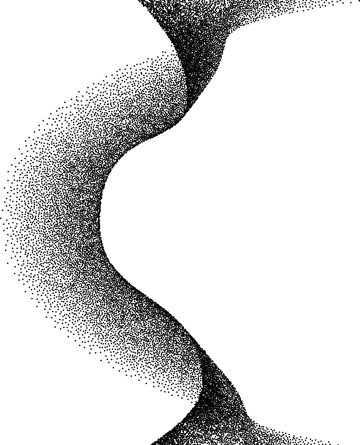
(Wayfair.co.uk, Metro Lane, 2024)
In post-industrial society, Ford gave us a good start. What is lost in mass production is individual independence. The wisdom of discreteness is also that it can be industrialized on a large scale, but it cannot be completely controlled (Manovich, L. 2001, p9).

“As I will show, new media follows, or actually runs ahead of, a quite different logic of post-industrial society— that of individual customization, rather than mass standardization.” (Manovich, L. 2001, p9).
The magic of discreteness is that it creates a stable situation that meets the common needs of socialism and capitalism. It’s like everyone has their own Ford factory. The emergence of TikTok can be said to maximize personalization. All videos are pushed to you based on your interests, even if you have never been exposed to similar information, we call it a hyperlink.
Example of spider man
In this example of hyperlink, the content creator used a very popular soundtrack specially designed for cutting sad stories, which brought people’s emotions directly into this mode. Even if they have not seen the Spider-Man movie, they can I roughly understand that this is a sad story.
To a certain extent, discreteness expands the publicity capability. The crew of Friends did not publicize that the couple were in the story at the same time, and their endings were also very vague. However, this did not prevent many people on the Internet from splicing these separate fragments together. Together they formed a carnival paradise of their own.
Example of Friends
In terms of aesthetics, some people criticise TikTok for its low standards and rough video production (it is indeed relatively cheap compared to movies that cost a lot of money to produce), which has led to the aesthetic standards becoming low in a broad sense. But in TikTok’s standards, it’s about the success of the promotion, not the quality. Of course, good quality can promote publicity, but in communication, traffic is the hard currency. The standard of aesthetics nowadays is flowing, in the post-movie world, there’s not a clear dividing line to saying what is good, but as scholars, the studies to get closer to the line and the principles behind are more important.
Tags: #Week 1 #Manovich, L. #newmedia #ShaneDensonandJuliaLeyda #post-cinema
Author:
Leyan Zhang, 33734844
References
Denson, S. and Leyda, J., 2016. ‘Perspectives on Post-Cinema: An Introduction’. In: Post-cinema: Theorizing 21st-century Film, pp.1-19. REFRAME Books.
edizor_1210 (2024). TikTok – Make Your Day. [online] Tiktok.com. Available at: https://vm.tiktok.com/ZGd2qfT9F/ [Accessed 27 Nov. 2024].
felixjesus04 (2024). TikTok – Make Your Day. [online] Tiktok.com. Available at: https://www.tiktok.com/@felixjesus04/video/7318622696219135238?_t=8riiV1REMj2&_r=1 [Accessed 27 Nov. 2024].
Lane, M. (2024). Wave Of Scattered Dots – Wrapped Canvas Print. [online] Wayfair.co.uk. Available at: https://www.wayfair.co.uk/Metro-Lane–Wave-of-Scattered-Dots-Wrapped-Canvas-Drawing-V115360370-L1318-K%7EU004259269.html?refid=PINTSO321-U004259269_1495464689&PiID%5B%5D=1495464689&epik=dj0yJnU9YVFFazFxeV8tc0M1UHVpcEJVTHFrN0ZCdE1xM0JvT2UmcD0wJm49aEtRYldEVTVNb09raXF2Q1NqbngxQSZ0PUFBQUFBR2RHSTd3 [Accessed 26 Nov. 2024].
Manovich, L 2001, The Language of New Media, MIT Press, Cambridge. Available from: ProQuest Ebook Central. [26 November 2024].
Slama, M. (2019). Pinterest. [online] Pinterest. Available at: https://pin.it/4i6pbMv7Q [Accessed 26 Nov. 2024].
 Digital Audiovisual Media Class Blog
Leave a comment