Exploring contemporary media and its intersection with post-cinematic theories
By George Hewitt
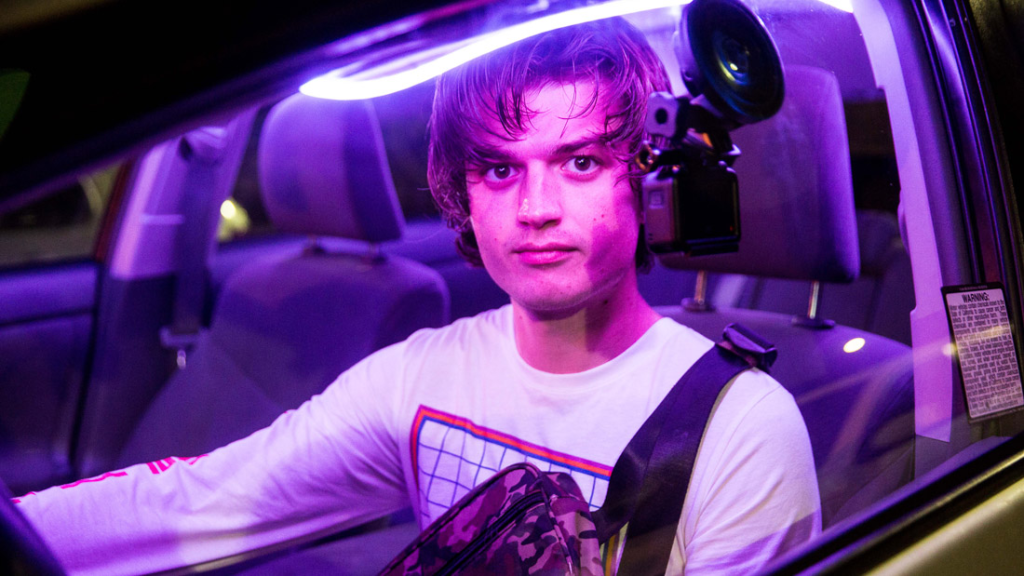
Eugene Kotlyarenko’s 2020 film ‘Spree’ follows Kurt (Joe Keery), who has devised a murderous ride-share scheme in an attempt to go ‘viral’ online. Described as a ‘black comedy’ the film delves into themes of streaming culture, interactivity and the blurring of fiction and reality. Using post-cinematic devices such as found footage cinematography, Kotlyarenko brings the viewer into Kurt’s stream where we become an active and participatory audience, mirroring that of post-cinematic media forms such as YouTube and Twitch streaming, all the while blurring the lines between reality and fiction.
As part of the films marketing campaign, Kurt, the fictional aspiring social media star, created his own (real world) social media accounts, with his instagram currently verified and sitting at 937,000 followers. this idea that fictional characters can garner such large audiences further highlights the idea that post-cinema is blurring the lines between reality and fiction, and Kotlyarenko uses this idea to compel viewers to reflect on their own participation on digital platforms, where shocking or controversial content is encouraged, despite having real world consequences. for instance, TikTok ‘star’ under the username Worldoftshirts gained 3.6 million followers on the platform, posting content consisting of him drinking copious amounts of alcohol to a life threatening extent, all the while being encouraged by his ‘fans’.
Spree masterfully blends traditional cinematic genre with digital aesthetics. combining conventional horror, comedy and satire formats with digital language and content highlights the idea that cinema and new media are merging, and how post cinema and social media are becoming indistinguishable. Spree is not just a commentary on the dangers of social media and the ‘virality’ of content, but also how cinema is no longer a passive experience but one participated in actively. As William Brown argues in ‘Supercinema: Film-Philosophy for the Digital Age’ (2015) spectators have transitioned from passive subjects in traditional cinema, absorbing the visual and narrative content as the director intended, into active participators in the content presented to them, whether through digital platforms such as social media or multi platform storytelling.
 Digital Audiovisual Media Class Blog
Leave a comment