By LAI WEI 33870474
As of 2016, Netflix had more than 93 million members in over 190 different countries, with 47% of those members residing in the United States. A recent survey of 2,200 Americans found that 70% of respondents reported binge-watching an average of over five episodes in one sitting. Among millennial respondents, 35% binge watch this way every week. With the convenience of having a multitude of TV shows a few clicks away, some Netflix addicts binge every day. In fact, there is a small minority of Netflix users who will start a Netflix series as soon as it is released at midnight, then keep watching continuously until they finish.
Binge-watching also releases serotonin, a neurotransmitter associated with happiness and satisfaction. The sense of accomplishment we get from finishing another episode or season of a show triggers a combination of serotonin and dopamine that is very rewarding, and much easier to obtain through watching Netflix than through longer-term goals like planting a garden or getting a degree. The release of neurotransmitters trains us to watch more, which rewards us with more neurotransmitters, which gets us caught in a loop of binging that can be difficult to remove yourself from.
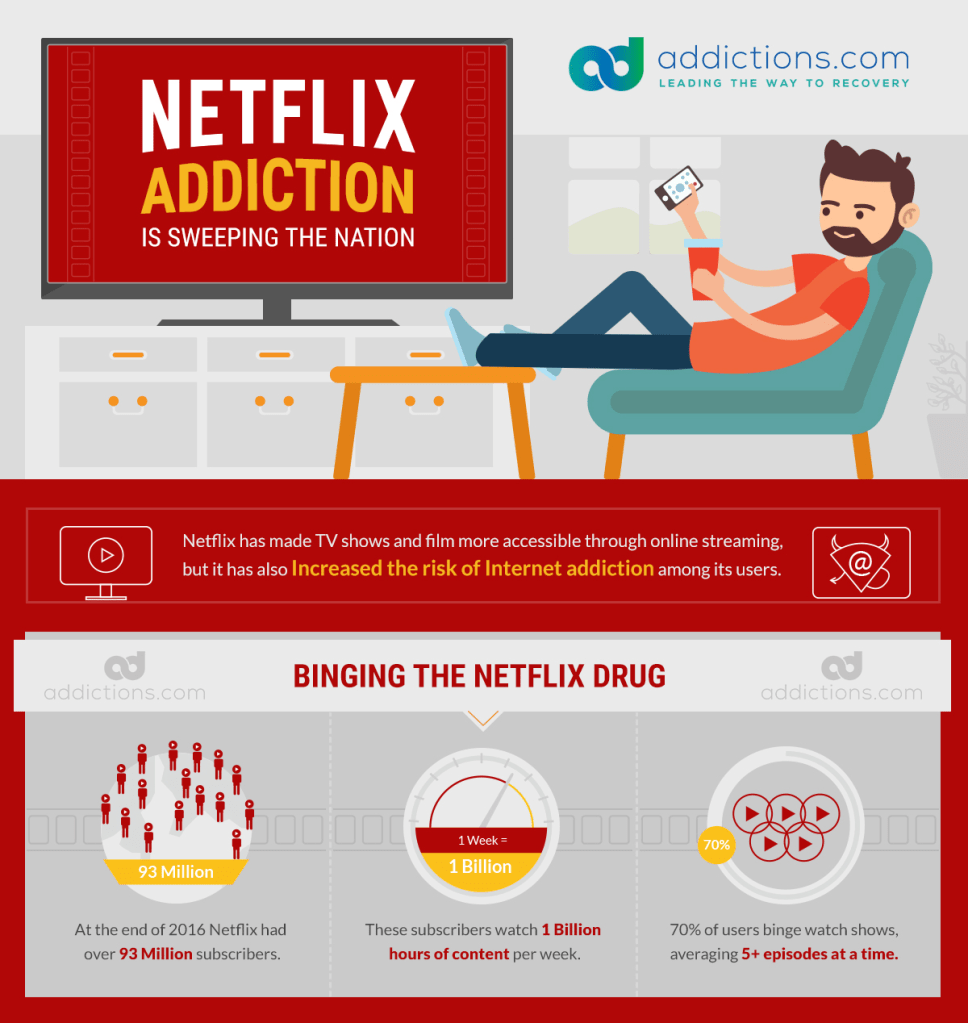
What makes it even worse is that there are other factors reinforcing the binge behavior loop. For one thing, watching Netflix messes with our time management skills. The human brain processes time best when it is broken down into smaller, even segments, like 30 or 60 minutes. Most shows on Netflix are 20ish or 40ish minutes long. If we tell ourselves we are only going to spend one hour watching before getting back to work, we are going to be partway through an episode when our time’s up—and very few people can resist watching “just a little bit longer” to get to the end of a show.
Recent studies have found that people who frequently binge watch Netflix also experience higher rates of anxiety, loneliness, depression, and problems with self-regulation. Whether Netflix usage leads to these problems, or these kinds of problems lead to Netflix addiction, is unknown. What is known is that addictive behaviors can only temporary mask emotional problems, and that in the bigger picture, addictive behaviors tend to make these problems worse.
There are also physical consequences to binge watching. A study published in the Journal of the American Heart Association found that adults who consume over three hours of television a day double their risk of premature death. Even if you regularly exercise, sitting for hours at a time greatly amplifies your risk of developing health problems such as heart disease, diabetes and cancer. In addition, sustained viewing promotes mindless over-eating of processed foods, which take less preparation and therefore cause less interruption.
Reference:
- Nolan Feeney, 2014, “When, Exactly, Does Watching a Lot of Netflix Become a ‘Binge’?” , published by theatlantic. https://www.theatlantic.com/entertainment/archive/2014/02/when-exactly-does-watching-a-lot-of-netflix-become-a-binge/283844/
- Netflix Addiction: America’s Latest Binge Obsession
https://www.theatlantic.com/entertainment/archive/2014/02/when-exactly-does-watching-a-lot-of-netflix-become-a-binge/283844/
 Digital Audiovisual Media Class Blog
Leave a comment