The introduction of colour in cinema was pivotal in reshaping the film industry, enriching visual storytelling and deepening audience engagement.

(Bananarratives, 2012)
The Wizard of OZ: Golden Age of Hollywood
While early films were limited to black and white, the shift to color added a new layer to filmmaking, enabling directors to express more profound emotional nuances, craft vivid visuals, and elevate narrative depth. As a timeless classic, The Wizard of Oz (1939) using color theory to mark transactions for Dorothy’s journey between her mundane reality and the dreamlike world of Oz. The sepia tones of Kansas reflect her limited world, while the vibrant Technicolor of Oz symbolizes hope and possibility. The strategic use of color, from the green of the Emerald City to the red of Dorothy’s slippers, enriches the film’s themes of transformation and self-discovery. This pioneering use of color helped establish it as a core element of cinematic expression, forever transforming the film industry and paving the way for the visually rich and immersive films that followed.
Breaking Bad: New media and binge watching
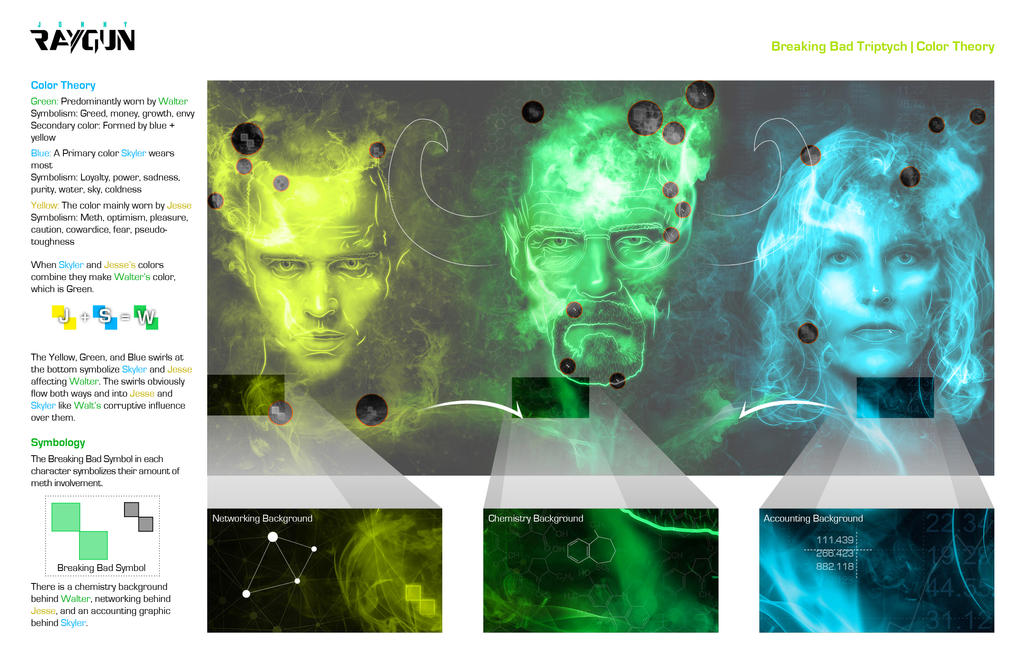
(DeviantArt. 2015)
In Breaking Bad, colour plays a key role in storytelling, reflecting character development and enhancing emotional engagement. Mareike Jenner (2018) discusses how streaming platforms like Netflix encourage binge-watching by creating immersive, continuous viewing experiences. Breaking Bad exemplifies this with its colour-coded narrative: Walter White’s shift to darker tones symbolizes his moral descent, while the use of Mexican yellow signals danger and corruption. These visual choices draw viewers back, fostering emotional investment and encouraging prolonged viewing.
Amanda Lotz (2017) highlights how internet-distributed television blurs traditional episodic structures, promoting a nonlinear, continuous viewing experience. Connecting, the use of colour maintains emotional continuity across episodes, aligning with Lotz’s view of serialised storytelling in the digital age. This visual storytelling ensures that viewers remain connected to the characters and narrative, reinforcing the binge-watching culture that streaming platforms have helped shape.
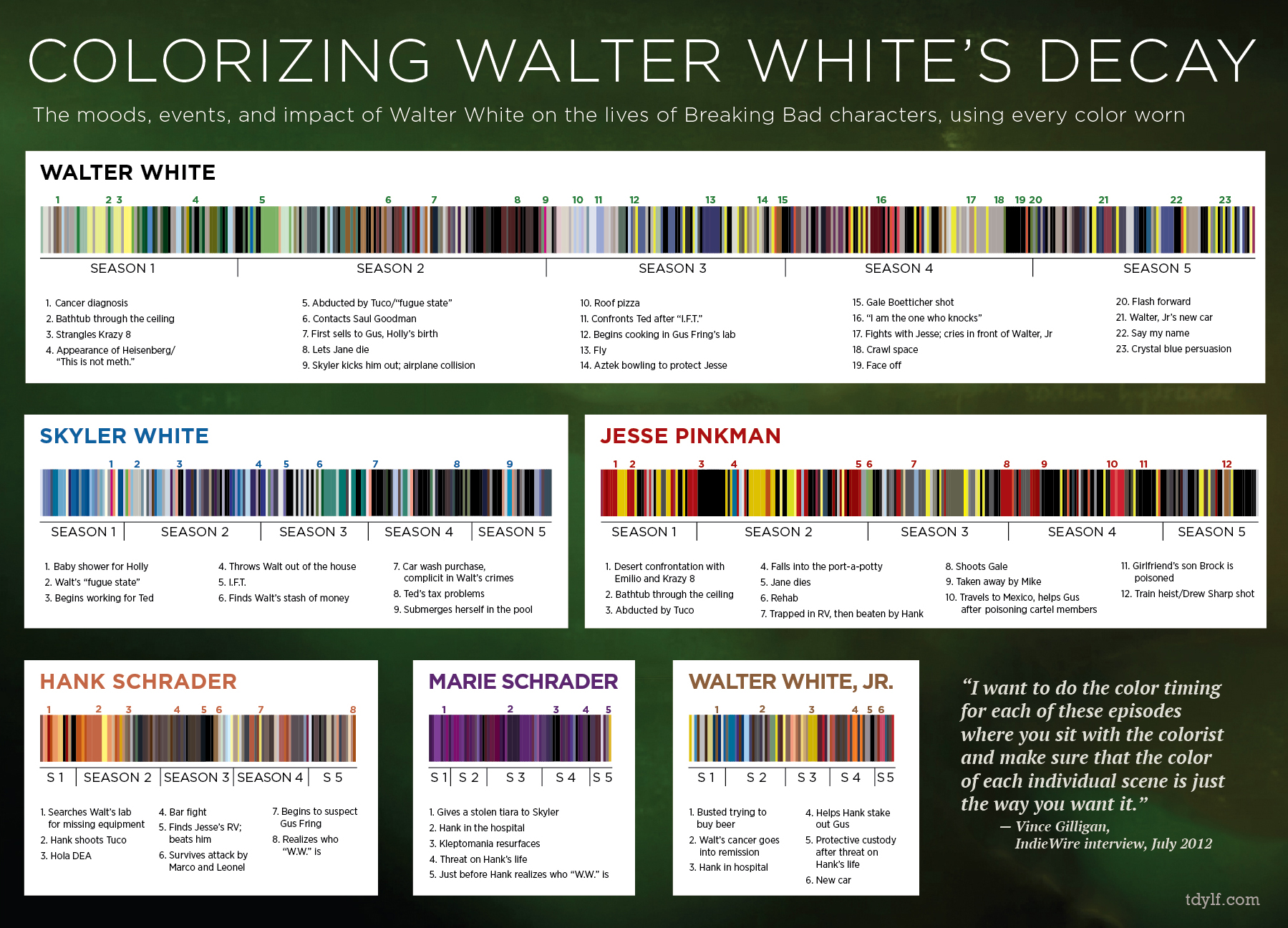
(Wiki, N/A)
Colour Theory on celebrities: Branding and promotion
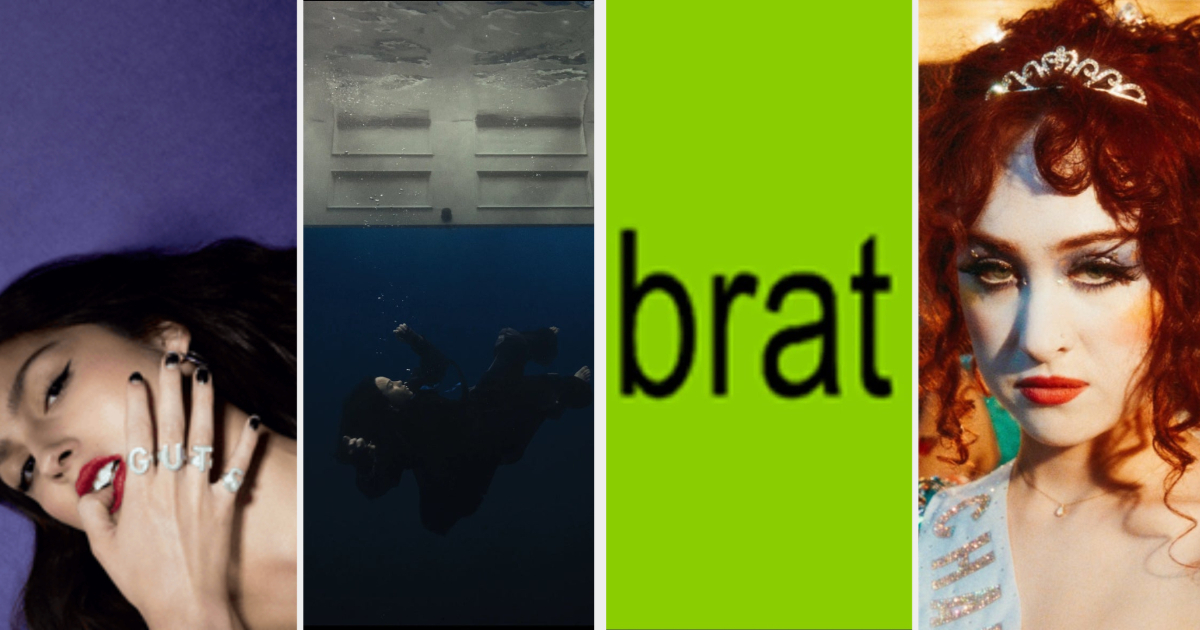
In today’s media-driven world, colour theory plays a crucial role in celebrity branding, helping artists communicate their identities and connect with their audiences. Olivia Rodrigo’s association with purple reflects creativity and emotional depth, while Billie Eilish’s blue represents introspection and calmness. These colors defined their personal brands and influence social trends, as fans adopt similar aesthetics: Amanda Lotz (2017) highlights how colour in the digital age shapes fan identity, with trends like Charli XCX’s bratty aesthetic impacting a cultural vibe, and collective identity shows how deeply colour theory can positively influence the society.
Resources
Bananarratives. (2012, November 19). Colour My World: an exploration of the use of colour in cinematic narratives. Bananarratives.
Breaking Bad | Color Theory explained by Jonny-Raygun on DeviantArt. (2015, March 14). DeviantArt. https://www.deviantart.com/jonny-raygun/art/Breaking-Bad-Color-Theory-Explained-520070539
Wiki, C. T. B. B. (n.d.). Colors. Breaking Bad Wiki. https://breakingbad.fandom.com/wiki/Colors
Jenner, M. (2018). Introduction: Netflix and the reinvention of television. In Netflix and the reinvention of television (pp. 1-31, 109-118). Palgrave Macmillan.
Lotz, A. D. (2017). Theorizing the nonlinear distinction of internet-distributed television. In Portals: A treatise on internet-distributed television (pp. 1-31). University of Michigan Press.
Jessie Tsui Hoi Yin 33776641
 Digital Audiovisual Media Class Blog
Leave a comment