The Weeknd’s “False Alarm” is a paradoxical example of post-cinema. While the music video employs traditional narrative techniques, its hyper-stylized visuals, rapid-fire editing, and intense action sequences push the boundaries of the genre. By defying expectations and embracing a more cinematic approach, “False Alarm” exemplifies the fluid and ever-evolving nature of the music video industry.
Editing and Narrative:
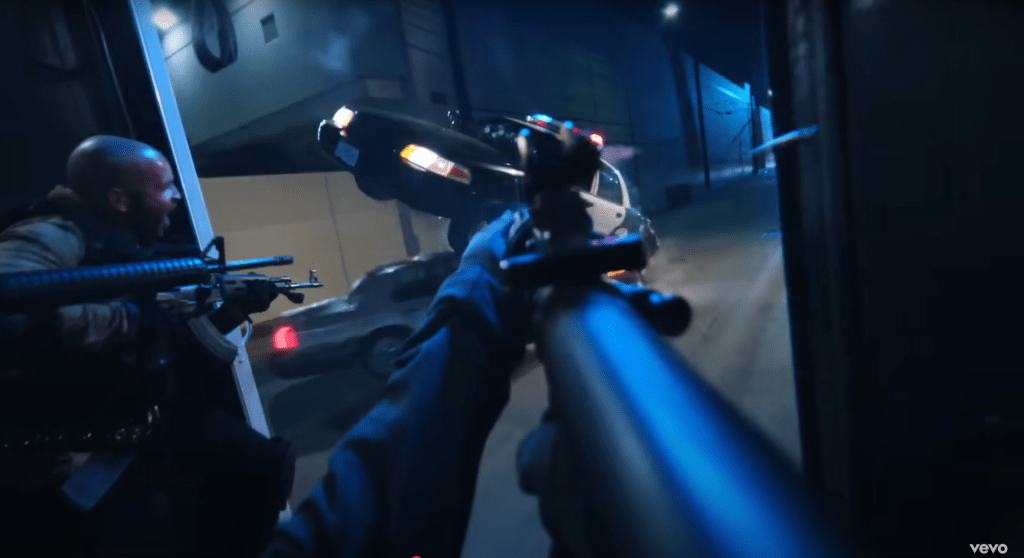
“False Alarm” adopts a first-person perspective, plunging the viewer into the heart of a chaotic bank heist. Rapid editing and dynamic camera movements heighten the sense of urgency and danger, creating a thrilling and immersive experience. While the narrative is linear, it unfolds through a series of intense action sequences, culminating in a dramatic climax. This approach is perfectly synchronized with the song’s fast tempo and constant beat changes, demonstrating how stunning visuals can enhance rather than overshadow the music. However, some might argue that this prioritization of visuals over traditional music video conventions, like lip-syncing, is what truly defines “False Alarm” as a post-cinema piece. In contrast to music videos that were released around the same time such as Carly Rae Jepsen’s “Call Me Maybe,” which focus on performance and lightheartedness, “False Alarm” challenges expectations and showcases the potential of music videos as a powerful storytelling medium. Proving Railton and Watson’s theory that music videos can be categorised into four different categories or genres: “pseudo-documentary, art, narrative and staged performance”
Giacomo Savastano 33748383
Railton, D. and Watson, P. (2022) Music Video and the politics of representation. Edinburgh: Edinburgh University Press.
 Digital Audiovisual Media Class Blog
Leave a comment