Films are audiovisual collections that contain complex interactions of sound and image that together construct a coherent experience for the viewer. By studying Ridley Scott’s Alien (1979) and Daniel Lee’s Time Raiders (2016) (Figs. 1&2), we can delve into how movies function as well-crafted collections and understand the digital state of contemporary films (Casetti, 2015).

Figure 1&2
Image credit: https://www.youtube.com/watch?v=svnAD0TApb8
“Film” is a structured whole:
The film uses continuous editing techniques to organize a series of sounds and images coherently. Alien’s blend of sci-fi and horror creates an immersive tension that reflects this. From the eerie silence of space to the piercing screams of alien creatures, the film’s sound design enhances suspense. Its visual language, including the claustrophobic corridors of the “Nostromo” spacecraft, creates a constant sense of unease.
00:35-1:43
Similarly, Time Raiders sticks to the adventure genre, combining fast-paced action with mythological themes, and its vivid visuals and expansive soundscape reflect modern genre filmmaking methods.
1:20-2:30
Environment and movies affect user experience:
The cinematic experience is deeply influenced by its environment, be it a theatre, a home or a virtual space. Casetti’s “mobile bubble” concept highlights this shift, where experiences become portable but still retain their immersive quality (Casetti, 2015). Films satisfy symbolic needs by allowing viewers to explore reality, imagine possibilities, and interpret stories. Alien meets people’s need for the exploration of existentialism and raises people’s doubts about the human’s position in the universe. Its realistic depiction of alien terror creates an intrinsic connection with primal fear (Figure 3&4).
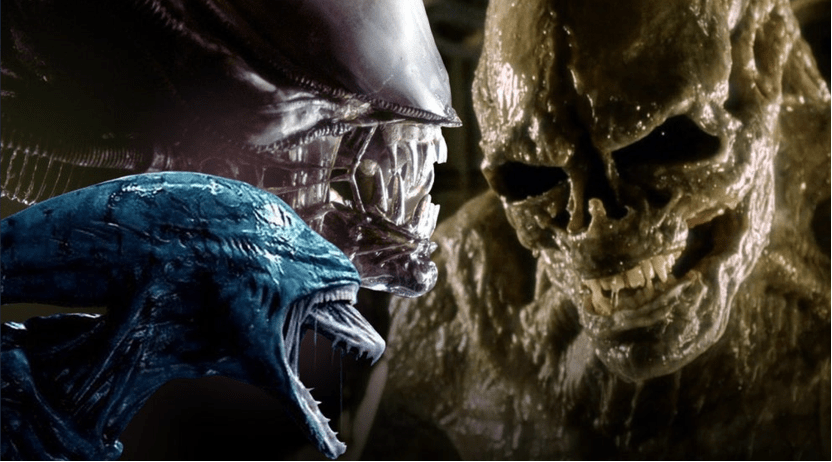

Figure 3&4
Image source: https://www.ign.com/articles/every-xenomorph-and-alien-from-the-alien-movies
Vernallis (2013) highlights the transformative nature of digital technology for media aesthetics, and the ongoing evolution of film digitization, whether in the theatre, at home, or through mobile devices. Film still exists as a dynamic art form that connects the sensory, cognitive, and symbolic realms of human experience.
Reference List:
Alien Anthology (2017). Alien: Covenant | Official Trailer [HD] | 20th Century FOX. YouTube. Available at: https://www.youtube.com/watch?v=svnAD0TApb8 [Accessed 25 Nov. 2024].
Casetti, F. (2015). The Lumière Galaxy Seven Key Words for the Cinema to Come. New York Columbia University Press, pp.60–82.
Far East Films (2022). Time Raiders (2016) 盜墓筆記 – Movie Trailer – Far East Films. [online] YouTube. Available at: https://www.youtube.com/watch?v=IVHtXd7lnkQ [Accessed 25 Nov. 2024].
JoBlo Movie Clips (2023). ALIEN Clip – ‘Danger’ (1979) Sigourney Weaver. [online] http://www.youtube.com. Available at: https://www.youtube.com/watch?v=wvH0ETbYRIY [Accessed 25 Nov. 2024].
Schedeen, J. and Collura, S. (2024). Every Xenomorph (and Alien) from the Alien Movies – IGN. [online] IGN. Available at: https://www.ign.com/articles/every-xenomorph-and-alien-from-the-alien-movies.
Vernallis, C. (2013). Unruly Media : YouTube, Music video, and the New Digital Cinema. Oxford: Oxford Univ. Press, Cop, pp.277–288.
By Yuqing Yin-33750937
 Digital Audiovisual Media Class Blog
Leave a comment