Written by: Polina Olhovska (33661919)
Carol Vernallis, in her discussion of YouTube aesthetics, references examples like ‘Badger‘ and ‘I’m a Gummy Bear‘. These “YouTube classics,” along with viral hits like ‘Crazy Frog‘, remain universally recognisable for their reliance on “instant reiteration,” “simplistic and evocative representations,” and “ad-hoc” colour schemes that capture attention. Vernallis notes that such content “excites the primitive alarm system,” offering immediate and visceral engagement.
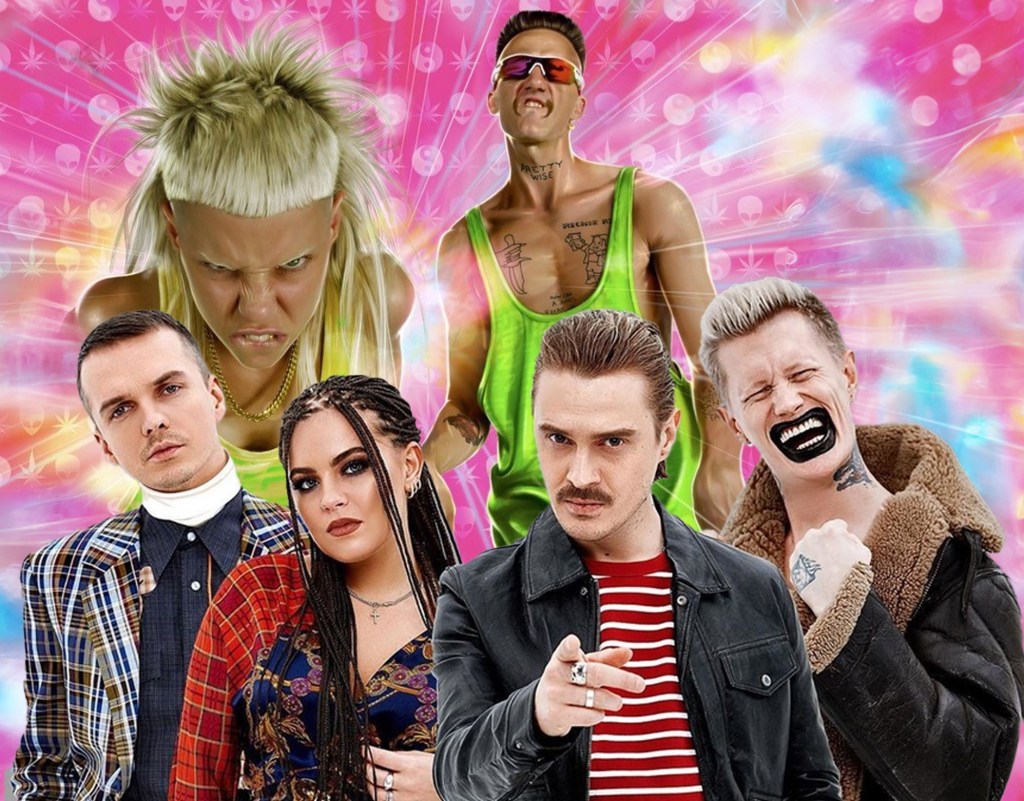
While Vernallis’s observations are accurate, these aesthetics have evolved significantly, as seen in the music videos of Die Antwoord and Little Big, where visuals often surpass the music in importance. These groups also exemplify Vernallis’s idea of participatory culture, where YouTube videos invite interaction, remixing, and cultural engagement that extends their reach far beyond the platform.
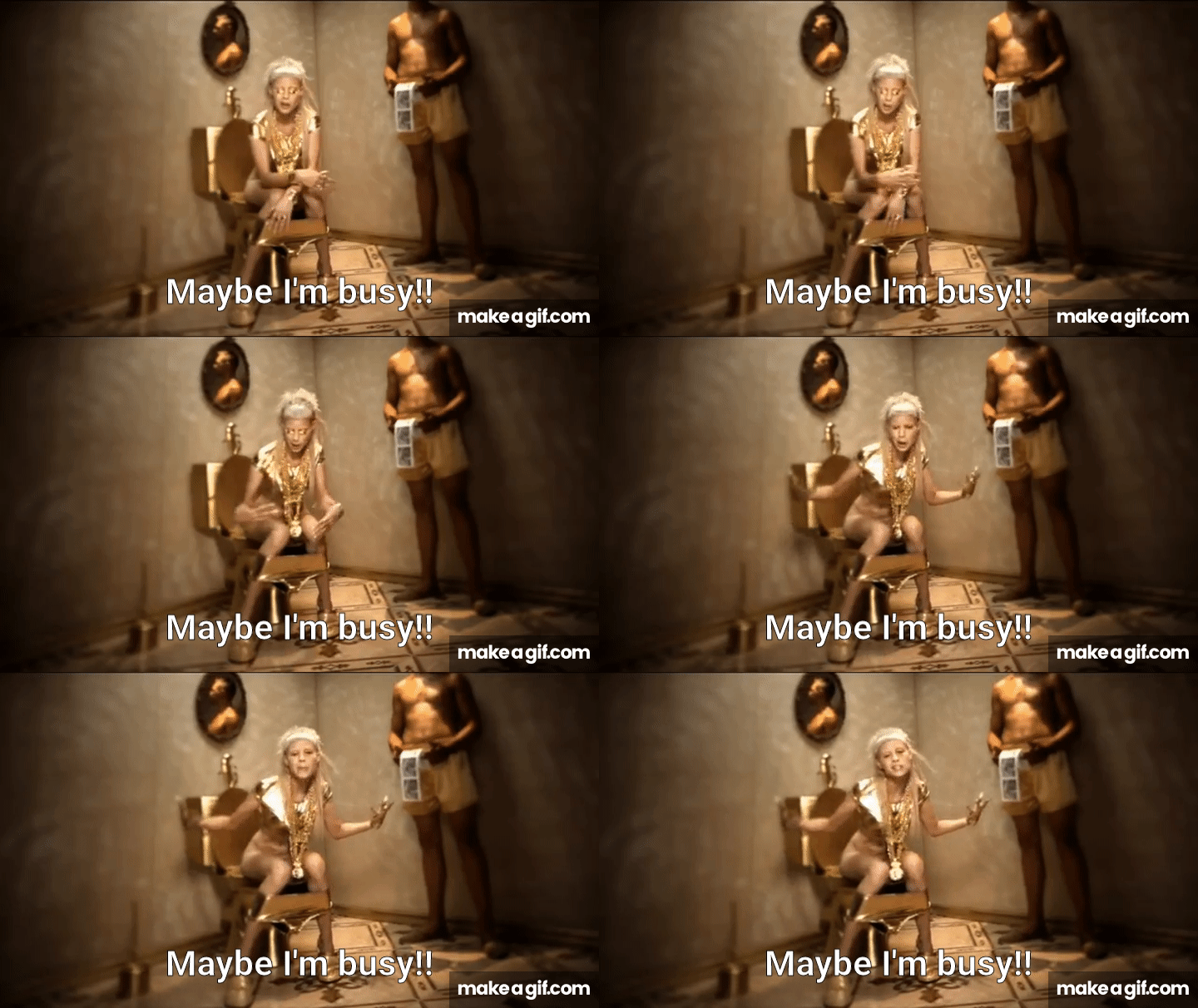
Die Antwoord, a South African group formed in 2008, has cultivated a distinct style they call “zef,” blending electronic rave and hip-hop with eccentric, provocative visuals. Their video ‘Rich B*tch‘ exemplifies this, featuring Yolandi adorned in gold, seated on a golden toilet, surrounded by gaudy imagery. The explicitness and artificial colour schemes align with YouTube aesthetics, emphasising excess and spectacle. Their surreal, bold visual language reflects a post-internet culture, making their videos central to their identity. The participatory nature of their content is evident in how fans and critics dissect their “zef” style, generating discussions and memes that reinforce their brand.
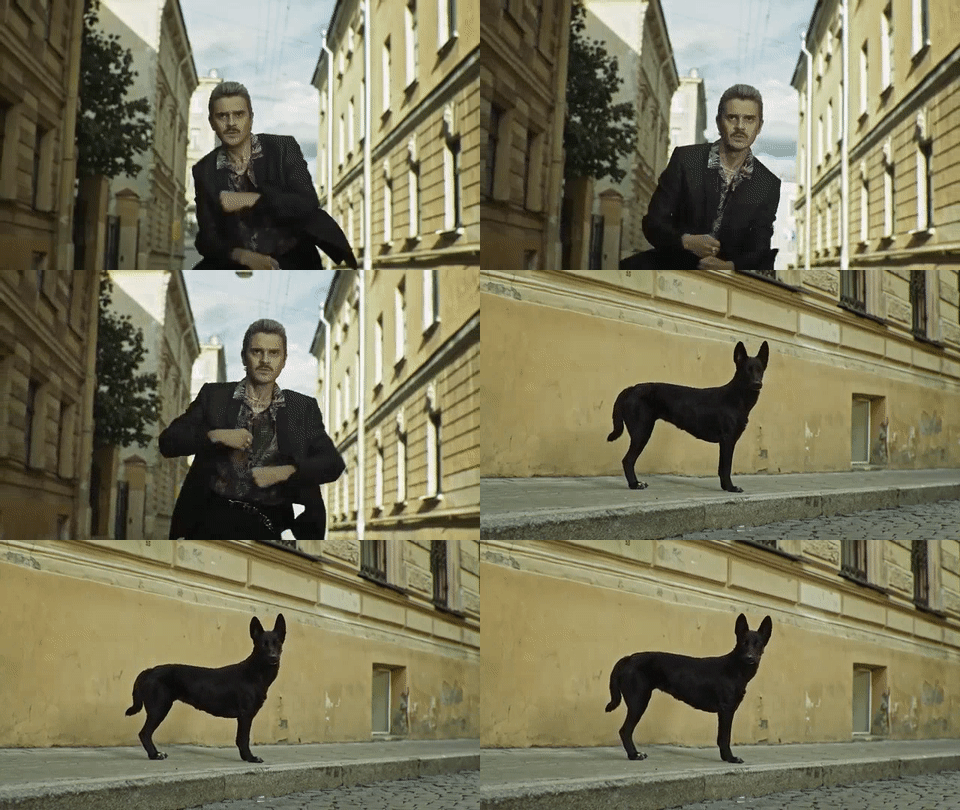
Similarly, Little Big, built their popularity through satirical, absurd music videos. Their breakthrough ‘Everyday I’m Drinking‘ (2013) mocked stereotypes about Russian culture, while ‘Skibidi‘ (2018) leaned into repetition and meme culture, featuring quirky choreography in multiple settings. Drawing on “YouTube classic” tropes like humour, surrealism, and repetition, Little Big updated these aesthetics with high production values, showcasing the platform’s evolution. The ‘Skibidi‘ video, in particular, became a participatory phenomenon, inspiring global dance challenges and memes, exemplifying Vernallis’s idea of YouTube as a space where viewers are not passive but actively engage with and reinterpret content.
Both groups exemplify how YouTube aesthetics have progressed from low-quality viral hits to polished, satirical productions. Their bold visuals, humor, and reliance on meme culture align with Vernallis’s framework, demonstrating how music videos have become essential to their artistic identity and global recognition. As YouTube’s algorithm and content creation trends evolve, the platform’s aesthetic landscape is shifting, with higher production values and more sophisticated approaches to visual storytelling now defining the next wave of viral success.
Bibliography:
Big, L. (2018). LITTLE BIG – SKIBIDI (official music video) – YouTube. [online] http://www.youtube.com. Available at: https://www.youtube.com/watch?v=mDFBTdToRmw.
DieAntwoordVEVO (2011). Die Antwoord – Rich Bitch (Official Video). [online] YouTube. Available at: https://www.youtube.com/watch?v=8bdeizHM9OU [Accessed 27 Nov. 2024].
Little Big (2013). LITTLE BIG – Everyday I’m drinking. [online] YouTube. Available at: https://www.youtube.com/watch?v=QrU1hZxSEXQ [Accessed 27 Nov. 2024].
Vernallis, C. (2013). Unruly media : YouTube, music video, and the new digital cinema. Oxford: Oxford Univ. Press, Cop, p.127.
 Digital Audiovisual Media Class Blog
Leave a comment