One element of Shaviro’s concept of post-continuity cinema is the creation of affect—using aesthetic choices to evoke sensation and amplify emotional or sensory engagement. Attack the Block (2011), Cornish’s alien invasion narrative unfolds within the Wyndham Tower estate, a looming, oppressive structure that serves as more than just a setting. This council estate, both battlefield and homeland, becomes a central character in its own right. Through crane shots and low angles, Cornish magnifies its dominance, symbolising the characters’ struggles within an environment shaped by systemic socioeconomic forces.
The opening scene of Attack the Block establishes the importance of the physical environment in the story. A crane-like, tilted camera movement glides from the top of the tower block to its base, revealing the imposing structure in its entirety. The tower dominates the frame, its brutalist architecture becomes memetic of the silhouette of a spaceship. The green, blue, and black hues saturating the screen further enhance this. For the viewer, two facts become immediately clear: this is a sci-fi film, and this is a London story.
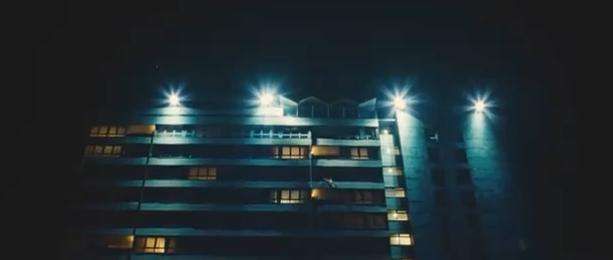
The linked video captures a climactic chase scene from Attack the Block in which the characters, armed with mopeds and bicycles, transform the Wyndham Tower estate into the perfect playground for an adrenaline-fueled action sequence. Cornish utilises the estate’s features—stair railings, twisting tunnels, and multi-level architecture—to amplify the stakes of the pursuit.
At the 1:35 mark, the character Pest is shown anxiously riding a moped while escaping an alien. Initially, the camera is stable, capturing Pest from an outsider’s perspective as he crosses a bridge. However, the next cut transitions to a wobbly, erratic handheld shot from Pest’s point of view as he spots a rack ahead and ducks to dodge it. These jagged, chaotic camera movements mirror the panic and intensity of the moment.
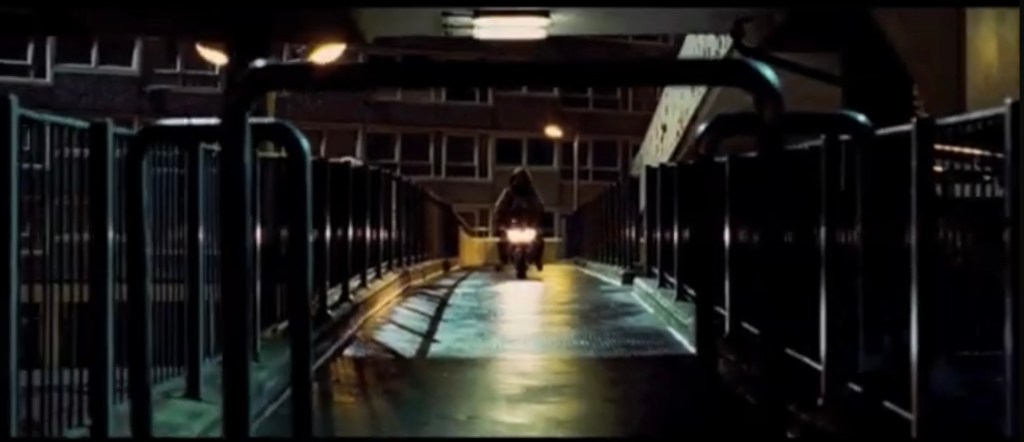

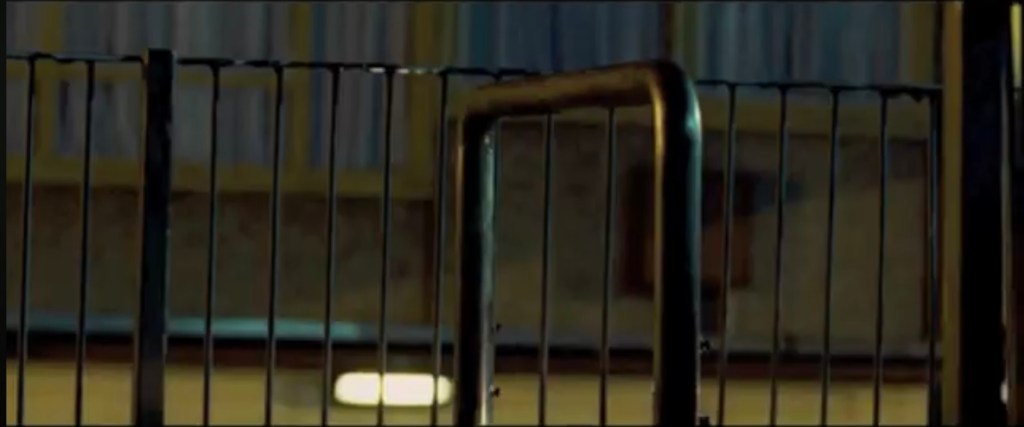
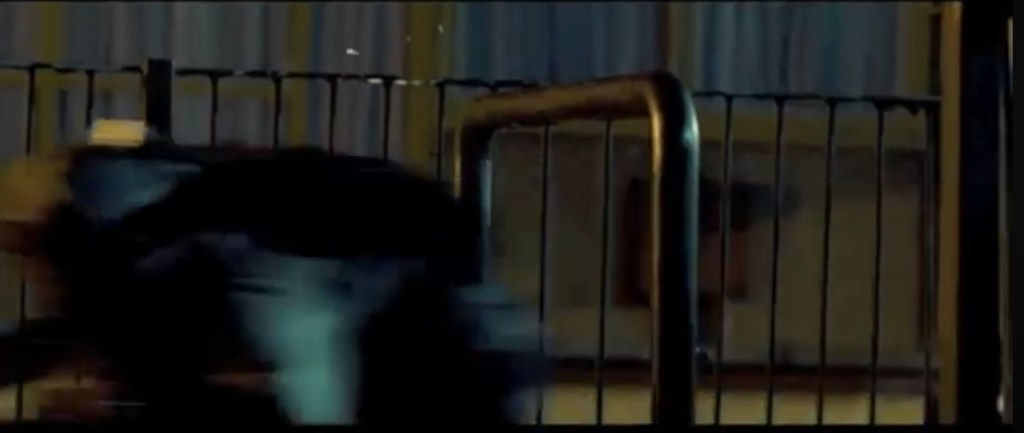
The sequence’s pacing and editing are deliberately disjointed, alternating between close-ups, medium shots, and long shots. This fragmented style sacrifices a linear portrayal of the spatial relationships leading the audience to question how far the boys are from the aliens and whether they will escape.
The payoff for the audience lies in the sensory impact and immersive quality of the scene. Cornish’s blending of social realism with sci-fi horror action produces a tone that feels both modern and reflective of digital-age storytelling.
Radwa Osman 33779472
References
Steven Shaviro, ‘Post-Continuity: An introduction’, Post-Cinema: Theorising 21st Century Film, 51-64 , pg 60
 Digital Audiovisual Media Class Blog
Leave a comment