Beef is a comedy-drama series produced by Netflix and released in April 2023. It stars Steven Yeun and Ali Wong, and the story follows the prolonged feud between their characters after they get into a road rage incident together.
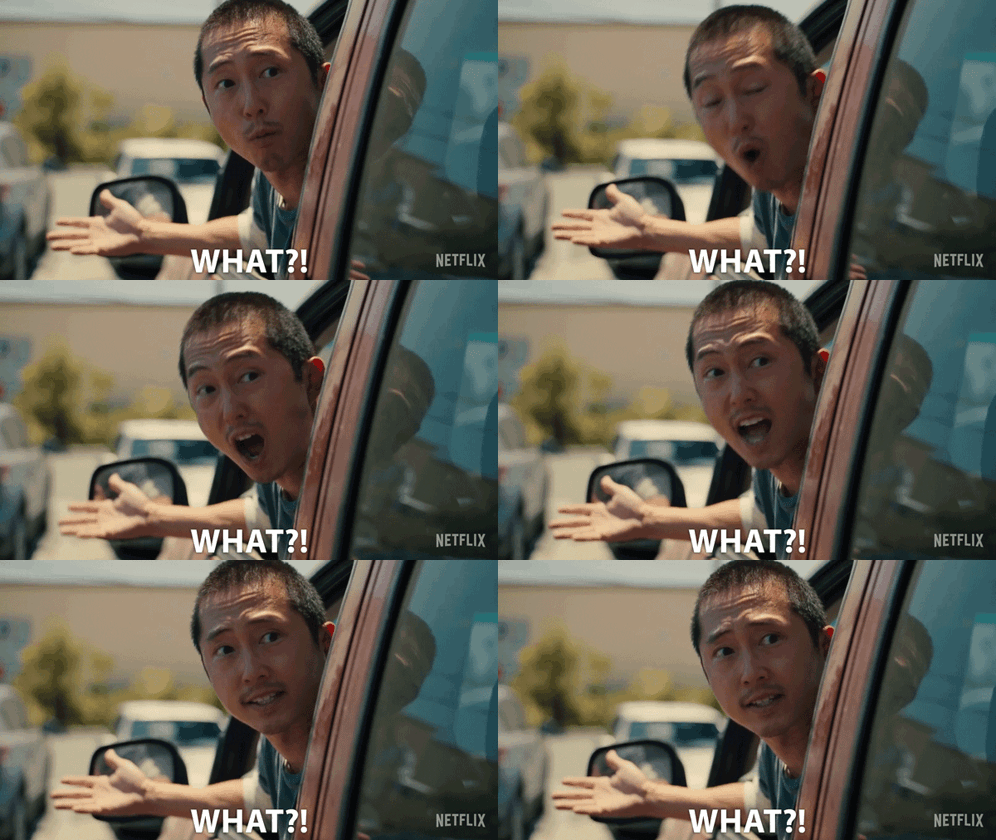
It only took me a couple of days to ‘complete’ watching all ten episodes of Beef, and the series was thoroughly entertaining. However, it is necessary to unpack why I felt so engrossed in the show. What mechanisms does Netflix use to ensure we are glued to our screens? And why did I finish Beef and immediately search for something new to watch?
Amanda Lotz (2017) explains that whilst internet distribution technologies (in this case, Netflix) can deliver content in a live or linear fashion, they don’t because they have created a different viewing model entirely. Netflix has made viewers impatient; they don’t want to wait a week to watch the next episode anymore, as per the limitations of traditional terrestrial television. Streaming services provide this luxury, and viewers pay for it.
Netflix began creating their brand identity in 2012 when it started to publish Netflix Originals such as House of Cards, Hemlock Grove, and Orange is the New Black (Jenner, 2018). The exclusivity of these shows exacerbated Netflix’s credibility in the earlier days of streaming services, as these highly rated ‘quality’ shows were only accessible on their platform. It is this brand identity that viewers now trust, and subsequently, I, as a Netflix user, already believe that shows produced specifically and exclusively for Netflix, such as Beef, will be good, as if by default.
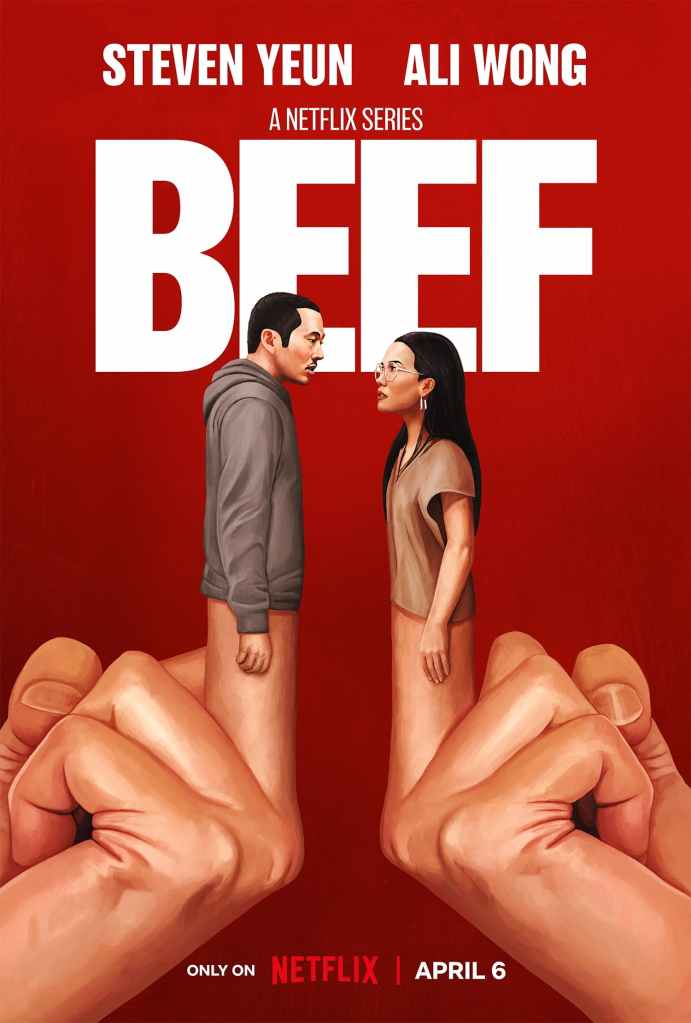
Jenner (2018) describes some of the mechanisms used by Netflix to create ‘flow states’ within the audience. The ‘entrance flow’ describes the recommendation algorithm used by Netflix to ‘constantly introduce viewers to programmes that fit each user’s tastes’. The ‘insulated flow’ is thereafter created through the features used by Netflix in serialised programming, such as the skip-intro function, which creates a ‘seamless flow’ between episodes.

Essentially, in-house productions such as Beef are published in a way which uses techniques to engage us subconsciously, encouraging these flow states and crafting a seamless viewing experience. “Binge-viewing can be viewed as a term that encapsulates how control is offered to viewers” (Jenner 2018 p109), however, viewers are not always particularly good at exercising control on Netflix because the viewing experience is designed to stop users from utilising this control.
References
Beef (2023) Netflix. Available at https://www.netflix.com/watch/81497204?trackId=255824129 [Accessed on 01/11/2024]
Amanda Lotz (2017) ‘“Theorizing the Nonlinear Distinction of Internet-Distributed Television”’, in A.D. Lotz (ed.) Portals: a treatise on internet-distributed television. [Ann Arbor, Mich.]: Maize Books, an imprint of Michigan Publishing.
Mareike Jenner (2018) ‘“Introduction: Netflix and the Reinvention of Television”’, in M. Jenner (ed.) Netflix and the re-invention of television. Cham, Switzerland: Palgrave Macmillan, pp. 1–31.
Mareike Jenner (2018) ‘“Introduction: Binge Watching Netflix”’, in M. Jenner (ed.) Netflix and the re-invention of television. Cham, Switzerland: Palgrave Macmillan, pp. 109–118.
Jonathan Thwaites 33745474
 Digital Audiovisual Media Class Blog
Leave a comment