The rapid evolution of media platforms has created a fluid boundary between cinema, television, and digital media, leading to what they call post-cinema. (Denson & Leyda 2016) This new media landscape reflects profound changes in how audiences consume and engage with moving images in the 21st century, largely driven by the proliferation of digital technologies and online platforms.
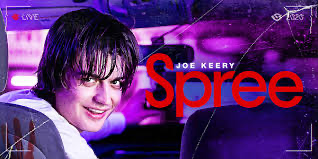
The film Spree (2020) offers a striking example of post-cinema in practice. Directed by Eugene Kotlyarenko, the film is a satirical thriller about a rideshare driver, played by Joe Keery, who embarks on a killing spree in an attempt to gain social media fame. As Denson and Leyda suggest, post-cinema is marked by shifts in the technological, economic, and aesthetic dimensions of film. Spree exemplifies these changes by using the visual and narrative strategies that have emerged from the digital landscape. The film is not just a traditional thriller but is deeply embedded in the social media-driven world, where the protagonist’s actions are influenced by the desire for online validation. Spree explores the ways social media platforms shape human behavior, relationships, and morality, tapping into key post-cinematic themes such as the blurring of boundaries between the real and virtual worlds.

This examination of post-cinema in Spree highlights how the filmic form has transformed under the influence of digital technologies. Post-cinema is marked by new technological practices—where digital platforms and tools facilitate the production, distribution, and exhibition of media—becomes evident in Spree. The film’s digital-native aesthetic, including its incorporation of social media feeds, live-streaming, and other online elements, is a direct response to how digital technologies have redefined storytelling and visual representation. The shift from traditional filmmaking techniques to digital aesthetics is a key feature of the aesthetic dimension of post-cinema, where filmmakers experiment with non-linear structures, hyper-realistic representations, and immersive experiences made possible by digital tools.

Further, Denson and Leyda note that post-cinema is not necessarily superior or inferior to traditional cinema but represents a different mode of engagement with audiovisual media. Spree is a prime example of this, as its storytelling and form are heavily influenced by social media algorithms, the attention economy, and the constant mediation of reality through screens. The film raises questions about the authenticity of online personas, exploring how social media shapes our perception of self and others. The protagonist’s attempt to create an online persona that blends with his real-life actions speaks directly to post-cinema’s exploration of digital identity and the inseparability of online and offline experiences.
Spree (2020) Eugene Kotlyarenko
Shane Denson and Julia Leyda, ‘Perspectives on Post-Cinema: An introduction’, Post-Cinema: Theorising 21st Century Film
By Naomi Senior- 3374010801
 Digital Audiovisual Media Class Blog
Leave a comment