Jin Xing: A Breakthrough for Transgender Representation
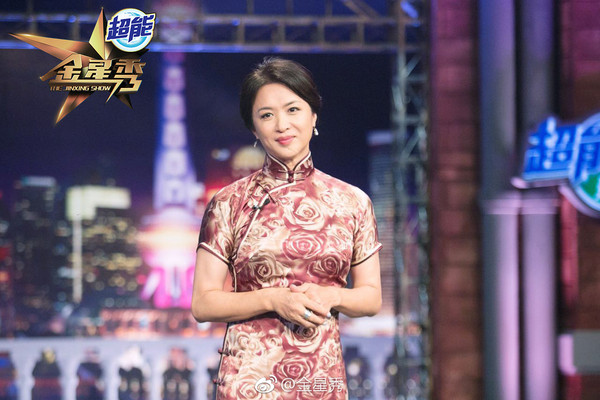
Jin Xing’s rise to fame represents a groundbreaking moment for transgender visibility in Chinese television. Renowned for her exceptional talent as a dancer, Jin Xing broke cultural and societal barriers by publicly sharing her transgender journey during the 1990s. As the host of The Jin Xing Show, she captivated audiences with her humor, directness, and ability to connect. The show adopted an “audience orientation” strategy (Dong, 2018), emphasizing authenticity to resonate deeply with viewers. Her work challenged stereotypes, proving that transgender individuals could succeed in the mainstream media while fostering dialogue about gender diversity in a restrictive cultural environment.
Jin Xing’s success aligns with Michael Goddard and Christopher Hogg’s (2018) concept of “Trans TV,” which frames television as a transformative space capable of challenging traditional norms and promoting inclusivity. While Jin Xing’s visibility remains an exception in China, her career illustrates how television can serve as a platform for reimagining societal narratives about transgender individuals. Her journey exemplifies the intersection of personal talent and cultural intervention, providing hope for greater diversity in media representation.
Policy and cultural challenges

Despite Jin Xing’s achievements, LGBTQ+ representation in China faces strict regulatory barriers. The National Radio and Television Administration’s 2016 ban on homosexual content significantly limited creative freedom, particularly for Boys’ Love (BL) dramas. These dramas gained massive popularity, especially among younger audiences, with series like Addicted amassing millions of views. However, creators were forced to “dance with chains on” (Chen, 2022), navigating censorship while trying to satisfy fan demand.
Amy Villarejo’s analysis of Transparent offers a comparative perspective on how television can destabilize hegemonic norms by amplifying marginalized voices (Villarejo, 2016). In contrast, China’s restrictive policies constrain the media’s ability to engage fully with LGBTQ+ themes. Despite these constraints, BL dramas and Jin Xing’s work have sparked essential discussions about gender and sexuality, laying the groundwork for incremental cultural shifts.
From the margins to the mainstream
Digital platforms like Weibo, Xiaohongshu, and Bilibili have become important spaces for discussing LGBTQ+ topics in China. On these platforms, transgender creators share their personal experiences, talk about gender identity, and explain medical transitions. While mainstream media often avoids these subjects, these online stories help people understand and feel empathy toward the transgender community.
Anamarija Horvat (2020) describes how these online platforms act as “border crossings,” where transgender creators move between small, supportive online groups and a wider public audience. By doing this, they challenge traditional ideas about gender and create new conversations. These platforms are becoming more important for spreading awareness and encouraging acceptance of gender diversity.
Jin Xing’s success and the growing presence of transgender voices online show that attitudes toward gender diversity are slowly changing. Goddard and Hogg (2020) say that stories about transgender people can challenge traditional beliefs, and Jin Xing’s story is a great example of this. Her visibility proves that personal stories can inspire social change, even in a society with strict media rules.
In summary
While transgender and LGBTQ+ communities in China still face cultural, policy and social barriers, it is still hopeful to spread the knowledge of this group and decrease people’s stereotypes and misunderstandings. Jin Xing’s achievements and the growing discussion of gender diversity in cyberspace show that change is possible. Progress may be slow, but every dialogue and every visible figure helps to move society towards greater inclusion and diversity.
Siqian Wang 33847063
References list
Chen, Y. (2022). A Breakthrough Research on the Integration of Boy’s Love Films and TV Dramas into Mainstream Culture [A Dissertation Submitted to the Graduate School of Henan University in Partial Fulfillment of the Requirements for the Degree of Master of Journalism and Communication]. Henan University.
Dong, F. (2018). 真实的“诱惑”——从受众心理谈《金星秀》. Western Radio and Television.
Goddard, M., & Hogg, C. (2018). Introduction: Trans TV as concept and intervention into contemporary television. Critical Studies in Television, 13(4).
Goddard, M., & Hogg, C. (2020). Introduction: Trans TV Re-evaluated part II. Critical Studies in Television, 15(3).
Horvat, A. (2020). Crossing the Borders of Queer TV: Depictions of migration and (im)mobility in contemporary LGBTQ television. Critical Studies in Television, 15(3).
Villarejo, A. (2016). Jewish, Queerish, Trans and Completely Revolutionary: Jill [sic] Soloway’s Transparent and the New Television. Film Quarterly, 69(4).
 Digital Audiovisual Media Class Blog
Leave a comment