In this week’s lecture on “The Digital Transformation of Cinema and Television,” we delved into the profound shifts that have reshaped our understanding of film and television in the digital era. The essential readings by Manovich, Denson and Leyda, and Rodowick provided a robust framework for this exploration, challenging us to reconsider the very nature of cinematic and televisual experiences.
Manovich’s “What is New Media” opened our eyes to the ways in which new media is not just a continuation of old media but a transformation that alters our relationship with content. He argues that new media is characterized by its programmability, interactivity, and spatiality, which are fundamentally changing the way we engage with audiovisual materials. This resonates with our current module, as it prompts us to think about how digital technologies have not only replaced analogue ones but have also introduced new forms of audience interaction and content creation.
Denson and Leyda’s introduction to “Post-Cinema” offered a theoretical perspective that moves beyond the materiality of film. They propose that post-cinema is not just about the end of film as a medium but about the ongoing historical transition that involves a dialogue between new and old media forms. This concept is particularly intriguing as it suggests that the essence of cinema is not lost but is being redefined in the context of new media platforms and practices.
Rodowick’s “What was cinema” provided a critical examination of the loss of indexicality in the shift from analogue to digital. He mourns the disappearance of the unique qualities of film, such as its material trace of reality and emotional impact. However, his perspective also invites us to question the authenticity of the cinematic experience and to explore how digital technologies might offer new avenues for realism and emotional resonance.
Reflecting on these readings and our lecture content, it’s clear that the digital transformation of cinema and television is not a simple replacement of old with new. It’s a complex interplay of technological advancements, aesthetic evolutions, and experiential shifts. As digital media student, I am particularly interested in how these changes affect the material basis for producing moving images and the experiences of audiences. The transition from analogue to digital has democratized content creation, allowing for a more diverse range of voices and stories to be told. Yet, it also raises questions about the preservation of the emotional and aesthetic qualities that we associate with traditional cinema.
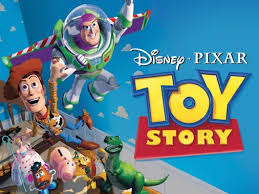
Here’s a movie I’d like to recommend: Toy Story (1995) – as the first fully computer-generated animated feature, it marked a major milestone in digital animation technology.
In conclusion, the digital transformation of cinema and television is a multifaceted phenomenon that demands a nuanced understanding of the interplay between technology, aesthetics, and audience experience. As we continue to navigate this transition, it’s essential to engage with the critical discourses provided by scholars like Manovich, Denson and Leyda, and Rodowick. Their insights not only inform our academic understanding but also enrich our appreciation of the evolving landscape of digital audiovisual media.
reference:
Manovich, L. (2002) ‘What is New Media’, in The Language of New Media, pp. 18-61.
Denson, S. and Leyda, J. (n.d.) ‘Perspectives on Post-Cinema: An introduction’, in Post-Cinema: Theorising 21st Century Film, pp. 1-19.
Editor:Qiutong Shen – 33842865
 Digital Audiovisual Media Class Blog
Leave a comment