This week, our focus shifts to the realm of Internet-distributed television, with a particular emphasis on Netflix as a paradigm of streaming services. As we venture into this new terrain, we are not only examining the novel production practices that have emerged but also delving into the transformed modes of consumption, especially the phenomenon of binge-watching as Jenner articulates.
Netflix’s departure from the traditional network model is significant, and it’s within this context that we explore the series ‘Dark’ (Netflix, 2017), a German science fiction thriller that exemplifies the creative possibilities of this new medium. ‘Dark’ challenges the conventions of television storytelling by employing complex narrative structures and character development, which are often constrained by the episodic and serialized format of traditional TV.
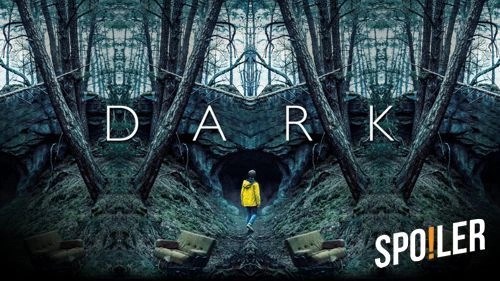
The show’s immediately sets the tone for a series that is not afraid to delve into the depths of time travel and its philosophical implications. It presents a narrative that is both intricate and engaging, allowing viewers to piece together the puzzle of a small town’s dark secrets across multiple timelines. This approach to storytelling is a testament to the freedom that streaming platforms offer creators, enabling them to craft stories that are not beholden to the commercial breaks and episodic constraints of network television.
Moreover, ‘Dark’ provides a rich ground for examining the new possibilities for representation in the era of convergent media. The series explores themes of race, gender, sexuality, and other dynamics, offering a diverse cast and complex character arcs that are often underrepresented in traditional television. It is in this transformed landscape that we see a shift towards more inclusive and nuanced portrayals of identity, which is a significant departure from the network model’s more homogeneous representation.
The binge-watching culture, as facilitated by Netflix, also plays a crucial role in the way ‘Dark’ is consumed. The ability to watch multiple episodes in succession not only enhances the viewing experience but also allows for a deeper immersion into the show’s complex narrative. This mode of consumption is a far cry from the weekly installments of traditional TV, where viewers had to wait for the next episode to make know the mysteries and resolutions.
In conclusion, ‘Dark’ serves as a prime example of how Internet-distributed television, particularly through platforms like Netflix, is redefining the way we produce and consume content. It opens up new avenues for storytelling, representation, and audience engagement, signaling a significant shift in the television landscape. As we continue to explore the implications of this transformation, it is essential to consider how these changes impact the narratives we consume and the stories we tell about ourselves.
reference:
McDonald, K. and Smith-Rowsey, D. (2016) The Netflix Effect: Technology and Entertainment in the 21st Century. London; New York: Bloomsbury.
Jenner, M. (2016) ‘Is this TVIV? On Netflix, TVIII and binge-watching’, New Media and Society, 18(2), pp. 257-273.
Lotz, A.D. (2014) ‘Television Outside the Box: The Technological Revolution of Television’, in The Television will be Revolutionized, 2nd edition, NYU Press, pp. 53-94.
Editor:Qiutong Shen – 33842865
 Digital Audiovisual Media Class Blog
Leave a comment