The Bear was a rapid success when the first season dropped on Hulu in the US and Disney + for UK viewers. Each episode was approximately 30 minutes and this partnered with its chaotic dialogue and intense pacing meant the show fit right into the model of a binge worthy show, inviting viewers to consume all episodes immediately. Pioneered by platforms such as Netflix is this idea of making ‘entire seasons of content available at once’ (Mareike Jenner, 2018,p.14) . This model has been reflected with how The Bear was distributed and thus, repeated with both Season 2 and 3.
However, in these further seasons The Bear strayed away from its previous high-stakes structure and there has been a deliberate slow down in its pacing. The focus seems to be less on holding the viewers’ attention from episode to episode and more focus on style and the cinematics.
This is most evident when we enter into the third season. Episode 1, titled Tomorrow comes off the back of a chaotic conclusion to the last season leaving the viewers on a cliffhanger in the plotline. Instead of exploring this unresolved narrative, it opens with a more experimental 40-minute episode which reflects on Carmy’s past. This departure from conventional TV storytelling is less of a narrative progression and instead is an immersive sensory experience that emphasises mood and introspection. The episode includes little dialogue which could be seen as a risk considering its length. The show is no longer relying on its chaotic nature to engage the viewer made evident here with a focus on Carmy creating and preparing dishes depicted in a way that feels like a tribute to the artistry of cooking.
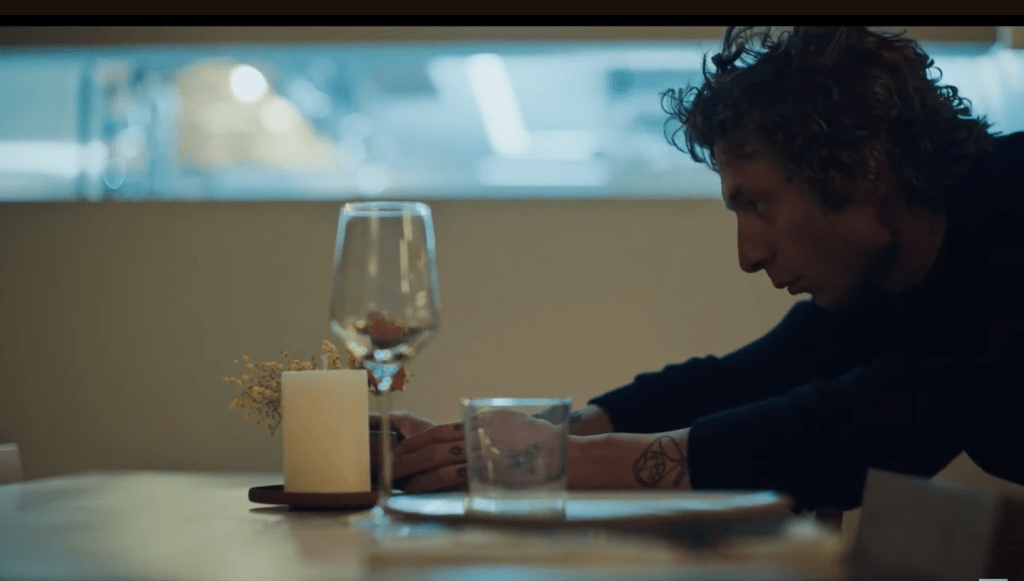
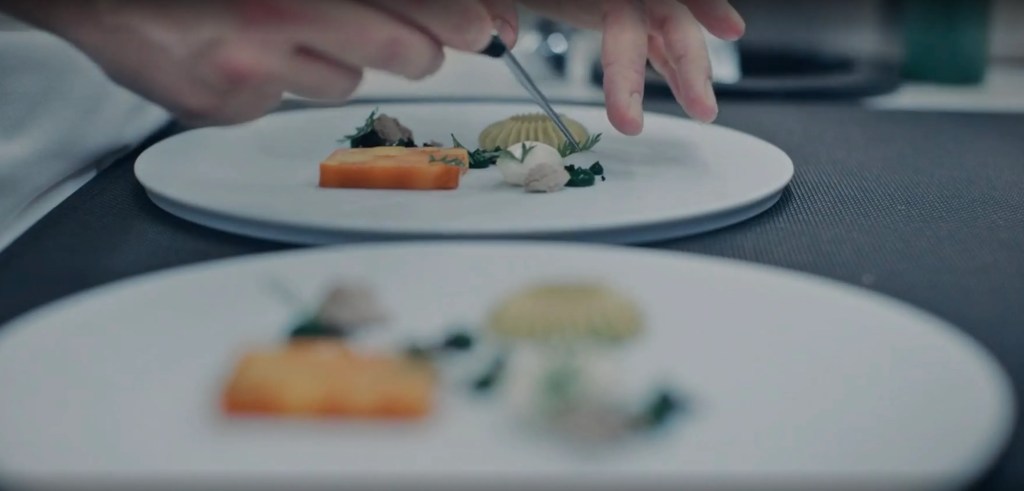
Marieke Jenner’s concept of TVIV – the fourth stage of television – argues that streaming platforms allow for creative freedom that interrupts the usual episodic structures. The Bear had taken these creative liberties to a high level with episodes that could be seen as self-contained short films. Despite some reviews of the last season coining the show as ‘boring’ it has still reached great success and perhaps poses as a challenge to the idea that streaming platforms are sacrificing creativity and depth in place of binge-ability.
Olivia Coleman – 33752564
Bibliography
Mareike Jenner (2018). Netflix and the Re-invention of Television. Cham Springer International Publishing Palgrave Macmillan.
 Digital Audiovisual Media Class Blog
Leave a comment