33724037
Venus Pun
Shunji Iwai’s film is about Lily Chou-Chou and occupies a unique space within the film. Watching the lecture and doing the readings, I could only think about his movie and how it echoes the transformation in media Culture described by Manovich, Shane Denson and other authors. This is the best film about the Internet and post-cinema. This film’s digital weaves digital aesthetics with the chat rooms, non-linear narratives and participatory culture.
The film’s use of the internet chat rooms as a narrative device throughout the film embodies what Manovich has identified within the variability of new media. According to Manovich, “a new media object is not something fixed once and for all but can exist in different, potentially infinite universes’ (Manovich, 2002). These sequences within the film are presented as on-screen text with woven ethereal imagery, simulating online communication’s fragmented and decentralised nature. This approach within the film breaks the linear and reflects the chaotic lives of the characters. This stylistic choice reflects not only the chaotic and disjointed lives of the characters but also the broader cultural shifts brought about by the Internet and new media technologies. The chat rooms allow all characters to participate anonymously and express their profound emotions and inner thoughts online. Also, audiences will be invited to engage actively in the film. Before the movie was released, Shunji had a website open that was a chatroom similar to the movie, where people could talk and use it as a promotional way to advertise the film and engage with it. The pre-release website chatroom extends this participatory culture beyond the confines of the film itself, allowing the audience to engage actively and blurring the line between narrative fiction and real-world interaction. This integration of media forms illustrates the modularity of new media, as elements from film, web, and participatory spaces combine to create a unique narrative experience.
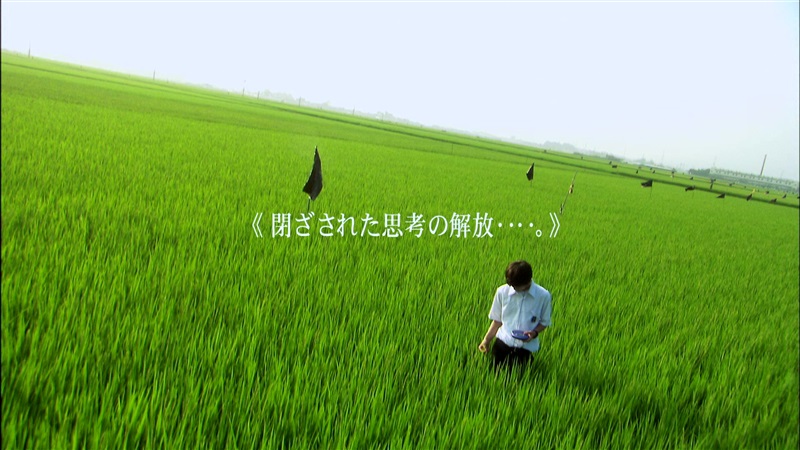
Shunji Iwai’s All About Lily Chou-Chou exemplifies the concept of post-cinema, as scholars like Shane Denson and Julia Leyda theorised by demonstrating how cinema evolves in response to digital technologies and cultural shifts. Post-cinema is not the end of cinema; instead, it is a generation’s transformation in the age of digital media domination. The evolution of the digital age, the digital aesthetics and the way of storytelling that Shinji used to deepen the relationship and engagement of the audience and the film.
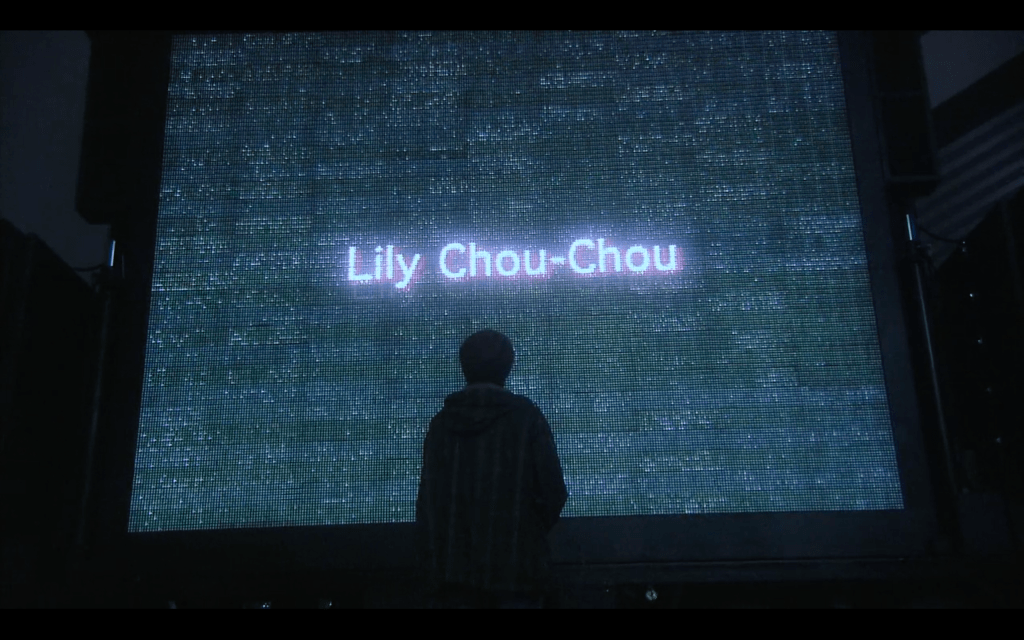
As noted by Denson and Leyda, the internet chatroom plays a significant role as a narrative and is characteristic of post-cinema. The senses of text and imagery embody the decentralised nature of online communication; the chatroom segments reflected the chaotic and dispersed attention that characterises the digital age. It emphasises and discovers how contemporary digital can be immersed into post-cinematic, challenging, traditional cinematic norms.
Manovich, L. 2002, ‘What is New Media’, The Language of New Media, pp.18-61
Shane Denson and Julia Leyda, ‘Perspectives on Post-Cinema: An introduction’, Post-Cinema: Theorising 21st Century Film, pp. 1-19
 Digital Audiovisual Media Class Blog
Leave a comment