From “Some Like it Hot” to “Euphoria,” gender flux and representation on film
In a time of so much change around film and television, representation has been a central focus in debates about visibility, authenticity, and accountability. This evolution is especially noticeable in the modern days of “Trans TV” – an ever evolving medium according to Michael Goddard (2020), with more representation of transgender characters and transgender creators appearing in the work
“Trans TV” asks us not to judge, as we might be tempted to do, if trans representation is “good” or “bad,” or to focus only on trends for the industry as a whole; it asks us to see streaming television as itself undergoing a transformation — or “transing” — in the ways it represents people and tells stories. From the comic cross-dressing antics of Some Like It Hot (1959) to the revolutionary sincerity of Euphoria (2019), representations of gender have transcended surface masks to profoundly complex studies of identity. The journey highlights the changing media environment and raises an important question: how have depictions of gender fluidity changed, and what part authenticity plays in this development?
Some Like It Hot (1959): Gender as Playful Disguise.

Through the story of two male musicians, Joe (Tony Curtis) and Jerry (Jack Lemmon), who dress as women to escape mobsters, Billy Wilder’s iconic comedy Some Like It Hot presents a humorous and subversive perspective on gender. While the film mostly uses cross-dressing as comic tool, it also questions the ideas of traditional notions of gender, exploring gender fluidity and the power dynamics of society differently. For instance, Jerry’s transformation into “Daphne” leads to his engagement with a man, which is played for laughs but also hints at a more fluid understanding of identity and relationships.
Some Like It Hot mostly avoids showing gender as a deep or complicated problem. Rather, it presents gender as performance, a mask that helps the characters negotiate their environment in ways they would not be able to do. Yet this playful treatment also avoids the more complex reality of gender identification that later films like Boys Don’t Cry or shows like Euphoria examine.
While Some Like It Hot doesn’t engage directly with questions of trans identity, it does contribute to the broader conversation around the fluidity of gender performance. Its timelessness and popularity does bring up an interesting question: does gender always have to be serious, or can it also just be a way of studying and exploring onerself?
Boys Don’t Cry (1999) Overcoming Obstacles in Trans Representation

Kimberly Peirce’s 1999 film Boys Don’t Cry is very different from the lighthearted Some Like it Hot style, as it shows a more raw and tragic portrayal of gender identity through the life and death of Brandon Teena, a trans man whose story brought attention to the violence experienced by trans people. While Hilary Swank won an Academy Award for her role as Brandon , the significance of the movie goes much beyond the acting. It was among the first big Hollywood films to centre on a trans character and so carefully and genuinely showcase the complexity of trans identity. Unlike previous films, Boys Don’t Cry challenged the notion that gender can simply be performed or swapped at will – highlighting instead the pain and danger of living in a world that does not acknowledge or accept trans identities.
Along with previous films, this one cleared the path for more trans characters to be seen, but it also made clear how much more has to be done to change the way the film business and society handled trans stories and actors. The way the movie presents Brandon’s experience begs important issues regarding authenticity in representation, issues that are especially more important in the media environment of today when digital platforms are allowing more complex depictions of gender.
Euphoria (2019): The New Frontier in Digital Platform Trans Representation
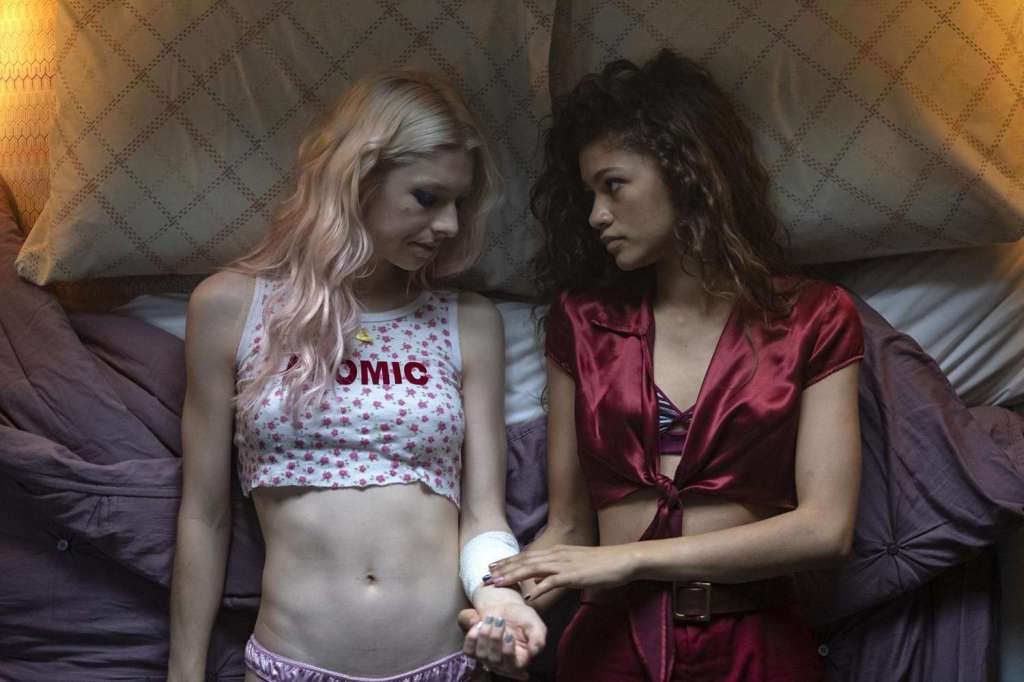
Shows like Euphoria have profoundly reshaped how gender and identity are portrayed on screen, thanks to the advent of digital streaming platforms like HBO Max. With Zendaya playing Rue, a teenage girl battling addiction, the show also introduced Jules, a character portrayed by trans actor Hunter Schafer. Importantly, Schafer also worked on the writing of Jules’s narrative, ensuring that the character resonate authentically with trans community. This collaboration marks a significant step forward in trans representation, as it integrates trans voices not just in front of the camera but also behind it.
Jules embodies a new era of trans visibility in television, as her character reflects the complexities of gender identity, exploring its fluidity in a way that feels deeply connected to today’s understanding of gender experiences. Euphoria doesn’t shy away from depicting the intricate intersections of gender, sexuality, and personal identity. It goes beyond representation to pose a larger question: what does it mean to truly see and accept someone for who they are?
Euphoria demonstrates the ways in which streaming platforms have carved out room for more rich and nuanced representations of gender. The show, which includes trans creatives and aesthetics of transification — the aesthetics of trans living — is television aesthetics transed.
As the spotlight of entertainment shifts to digital platforms these days, they carve out new spaces for trans voices and experiences to be represented in more authentic and progressive forms. This opening up to a more inclusive and nuanced view of gender makes you wonder — does a role need gender in order for an actor to portray it? In an increasingly fluid world, it remains to be seen if representation has a future that explains people away by neatly boxing them into one or another category, or one that revels in the messiness of gender and welcomes all performers, trans and cis alike, to explore roles that reflect the whole of humanity rather than a division.
Post By: Elizaveta Vorobyeva 33768066
Michael Goddard and Chris Hogg 2020, ‘Introduction: Trans TV Re-evaluated part II’, Trans TV Dossier 3, Critical Studies In Television 15: 3: https://journals.sagepub.com/toc/csta/15/3
 Digital Audiovisual Media Class Blog
Leave a comment