Mukbangs are videos where creators film themselves eating large quantities of food. Originating in South Korea in the late 2000s, the term “mukbang” combines “muk-ja” (to eat) and “bang-song” (broadcast). Initially popularised on live-streaming platforms like AfreecaTV, mukbang’s allowed broadcasters to engage viewers by sharing meals in real time. Today, the ‘mukbang’ concept has spread globally, with creators from all over the world adopting the format, using platforms like YouTube and TikTok to reach millions of viewers seeking entertainment, comfort, and connection. As audiences grow, Mukbangers tailor their content to algorithmic trends, seeking engagement through likes, comments, and sponsorships.
Mukbang’s are an example of ‘creator labour’, a concept coined by Stuart Cunningham and David Craig. Creator labour refers to the entrepreneurial, affective, and precarious work involved in producing content for digital platforms. Mukbang’s align with this concept as creators must cultivate a distinct personal brand, often centered around their eating habits, personality, and visual style.

A prime example of this is popular YouTube mukbanger Tzuyang, who boasts over 11 million subscribers. Viewers flock to her channel to watch a slim woman consume enormous portions of food—enough to feed an entire group. This contrast between her petite frame and the massive quantities she consumes is the shock factor that captivates audiences. The editing often highlights the reactions of shop owners in disbelief, furthering this shock tactic, while many viewer comments echo the same astonishment. This sense of awe and entertainment plays a central role in her appeal and success.
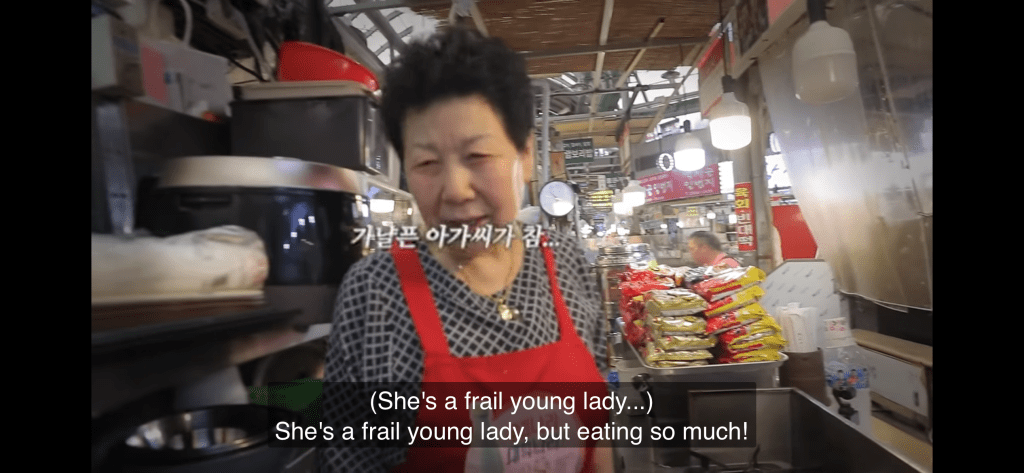
The affective labor of mukbangers fosters emotional connections with viewers, offering comfort and companionship. However, these relationships can also present dangers. As viewers become emotionally invested, they may begin to mimic the behaviour they see on screen, normalising excessive eating and binge consumption.
Mukbangs are not simply forms of entertainment; they reflect the complex interplay of digital, emotional, and financial labour. Creators navigate a precarious landscape, balancing their mental and physical well-being with the demands of content creation.
Radwa Osman – 33779472
References
Tzuyang Video in the Screenshots – https://www.youtube.com/watch?v=WkQrMzwqKv4&ab_channel=tzuyang%EC%AF%94%EC%96%91
Stuart Cunningham and David Craig (2019), ‘Creator Labor’, Social Media Entertainment: The New Intersection of Hollywood and Silicon Valley, 65-114
 Digital Audiovisual Media Class Blog
Leave a comment