Strong graphics, the sound of simple eating (ASMR), and viewers’ questions about the host’s ability to eat that much make mukbang videos on YouTube a particularly unique category that draws viewers from all over the world. We discovered that Mukbang videos on YouTube are not just about the creator’s eating experience, but also about the technology (such as camerawork, editing, etc.), the platform’s algorithms, and the method of creation when we applied Carol Vernallis’s concept of assemblages to the analysis. It also encompasses viewer interactions (likes, shares, comments, etc.), platform algorithms (recommendation systems), and technology (e.g., camera, editing, close-ups, etc.).
As I watched the majority of the food-eating videos, it became clear to me that they were all “repetitive” in various senses, both in terms of format and language, and that the only thing that needed to be changed in a food video was the requirement to eat a different type of food in each episode. As Vernallis points out, the most prevalent prosumer YouTube aesthetic is insistent reiteration (Vernallis, 2013). Eating videos often follow a fixed format: the creators show and eat large amounts of food, and the structure and presentation of the video are highly consistent. A high degree of immersion is produced by this pattern of repeating content, which gives viewers the ideal viewing experience.
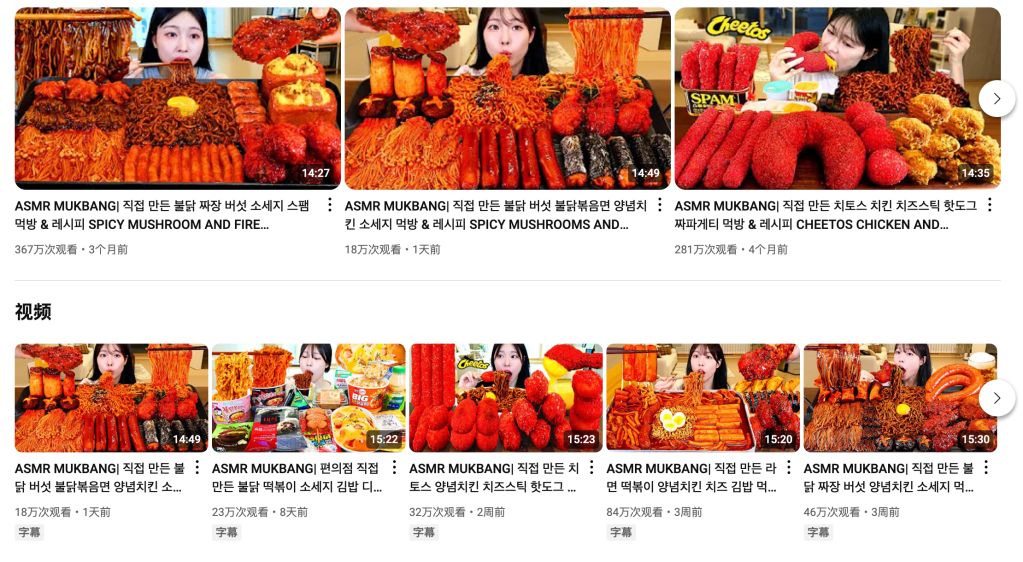
Additionally, YouTube’s recommendation algorithm reinforces this trend. The platform recommends similar content based on a user’s viewing history, resulting in a standardised and repetitive pattern of eating videos that tends to show up. A cycle of content consumption is created when users watch a video from a specific creator and are then shown more similar videos. The popularity of food videos also demonstrates how YouTube, a platform that prioritises community connection and individualised content consumption, can boost viewer engagement and content stickiness by using this “repetitive” strategy.
Overall, Mukbang videos reflect the nature of YouTube’s platform, which promotes a standardised and repetitive content aesthetic through content formatting, algorithmic recommendations, and viewer interaction. In addition to being consistent with the platform’s mathematical logic, this “persistent repetition” turns food broadcasting into a continuous, participatory cultural phenomenon.
Reference:
Vernallis, C. (2013) Unruly media YouTube, music video, and the new digital cinema. New York: Oxford University Press.
By Xinran Liu 33732297
 Digital Audiovisual Media Class Blog
Leave a comment