Defining Post-Cinema
In today’s media milieu, a post-cinema appears one of the extremely important concepts interrogating our perception of audio practices. As Denson and Leyda put it, post-cinema describes examining “how 21st-century media help shape and reflect new forms of sensibility” (Denson and Leyda, 2016). Into this definition, the notion flies beyond technological innovation into deep, dramatic shifts in interpreting and using media. The problem is further complicated in post-cinema because of other forms of media still around.
Apart from a simple notion of replacement due to evolving technology, post-cinema requires a finer and more sensitive analysis. As the authors put it, this means transcending the latter conception of “new media” and thinking, for example, about the relationship (rather than mere distinction) between older and newer media regimes” (Denson and Leyda, 2016). This very point aids in conceptualising the onset of communication as a kind of conversation rather than a linear changeover.
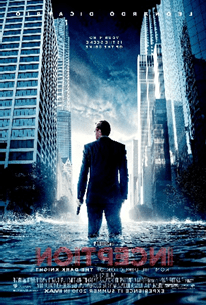
The reforming of adventure films reflects changes on technical and fundamental aesthetic considerations that inform visual perception. The way media are consumed has been really altered with new technological innovations by instantaneousness via cell phones and the social media stage. Visually challenged traditional cinematic codes of fragmented narratives, nonlinear stories, and visual language that constitute the pith of this. For example, Inception (2010), directed by Christopher Nolan, embodies this shift through its manipulation of time and space, where the boundaries between dreams and reality blur, creating a fragmented, nonlinear narrative. This film challenges traditional cinematic time, offering a multi-layered, fragmented experience that reflects the transformation in visual perception and storytelling that post-cinema represents.
Certainly, this programming represents not an insignificant, surface change, but, rather, a structural transformation in our very relationship with the media. Newly produced methods of seeing, feeling, and sensing events relate strongly to developing forms of art and art production. Post cinema, thus, opens a space to think about that complex relationship of technological production, aesthetic practice, and cultural perception.
Denson, S and Leyda, J (Eds.). (2016). Post-Cinema: Theorising 21st Century. Sussex Academic Press.
Oliver Frieze
33776336.
 Digital Audiovisual Media Class Blog
Leave a comment