‘Post-continuity’ explores the evolving landscapes of cinema in the 21st century, arguing that contemporary film has moved away from traditional narrative structures and continuity editing and is embracing a more fragmented and nonlinear approach (Shaviro,2011). New movies challenge the viewer’s sense of reality, giving us an emotional ‘fragmented’ experience, breaking or redefining traditional narratives and editing rules. The movie Lucy follows the story of a woman who is exposed to an experimental drug and with her life in the balance experiences the secrets of the universe.
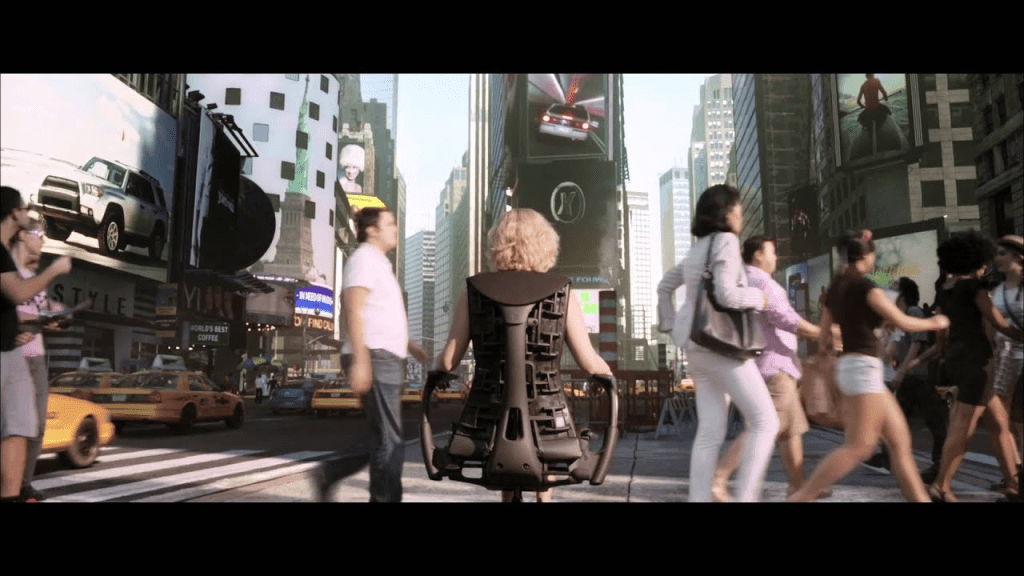

(both from Lucy, 2016)
We experience different visual information and emotional impact as she is going through history, it forrms a sensory stimulation of a ‘chaotic movie’ where every scene seems like the climax, which is very different from past productions which would slowly build up. Lucy uses CGI and cutting-edge editing to create an immersive universe. Audience engagement has changed, where digital effects and action-packed scenes have become the new norm, and this change reflects the cultural and technological changes including the influence of digital media and the internet.
However, with the advancement in technology and editing techniques, there has been a change in the appreciation of film where it is no longer viewed as art, instead, it is argued it is a funfair where people are just waiting to try the next big thing. For example, many people only watched the ‘Little Mermaid’ live-action to judge the quality of a £270.5 million CGI budget.
The Little Mermaid created a more sensory experience where the sound of this film is intended to stir emotions in the viewer, where they go hand in hand to create something new. Reflected in the CGI detailing and the unexpected choice of casting a black actor
Therefore exploring the changing landscapes and the new technological expectations.
by 33749110 – bally
Steven Shaviro, ‘Post-Continuity: An introduction’, Post-Cinema: Theorising 21st Century Film, 51-64
 Digital Audiovisual Media Class Blog
Leave a comment