The television industry has changed significantly in the past few years, mostly due to technological and aesthetic developments. Contrary to this, the idea of Trans TV became an important way to understand these complex shifts. Through the publications of Critical Studies in Television (2018-2020), Trans TV was introduced as a thorough method to study modern television.
Trans TV not only links the technical and industrial changes to shifts in televisual content, but it specifically targets being related to the streaming arena. The main attraction of this concept is concentrating on the way that transgender, non-binary, and queer people are portrayed in some of the most popular TV series. As Goddard and Hogg (2018) put it, “Trans TV operates as an intervention into these multiple contemporary transformations of television, arguing that they need to be thought together, and especially that discussions of technological transformations of industry cannot be thought separately from aesthetic transformations both of televisual programmes and the televisual experiences of audiences.”
A noteworthy milestone in the evolution of Trans TV occurred in 2015 with the character of Sally St Claire in the British soap Hollyoaks. Played by Annie Wallace, Sally became the first regular transgender character in a British soap. Wallace, who is also a transgender woman, made history with her portrayal, highlighting the importance of transgender representation in mainstream media. Her character’s storyline tackled significant issues, including identity, acceptance, and the challenges of transitioning, making it a pivotal moment for the visibility of trans people in soap operas.
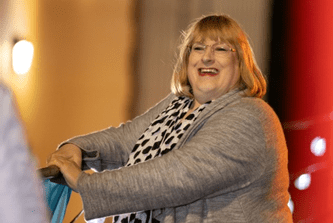
Trans TV characters that have pushed boundaries in the UK
Most importantly, it is not a claim that internet-streamed television is universally progressive. On the contrary, it embraces the scope for more varied representation in new television forms. As was pointed out by the authors, these channels “at least allow for a potentially more queer manifestation of television” (Goddard and Hogg, 2018). This viewpoint is one with Koch-Rein et al.’s discussion of programs such as Transparent and Pose, which insinuate the stylistic and structural transing of the television medium itself.
Goddard, M. & Hogg, T. (2018). Trans TV. Critical Studies in Television.
33776336
Oliver Frieze
 Digital Audiovisual Media Class Blog
Leave a comment