The Substance by Coralie Fargeat is a graphic examination of bodily horror that explores society’s compulsive obsession with youth and beauty, releasing these fears in a graphic, over-the-top story. The movie questions patriarchal beauty standards and their severe psychological effects, with Demi Moore and Margaret Qualley in the forefront. The Substance, which had its Cannes premiere, additionally demonstrates a distinctly post-cinematic style in which affect-driven visual and audio and sensory excess replaces narrative coherence, connecting it to current discussions of post-continuity and the neuro-image.

The main plot of The Substance revolves around Elizabeth , an ageing celebrity who is trying to regain her youth, and Sue, a younger rising star. The narrative turns into an ugly horror as Elizabeth experiments with an unknown substance that claims to be able to reverse ageing. The body turns becomes a place of change, obsession, and ultimately devastation—a real battlefield for societal expectations related to beauty and ageing. By means of highly exaggerated imagery, Fargeat creates a setting in which the grotesque reflects the unachievable standards enforced by beauty culture.
The film’s critique and aesthetics are interconnected. The Substance revels in excess, from the flashy display of Sue’s dance routines (played to the thumping sound of Danzel’s Pump It Up) to the sickening, up-close views of Elizabeth’s collapsing body.
Steven Shaviro’s work on post-continuity filmmaking explains how modern films no longer rely heavily on traditional storytelling methods, like a clear and linear plot, to engage audiences. Instead, they focus on creating intense emotional experiences through fragmented visuals, unpredictable editing, and a mix of styles. This reflects our modern, multimedia world where information is scattered and fast-paced. In post-continuity films, the story isn’t completely abandoned, but it’s presented in ways that feel disconnected or non-linear. For example, rules about time and space, which were strictly followed in classical films, are now used only when convenient. Modern films combine flashy graphics, video game-like effects, or wildly different types of footage to engage viewers in fresh, chaotic ways that reflect how we consume media today.
In The Substance, Coralie Fargeat uses a post-continuity style to immerse viewers in Elizabeth’s distorted, obsessive world. Instead of relying on a cohesive plot, the film emphasizes feelings of discomfort and chaos through fragmented editing, exaggerated colors, and disturbing close-ups. This aesthetics creates a mood of unease, reflecting the main character’s psychological breakdown. Like in Shaviro’s examples, The Substance doesn’t ignore storytelling but shifts the focus to intense visuals and sounds to make a statement about society’s obsession with beauty and youth. The result is a film that feels both disorienting and deeply relevant to the fragmented media culture we live in today.

Bruce Bennett’s (2015) analysis of Michael Bay’s cinema highlights how his films are defined by “cinematic excess”—over-the-top visuals, dramatic effects, and stylistic exaggerations that are so extreme they’ve become a recognizable signature, often parodied. For Bennett, this excessive style reflects broader cultural themes, such as overconsumerism and excessive power.
Like Michael Bay’s work, The Substance uses cinematic excess to underline its themes. Coralie Fargeat fills the film with vivid, exaggerated visuals and grotesque imagery to explore society’s obsession with beauty and perfection. The film’s graphic body horror, bright colors, and unsettling sounds overwhelm the viewer, much like Bay’s excessive action sequences. However, this isn’t just for shock value—it’s a deliberate way to reflect the characters’ unhealthy fixation on youth and body image.
For example, the gurgling, tearing, and squelching “body sounds” that accompany Elizabeth’s transformation scenes are increased, forcing the audience to face the physical horror of her pursuit of perfection.
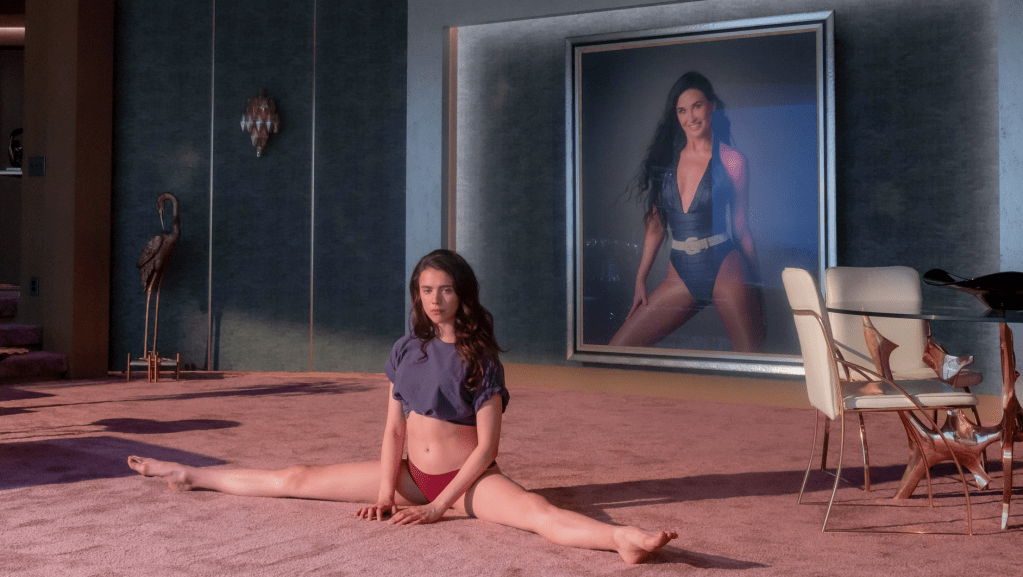
The Substance, a post-continuity film, rejects the conventional limitations of linear storytelling in favour of crafting an emotionally charged, engrossing experience. The editing alternates between hectic, bizarre montages that depict Elizabeth’s worsening mental state and slow, thoughtful scenes, such her moments of self-loathing in front of a mirror.
The visual language of the movie also lacks conventional coherence. Benjamin Kracun, the cinematographer of Promising Young Woman, alternates intrusive close-ups that practically fetishise Elizabeth’s wrinkles and sagging skin with static wide shots that highlight her loneliness. The end effect is a visual dialectic that reflects Elizabeth’s own mixed emotions towards her ageing body by evoking both empathy and disgust at the same time.
Post By: Elizaveta Vorobyeva 33768066
Steven Shaviro, ‘Post-Continuity: An introduction’, Post-Cinema: Theorising 21st Century Film, 51-64
Bennett, Bruce, ‘The Cinema of Michael Bay: An Aesthetic of Excess’, Senses of Cinema, 75 (2015) http://sensesofcinema.com/2015/michael-bay-dossier/cinema- of-michael-bay-2/
 Digital Audiovisual Media Class Blog
Leave a comment