Historically, Indian Television in the late 90s and 2000s was dominated by soap operas that reinforced the patriarchal and conservative narratives to the average Indian household. Shows like Kyunki Saas Bhi Kabhi Bahu Thhi (which roughly translates to “Because the mother-in-law was once the daughter-in-law”) and Kahaani Ghar Ghar Ki (“The story of every household”) focused on the traditional Indian household with the sacrificial wife being “othered” by the mother-in-law. Additionally, many other shows during this time often perpetuated a binary and heteronormative outlook towards the Indian society. The advent of streaming platforms has, however, led to a certain “transing” of television in India, which mirrors the western reconfigurations that have been discussed by scholars like Goddard & Hogg (2020) and Koch-Rein et al (2020).
The “transing” not only reflects the inclusion of trans characters in mainstream television but also includes changes in aesthetic, narrative and representational practices. Shows such Taali (2023) starring Sushmita Sen as a trans activist marks a major shift in this discourse. The show moves beyond the stereotypical portrayals of the Hijra community in India and has a layered focus on their life and agency in a rather conservative society. Situating the intersections of historicity and desire and that of personal with political based on Villarejo’s (2014) arguments, the show discuss themes of gender affirmation and systemic discrimination which would otherwise be censored in traditional Indian media formats.
The change mentioned above is also evident in the show Made in Heaven (2019-) which includes discussions on gender, class, identity among other issues in a plot revolving around wedding organisers. Unlike earlier depictions of queer characters in mainstream media, this show centres its queer narrative within broader challenges of privilege and societal expectations in India. The character of Meher, a trans woman, explores the contradictions and problems within the Indian society.
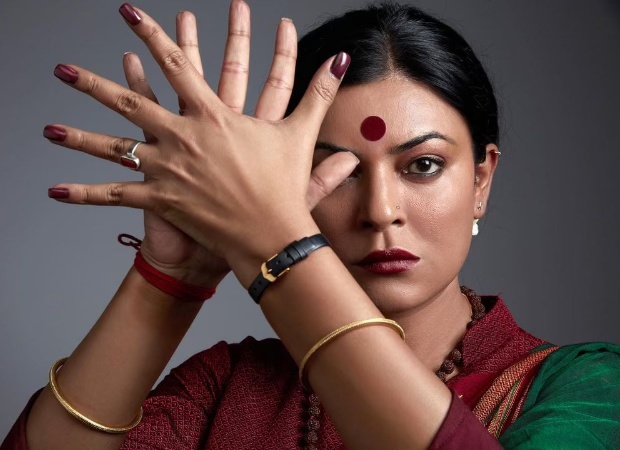

However as Villarejo (2014) critiques in her analysis of Transparent, there is always a risk involved in siloing trans narratives which might lead to a hierarchy in terms of broader queer discourses or intersections. Made in Heaven, for example, explores Meher’s story in a more tangential manner while focusing more on the straight, rich, cis-gender protagonist. Even Taali, as necessary as it is in the space of mainstream media, does not engage with the broader queer community of India and mostly revolves around the protagonist’s life (played by a cis-gendered woman). The issue of commodifying these narratives along with Koch-Rein et al’s (2020) perspective on “trans our ways of looking” highlights how representation in itself is not adequate. The representation of trans and queer characters in Indian mainstream television is a long overdue change but the potential for a more intersectional and nuanced approach, or adopting a “queer gaze” could pave the way for more stories to resonate deeply within the complex and diverse queer communities in India. This could lead to a more inclusive and transformative media in the context of Indian Television.
Reference List:
Goddard, M., & Hogg, C. (2020). Introduction: Trans TV re-evaluated part II. Trans TV Dossier, 3. Critical Studies in Television, 15(3). https://journals.sagepub.com/toc/csta/15/3
Koch-Rein, A., Yekani, E. H., & Verlindern, J. (2020). Representing trans: Visibility and its discontents. European Journal of English Studies, 24(1). https://www.tandfonline.com/doi/full/10.1080/13825577.2020.1730040
Villarejo, A. (2016). Jewish, queer-ish, trans, and completely revolutionary: Jill Soloway’s Transparent and the new television. Film Quarterly, 69(4). https://filmquarterly.org/2016/06/15/jewish-queer-ish-trans-and-completely-revolutionary-jill-soloways-transparent-and-the-new-television/
Paarth Pande, 33811391
 Digital Audiovisual Media Class Blog
Leave a comment