Internet-distributed television has brought queer diversity, and some people claim that this is over represented, when in fact it is just what society needs.
The rise of queer identities in media reflects society’s evolution on queer rights and the shift of TV to streaming platforms. Critics say LGBTQ+ content on TV is excessive, calling it “forced representation” and asserting it is neither natural nor necessary, and even harmful. Here a YouTube video:
This reaction is often driven by homophobia, transphobia or simply unfamiliarity, because, like Amy Villarejo explains, queer characters have been historically excluded from television, and the little representation has been negative or stereotypical. To this argument it could be answered that yes; it can feel forced representation at first, but eventually it becomes normalized. In the beginning it has to be forced, until one day it is not a big deal.
Nevertheless, one might also argue that forced representation is actually having a whole film where everyone is cisgender and heterosexual. Including queer people reflects society, LGBTQ+ people have always existed, and lately more people are freely identifying as queer. Consequently, the media portrays that. Furthermore, it is not as if other representations would be diminished by including queer individuals.
A recent example is Heartstopper, the coming-of-age TV series that revolves around friendship, mental health, love, identity and self-discovery, with extended queer representation. Critics claim that the series has too many LGBTQ+ people, making it feel fake. It is likely that their views are influenced by a lack of exposure to queer communities. Queer people tend to gather for various reasons, one of which could be the oppression they face as they have no other option but to create their own safe place.
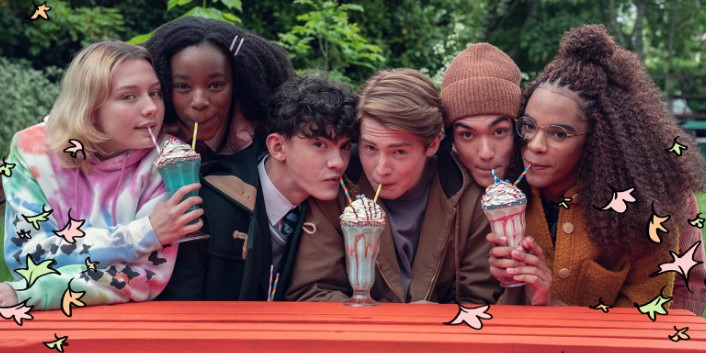
The media should reflect society as it is: plural and diverse. What seems forced is often due to unfamiliarity. Moreover, forcing queer representation is part of a process that leads to greater acceptance.
By Elisabeth Zubiaguirre 33871955
Bibliography
‘Crossing the Borders of Queer TV: Depictions of migration and (Im)mobility in contemporary LGBTQ television’ (2019) Trans TV Dossier, 15(3). Introduction: Trans TV as concept and intervention into contemporary television – Michael N Goddard, Christopher Hogg, 2018
Ethereal Queer: television, historicity, desire (2014). Duke University Press. Ethereal Queer: Television, Historicity, Desire on JSTOR
‘Heartstopper’ (2022). See-Saw Films.
‘Introduction: Trans TV as concept and Intervention into Contemporary television’ (2017) Critical Studies in Television, 13(4). Introduction: Trans TV as concept and intervention into contemporary television – Michael N Goddard, Christopher Hogg, 2018
‘Jewish, queerish, trans and completely revolutionary: Jill Soloway’s Transparent and the New Television’ (2015) Film Quarterly, 69(4). Jewish, Queer-ish, Trans, and Completely Revolutionary: Jill Soloway’s Transparent and the New Television | Film Quarterly
‘Sense8: Transcending Television’ (no date) in Sense8: Transcending Television. Bloomsbury. Sense8: Transcending Television: Deborah Shaw: Bloomsbury Academic
 Digital Audiovisual Media Class Blog
Leave a comment