
The “360” music video by Charli XCX offers a powerful feminist critique on what it means to be a “it girl” in the digital era, not only a visual feast. Full of cultural heavyweights including Chloë Sevigny, Julia Fox, and Emma Chamberlain, the film questions conventional ideas of feminism, stardom, and impact. The film honours women’s autonomy in creating their own stories by highlighting a wide spectrum of internet-savvy “it girls,” therefore subverting the mythos of being “hot in a way that’s scary, unknowable, and empowering.”
Originally defined in Elinor Glyn’s 1920s book the first “It Girl” used to reflect an intangible magnetism — “a certain quality of an individual personality” — marked by glamour, charm, and sexual appeal. Often connected to Hollywood’s well chosen ideals such as Monroe or Taylor of charm and perfection, which focused on material culture, luxury, and idealised lifestyles, this mystique was related to (Robbins, 2009).
In contrast, “360” presents the “It Girl’s fluid and democratised identity formed by modern media dynamics, therefore dissolving its traditional exclusivity and mysticism. Charli XCX suggests that anyone—from a waitress, to a food blogger or a former pornographic actress (ex: Chloe Cherry – another cast member of the 360 video) — can represent “It,” therefore substituting a more inclusive portrayal for the previous definitions of glamour and charm. This change calls into doubt the concept of the “It Girl” as an untouchable idol and replaces her as a mirror of changing digital and cultural trends.

The 360 video begins with a dinner party where iconic ‘it girls’ of nowadays including Julia Fox and more recent niche influencers like food blogger Gabbriette gather. On the table is a topic: finding the next “hot internet girl.” The stakes are clear for everyone: failure to adapt means being forgotten in a society that celebrates constant change.
This light-hearted but sharp setup reflects the unwritten laws of the contemporary media environment. As long as she’s ready to reflect the illusive, trend-defining “je ne sais quoi” (a quality that cannot be described easily, charm) the “it girl” is no more a fixed archetype; she may be anyone—from a high-fashion model to a viral food blogger. As the group ends up picking their waitress as the new ‘it girl’, the video suggests this fluidity and the universal potential for anyone to become the new “It”.
The variety of the cast in age, background, and style questions the conventional view of womanhood fostered by mainstream media. While TikTok and Twitter (X) star Blizzy Mcguire marks the emergence of underground digital fame, long-time cool icon Chloë Sevigny symbolises timelessness in a space too frequently preoccupied with youth. This mix of both established and emerging stars emphasises a democratisation of influence—today’s “it girl” can come from anywhere.
The work of stylist Chris Horan in the clip tells volumes about the ability of fashion to be a tool for self-expression. The outfits feature elegant moto gear that radiates dark femininity combined with grungy leather jackets and Y2K-inspired baby tees. This devil-may-care approach not only specifies the visual look but also represents a rejection to follow conventional gender roles or society expectations.
This fierce and strong vibe dominates the video, where styling highlights strength and uniqueness over subdued beauty. The clothing and accessories serve as armour, enabling women to dominate — and control the public gaze on their own terms.
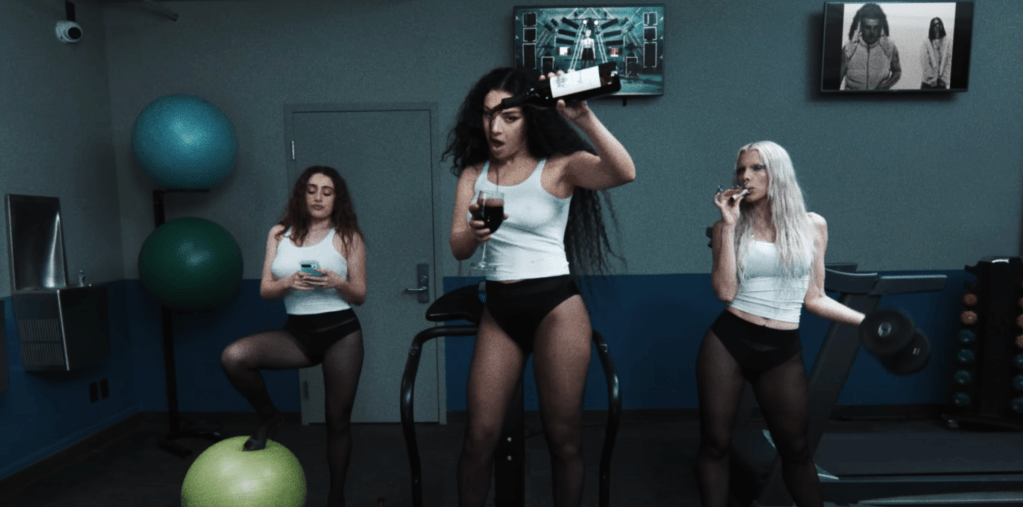
The video humorously critiques stereotypical female images imposed by society and the media. With irony, it presents the scenes of women drinking wine while working out, taking endless selfies, or getting into a car accident while applying lipstick behind the wheel.
The ridiculousness and humour in the clip also challenge the whole concept of a “it girl” concept. It raises the issue of why women should be expected to be “perfectly imperfect” for public view while honouring their means of reclaiming this gaze to define their own identities.
More than only a music video, “360” is a feminist manifesto reclaiming the idea of the “it girl” as a symbol of empowerment rather than objectification. By means of humour, style, and subversion of stereotypes, Charli XCX and her group of ‘It Girls’ question conventional ideas regarding what it constitutes to be beautiful, desirable, and influential.
Post By: Elizaveta Vorobyeva 33768066
Bibliography:
Robbins, K., 2009. Theorizing it: Paris Hilton, the celebutante, and the It Girl lifestyle.
 Digital Audiovisual Media Class Blog
Leave a comment