RuPaul’s Drag Race has become a cultural phenomenon, celebrating drag queens as artists who blur the lines of gender, performance, and identity. Yet, the show often reinforces narrow definitions of femininity, revealing a paradox within its celebration of gender diversity. As Horvat (2020) notes, media representations of queerness often navigate a complex interplay of visibility and conformity, reflecting broader societal expectations rather than subverting them entirely.
A pivotal moment in the show’s first season highlights this tension. Ongina, a contestant who challenged traditional drag aesthetics, performed without wigs, padding, or tucking, in contrast to the hyper-feminised standards of the competition. However, judges criticised her for looking like a “boy in a dress.” In response, Ongina remarked, “I’m gonna have to put my balls behind my freakin’ body today,” signalling her reluctant conformity to meet the show’s rigid expectations. She emphasised her desire to be seen as a “drag queen in a dress” rather than a “boy in a dress,” underscoring the unspoken rule that a successful drag queen must appear “passable” as a woman.
This moment exposes how drag culture, particularly as framed by Drag Race, often perpetuates traditional gender norms. RuPaul himself has stated that hiding one’s male features is central to queenhood, reinforcing a standard that aligns femininity with visual illusion. Such standards echo broader critiques of drag as a parody of womanhood. Scholars like Laurie (1983) have argued that men who wear women’s clothing can objectify and exaggerate femininity, reducing it to hyper-sexualised tropes that mirror the male gaze.
RuPaul’s commentary in his book *Workin’ It!* (2010) further underscores this critique, as he advises on achieving an “ideal” female body through techniques like corsetry and contouring to “biologically hypnotise men.” This framing ties femininity to attractiveness and desirability, perpetuating stereotypes that equate a woman’s worth with her ability to conform to societal beauty norms.
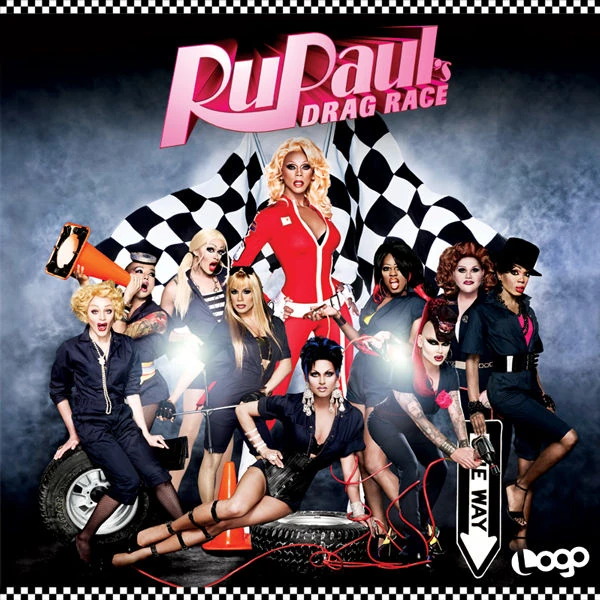
While drag is undeniably an art form that challenges binaries, the culture promoted by RuPaul’s Drag Race risks reinforcing toxic femininity. Ongina’s experience serves as a reminder of the complexities of gender performance, revealing how larger cultural forces shape what society deems “natural” or “normal” for women and drag queens. As Horvat (2020) argues, such representations can expose, but also inadvertently reinforce, restrictive social narratives surrounding gender and identity.
References:
Horvat, A. (2020) ‘Crossing the Borders of Queer TV: Depictions of migration and (im)mobility in contemporary LGBTQ television’, Trans TV Dossier 3, Critical Studies in Television, 15(3).
Laurie, A. (1983) The Language of Clothes. New York: Random House.
RuPaul (2010) Workin’ It!. Harper Collins.
Sze Chan 33742461
 Digital Audiovisual Media Class Blog
Leave a comment