Sofia Coppola, the only daughter of prolific film director Francis Ford Coppola, made her debut in the world of cinema via her appearance in The Godfather Part III. The tremendous backlash that both father and daughter received after the film’s release, evidenced the public’s disdain for unearned notoriety and nepotism, however, Sofia Coppola has persisted and made a transformative name for herself through her directorial pursuits. Coppola’s films are celebrated for capturing the essence of “girlhood” – a concept that had previously not been granted a sense of such seriousness in mainstream cinema – through her aestheticised lens, presently popularised by users on platforms such as Tumblr, Pinterest and more recently, TikTok, who create boards and ‘edits’ of films such as The Virgin Suicides (1999), Marie Antoinette (2006) and Priscilla (2023) which was released on the curated online-platform, Mubi, which specialises in “quality” cinema.
The dreamlike visuals and arrangement of Coppola’s films aid in channelling the perspective of young (particularly teenage) girls, which, in turn, attracts an audience consisting largely of that same demographic.
Although the idea of sharing and subjectively recontextualising film may initially seem like a celebration and harmless extension of the enjoyment of cinema, the extent and subsequent consequences of this particular phenomenon do more harm than good.
The infamous blog website, Tumblr, is notorious for its space being utilised to take advantage of younger users, the lack of moderation of the site has made it easy for individuals to post content promoting self-harm, drug use and disordered eating, among many more destructive habits. Images and clips from Coppola’s films are synonymous with these kinds of niche posts, her movies include themes of isolation, youth and lack of identity and possess a melancholia both visually and sensationally, and those with malleable minds have latched onto the imagery of these films, without considering the actual meaning or lessons that Coppola is attempting to convey.
By expropriating the imagery from these films and placing them in the context of hopelessness and negativity, individuals desecrate the once heartfelt intentions and conveyance of the artist. They strip the media of any substance or depth and completely reconceptualise images, dialogue and tone, producing online artefacts which become harmful and negatively influential to young, exposed users.
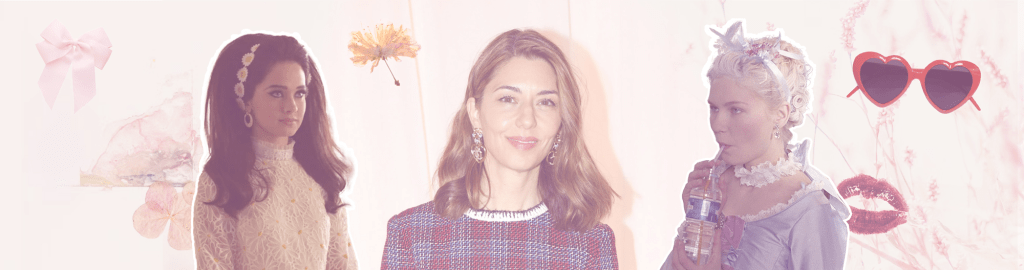
TikTok, @janinerayas3 available at: https://www.tiktok.com/@janinerayas3/video/7418705316591717675
Goddard, M. Hogg, C. (2018) ‘Introduction: Trans TV as concept and intervention into contemporary television’, Critical Studies in Television 13:4: https://journals.sagepub.com/doi/full/10.1177/1749602018798217
Kristeva, J. (2010) ‘Art, Love Melancholy, Philosophy, Semiotics and Psychoanalysis (European Writers)’
Sari Fleming-Standen 33652248
 Digital Audiovisual Media Class Blog
Leave a comment