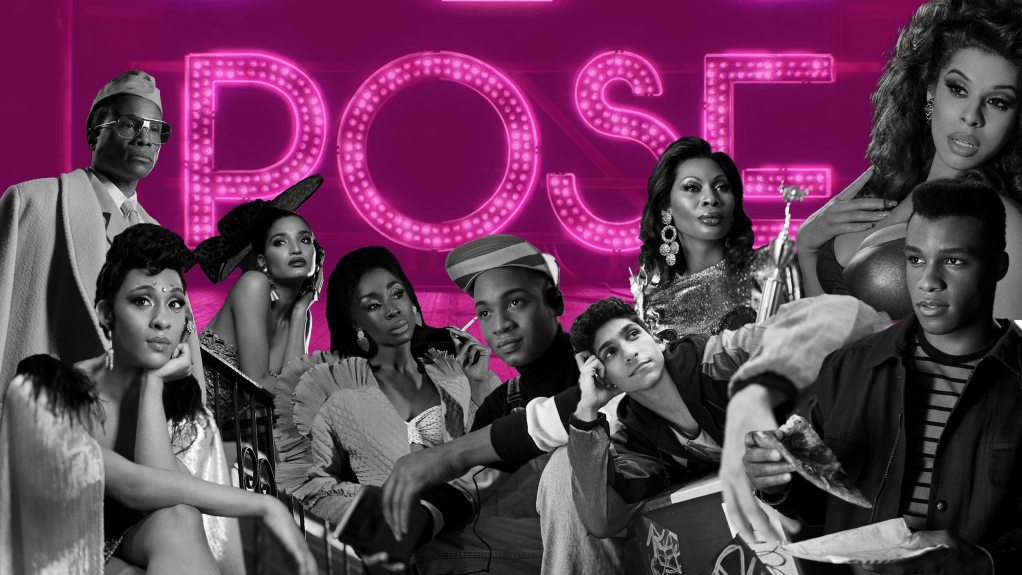
Pose was the first mainstream television series to place the transgender community and Black and Latino LGBTQ+ characters at the center of its narrative. By focusing on ballroom culture, the series portrays the lives of marginalized communities in 1980s New York, depicting trans and queer individuals as complex, three-dimensional characters. It fills gaps in the historical narrative of the AIDS crisis and the LGBTQ+ community, particularly highlighting the role of the trans community in this history.
With a predominantly trans cast (e.g., Mj Rodriguez, Indya Moore), the series emphasizes the importance of “telling your own story by yourself.” This narrative not only increases visibility for the trans community but also creates new spaces for identity formation and self-expression.
New digital platforms (e.g., Netflix, HBO) break down the limitations of traditional television networks, offering more space for trans and minority narratives. Through the internet, shows like Pose can be distributed globally, reaching culturally diverse audiences. These platforms make content related to gender and gender identity more accessible to interested viewers through accurate recommendations. Additionally, new platforms promote interactivity: viewers are no longer merely passive consumers but active participants in discussions and re-creations via social media and online communities. Fans and communities can share their interpretations and imitations of characters and stories, influencing mainstream culture in the process. “Netflix’s seemingly accurate capturing (and captivation) of fan taste is left feeling somehow uncannily simulated or derived. The form of multi-discursive fandom […]is hence one where distinctively data-driven fandom meets embodied fan reflexivity – where fan and follower collide in an over-determined moment of industrial co-option, individualised personalisation, and lived fan (communal) experience” (Hills, 2018)
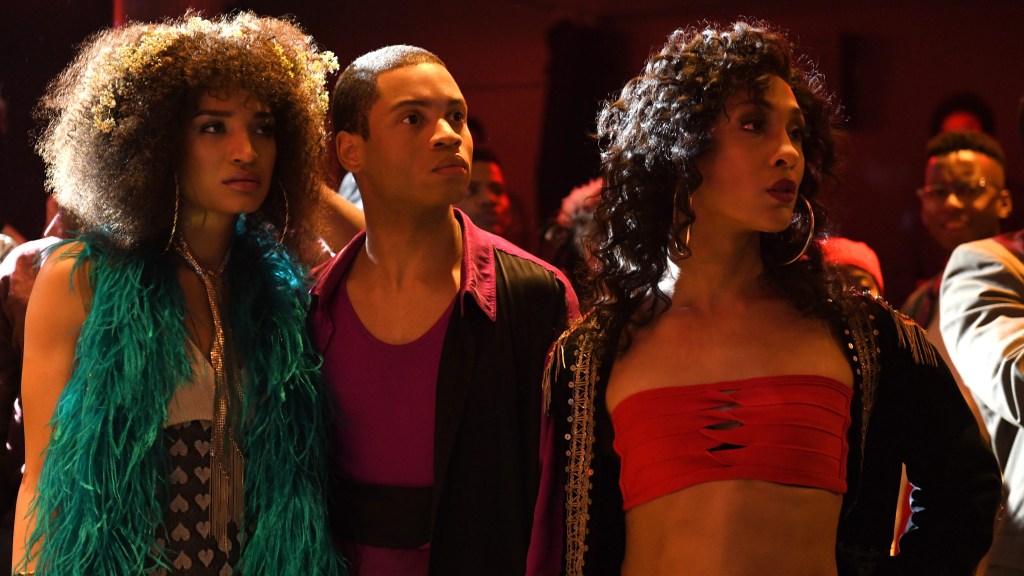
New platforms also encourage aesthetic innovation, supporting diverse narratives that enable richer gender expressions and aesthetic practices. Unlike traditional TV dramas, which often “downplay the characteristics of minorities,” Pose authentically portrays the emotions and daily lives of marginalized communities, challenging audiences’ conventional understandings of gender and sexual identity. Through these platforms, Pose helps to make trans individuals less invisible or marginalized, positioning them as active participants in mainstream narratives.
However, algorithms and traffic-driven priorities may favor the promotion of “packaged minority narratives” that cater to mainstream aesthetics over fully authentic stories. Transgender culture, in its increasing proximity to popular culture, risks being assimilated or commodified.
Bibliography
Hills, M 2018, ‘Netflix, transfandom and ‘trans TV’: Where data-driven fandom meets fan reflexivity’, Critical Studies in Television, vol. 13, no. 4, pp. 495-498. https://doi.org/10.1177/1749602018797738
33774355 HANCHU PAN
 Digital Audiovisual Media Class Blog
Leave a comment