Digital platforms, such as Netflix and Amazon, have changed the very nature of television by altering the models of production and distribution that had been dominant for decades, and finding new ways to reach the niche audience. Goddard and Hogg (2018) believe that with this ‘internet-distributed’ and ‘platform’ television, some of the most basic ideas of the concept of TV, such as ‘channels,’ ‘audiences,’ and ‘schedules,’ are rendered meaningless or obsolete. For example, the shift from linear programming to user-demand content has also enabled binge-watching and mobile watching, challenging how TV fits within lives. Critically, these industrial and technological changes cannot be taken independently of aesthetic and representational changes in programming (Goddard and Hogg, 2020). Series such as Transparent (2014), Sense8 (2015–2018), and Pose (2018) demonstrate this ‘transing’ of television where queer, trans, and ethnically diverse characters are integrated into the storytelling. From the perspective of Goddard and Hogg (2018), these productions resist heteronormative storytelling to create this ‘divergent heterotopia’ where traditional televisual structures are challenged to be able to have more representative content.
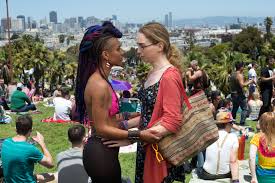
A scene from Sense8
The show Transparent (2014) is significant in bringing together transgender narratives into mainstream media. Centering trans voices, on-screen and behind the scenes, is essential for authentic storytelling. From the perspective of representation, the authors underline a critical tension in the development of Transparent it stood as a landmark moment in the integration of a transgender protagonist but also had some flaws. Casting a cisgender male actor, Jeffrey Tambor, as Maura, the transgender lead shows the ‘proto phase’ of diversity in media. The authors critique the lack of transgender representation in the writers’ room and the supporting roles assigned to transgender performers which reinforce the existing marginalization. These events emphasize the loopholes of surface-level inclusion that fail to adequately engage with the communities it seeks to represent.

Transparent TV series
References
Goddard, E., Hogg, C. (2020) ‘Introduction: Trans TV dossier, III: Trans TV re-evaluated, part 2,’ Critical Studies in Television the International Journal of Television Studies, 15 (3), pp. 255–266. Doi: 10.1177/1749602020937566.
Goddard, M.N., Hogg, C. (2018) ‘Introduction: Trans TV as concept and intervention into contemporary television,’ Critical Studies in Television the International Journal of Television Studies, 13 (4), pp. 470–474. Doi: 10.1177/1749602018798217.
By Xindi Zhao
33734821
 Digital Audiovisual Media Class Blog
Leave a comment