Earlier experimental cinema shows that filmmakers might have thought of the apparatus and the components of its fixed perceived machinery as open, dynamic and interactive. Experimental film is often self-reflexive because it actively goes against narrative and conventional form, and therefore does what Polan says in ‘Brecht and the politics of self-reflexive cinema’, “making strange its own formal devices” and is inherently deconstructive to meaning rather than productive as it disrupts sense of time, which reflects how we would perceive and live through digital media today.
An example of this would be Jean Cocteau’s Blood of a Poet, which is 1932 early avant-garde work which despite containing narration, is closer to poetry and turns visuals into an account of his creative process and self-reflection. Cocteau built his own visions of what faces, forms, gestures, places looked like in order to reflect on and build on these processes simultaneously. The artist and main character does not have a future or past, he is simply in process of being and becoming an artist, and with Cocteau’s use of mirrors and jump cuts for example which removes any possibility of deciphering context, produces the spectator in process of becoming as well.
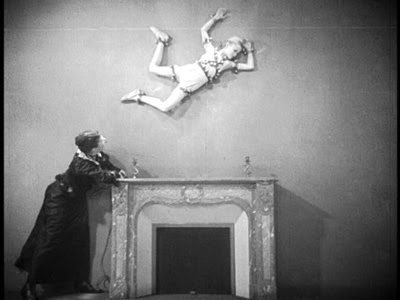
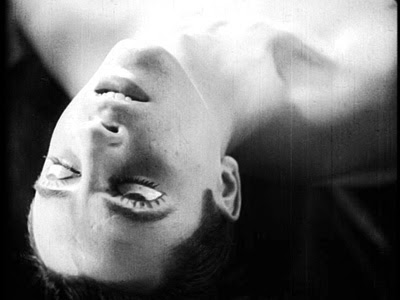
Stills from Blood of a Poet (1932, Jean Cocteau)
In 2006 with Inland Empire, David Lynch reflected on the complete turnover of filmic paradigms which come from digital media technology, the assemblage which its made up of not only in its nonlinearity but also in its self reflexivity, in the way it illustrates acting and performance in a given context. In the book David Lynch Swerves by Martha P Nochimson in fact describes Lynch’s digital techniques in the film with “through its slippery use of time, Inland Empire offers the possibility of a specific experience– a simulacrum of the experience David Lynch undergoes as a creator”.
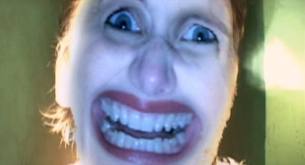
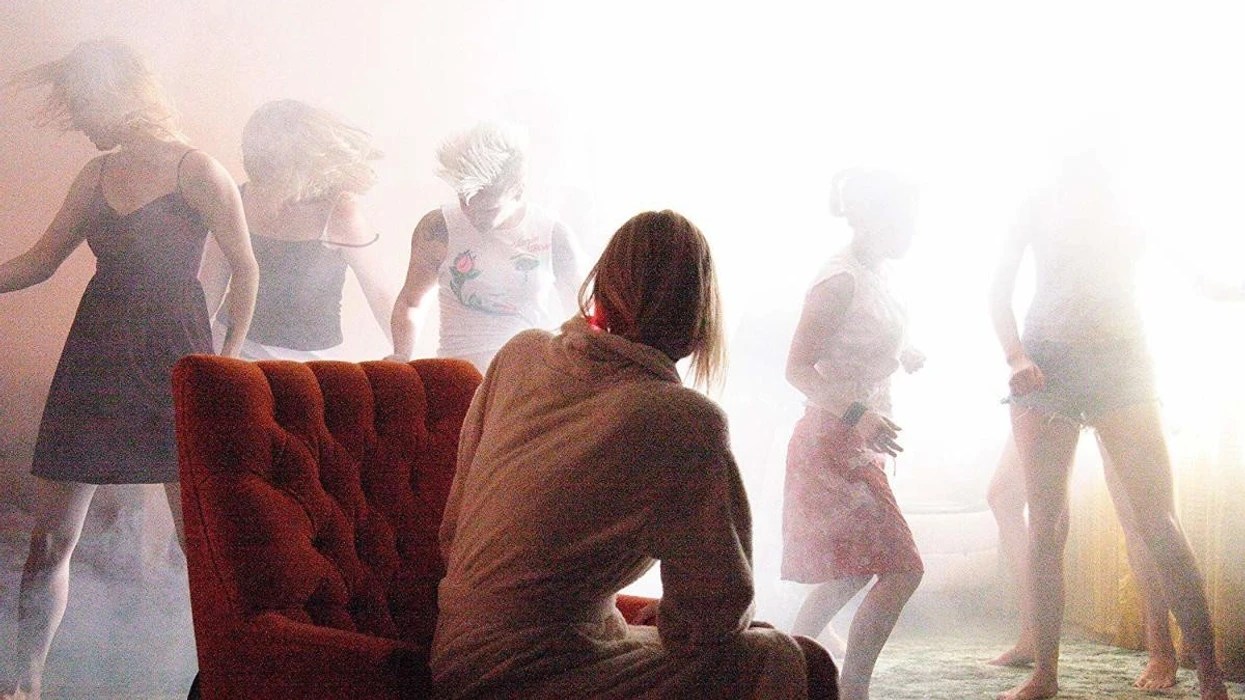
Stills from Inland Empire (2006, David Lynch)
These two films and modes of production are bringing attention to themselves, whether through experimental forms as Jean Cocteau does or simply confronting new digital media technology in the purest form in the case of Lynch, which all reflect the way its important to look at the machinery of filmmaking not as bigger than the spectator, as separate or taking over you but as something which confronts you and that you are confronting simultaneously. They all posit the idea of cinema and its configurations not as a noun and rather as a verb, which is what Deleuze often did with his concepts of assemblage and becoming as well:
“A body is not defined by the form that determines it nor as a determinate substance or subject nor by the organs it possesses or the functions it fulfills. On the plane of consistency, a body is defined only by a longitude and a latitude: in other words the sum total of the material elements belonging to it under given relations of movement and rest, speed and slowness (longitude); the sum total of the intensive affects it is capable of at a given power or degree of potential (latitude).” (A Thousand Plateaus, pg. 260)
Paraskeva, Anthony. “Digital modernism and the unfinished performance in David Lynch’s Inland Empire.” Film Criticism, vol. 37, no. 1, fall 2012, pp. 2+. Gale Literature Resource Center, link.gale.com/apps/doc/A319975370/LitRC?u=anon~9cc3a1b3&sid=googleScholar&xid=ce468f9c.
Dessem, Matthew. “#67: The Blood of a Poet.” Blogspot.com, 29 Nov. 2024, criterioncollection.blogspot.com/2007/03/67-blood-of-poet.html.
Cami Sarram 33737747
 Digital Audiovisual Media Class Blog
Leave a comment