The digital age has sparked a fundamental shift in the aesthetics and narratives of television, particularly in the representation of gender identities. Streaming platforms like Netflix have not only transformed how television is consumed, but they have also created new opportunities to challenge traditional gender portrayals. This shift is especially evident in the rise of shows featuring trans characters, such as Sense8, Transparent, Pose, and Euphoria. As Michael Goddard and Christopher Hogg argue in Trans TV as Concept and Intervention into Contemporary Television (2018), these shows are part of a larger trend that challenges the conventions of mainstream television by offering more fluid, complex representations of gender.
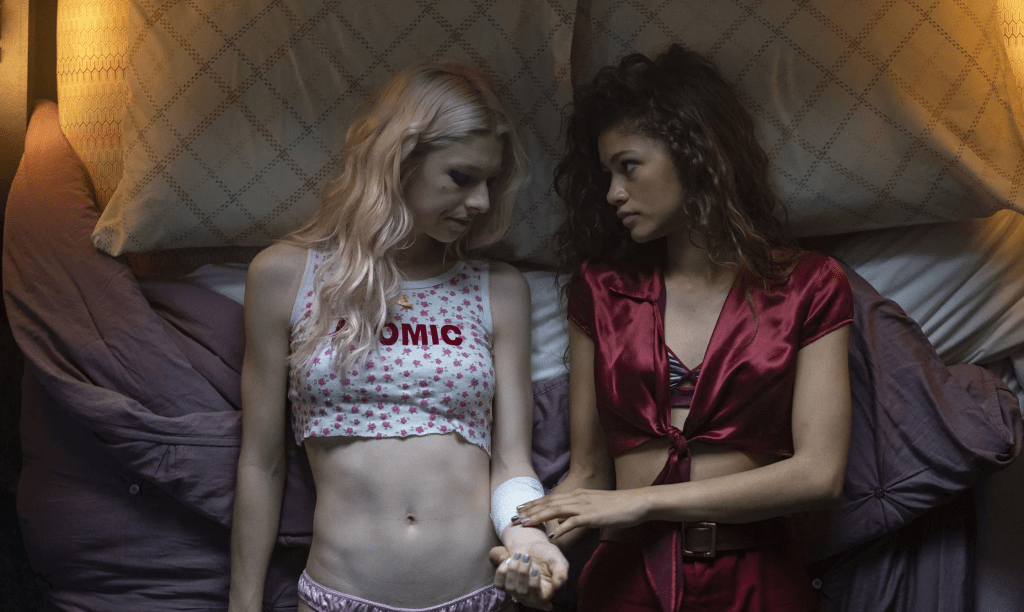
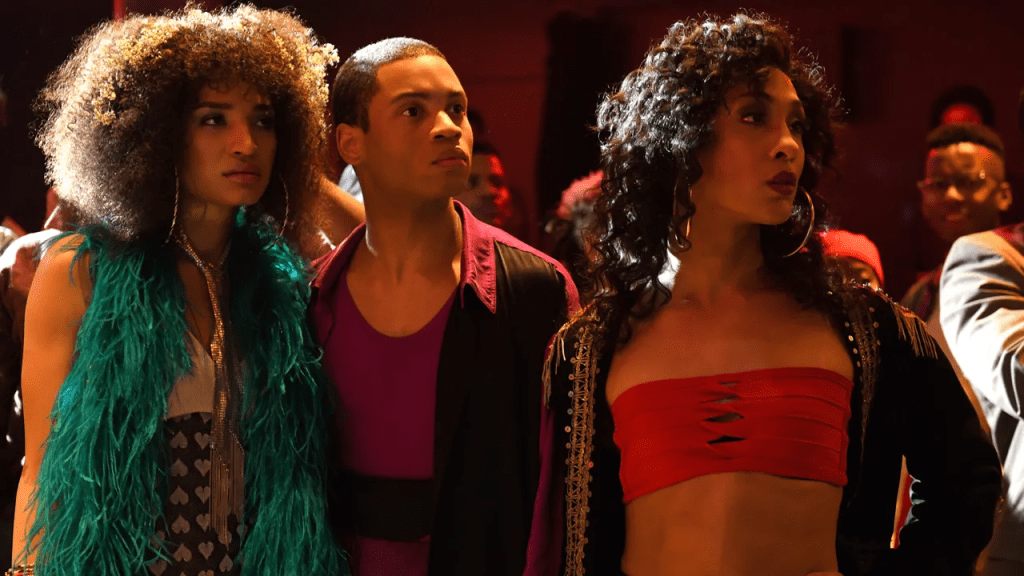
Goddard and Hogg suggest that Trans TV goes beyond simple representation; it intervenes in the form and structure of television itself. This includes not only the narrative but also the aesthetic strategies that give trans and non-binary characters the space to be fully realized, both thematically and visually. Pose, for instance, draws upon the extravagant fashion and performances of the 1980s ballroom culture to celebrate trans identities. The show’s visual language—rich with color, movement, and excess—becomes an embodiment of trans identity that is far from static. This is what Goddard and Hogg refer to as the “transing” of television aesthetics: a radical departure from the neutral or stereotypical portrayals of gender seen in earlier television. Pose utilizes aesthetic strategies that mirror the fluidity and multiplicity of trans and queer lives.
Similarly, Transparent, with its introspective narrative, employs a more restrained aesthetic that reflects the internal transformation of its central character, Maura. The long takes, muted lighting, and intimate framing strategies create an atmosphere of self-reflection that aligns with the complex emotional journeys of trans characters. This approach also reflects the idea of gender identity as an ongoing, evolving process, rather than a fixed category.
Sense8, on the other hand, takes a more experimental approach, using dreamlike visuals and fragmented storytelling to express the interconnectedness of its characters, whose gender identities are fluid and non-binary. The show’s use of visual metaphors—such as the interwoven bodies of the characters—suggests that identity is not static but something in constant flux, resonating with the idea that gender is an ongoing performance rather than a simple label.
In Euphoria, the portrayal of trans identity is bound up with an aesthetic of heightened, surreal visuals that both challenge and affirm gender expectations. The show’s bold use of makeup, costumes, and saturated colors creates an aesthetic that is performative, experimental, and intensely emotional. The representation of transness in Euphoria is about transformation, both visual and narrative, allowing gender identities to be expressed in more complex, imaginative ways.
Goddard and Hogg’s Trans TV framework expands the concept of representation by recognizing how digital and internet-distributed television allows for a re-evaluation of television’s aesthetic boundaries. The digital space creates the possibility for more flexible, experimental forms of storytelling and visual expression—what they describe as the “transing” of television itself. In this context, these series do not simply represent trans lives but rather transform the visual and narrative grammar of television, opening up new ways of seeing and feeling gender. As these platforms continue to grow, we can expect the evolution of these aesthetic strategies to deepen, further challenging the boundaries of television’s representation of gender.
Post by: Karoline Brandslet
Michael Goddard and Christopher Hogg (2018), ‘Introduction: Trans TV as concept and intervention into contemporary television’, Critical Studies in Television 13:4: https://journals.sagepub.com/doi/full/10.1177/1749602018798217
Michael Goddard and Chris Hogg 2020, ‘Introduction: Trans TV Re-evaluated part II’, Trans TV Dossier 3, Critical Studies In Television 15: 3: https://journals.sagepub.com/toc/csta/15/3
 Digital Audiovisual Media Class Blog
Leave a comment