Cinema isn’t dying, it’s just evolving. While we used to define ‘the movies’ by going to a dark room with a massive screen, that definition has gotten a make-over throughout the years. This is why many media scholars now use the term ‘post-cinema’. This term helps us understand how moving images exist across many platforms in modern day, from cinema screens to streaming services, phones, and social media. One of the clearest examples of this transformation is the Netflix series ‘Stranger Things’ (2016)
‘Stranger Things’ feels like a blockbuster in its visuals , storytelling, and scale, yet it’s not experienced in the cinema by its audience. Instead of watching one film in a theatre, audiences binge multiple episodes at home, often on laptops or phones. This way of viewing is crucial when referring to post-cinema, it’s not what we watch, but how we watch. We’ve traded the theatrical experience for the ‘bing-watch’, turning a cinematic event into something we can just carry in our pockets and watch when and where we want.
The series feels extremely familiar because it’s a tribute to the 1980s. It borrows ideas from sci-fi, horror, and adventure films. With clear references to iconic directors such as Steven Spielberg, John Hughes, and John Carpenter. However, ‘Stranger Things’ is not copying these films exactly. The series redefines older cinematic forms for a digital, streaming-based audience.
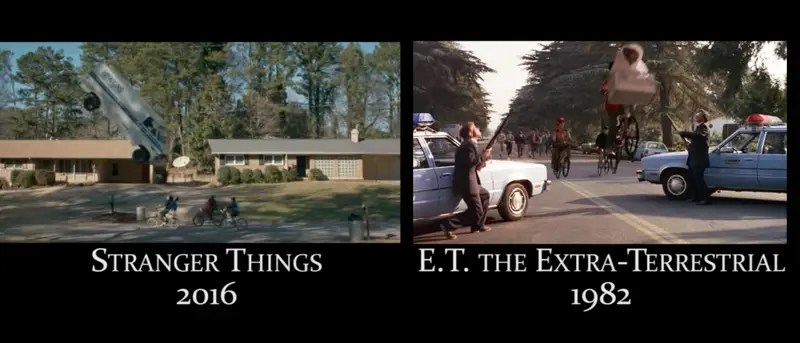
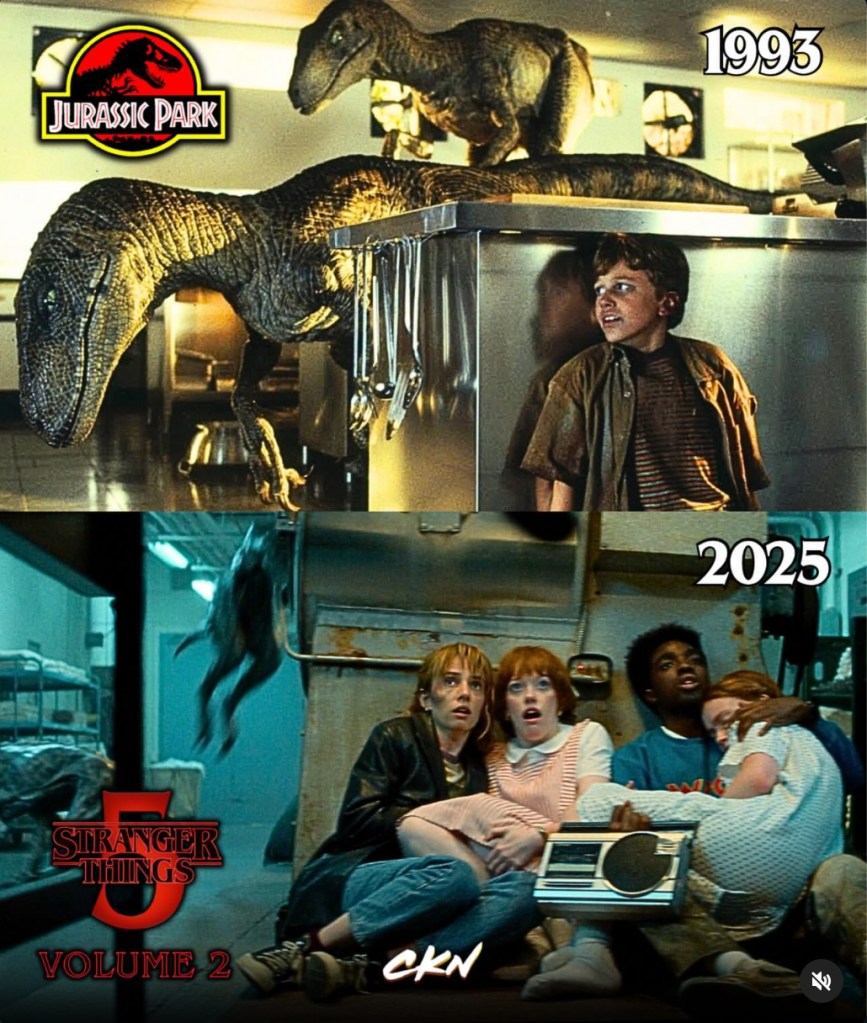
Post-cinema is about ongoing transition, not a complete break from the past. As Denson and Leyda suggest, new media is in conversation with inherited cultural forms rather than replacing them. ‘Stranger Things’ shows this by combining vintage nostalgia with new technology, high-end digital effects, and streaming culture.
The series also reflects influence of online culture. Fan theories, memes, and social media discussions become part of the viewing experience, it also exists beyond the screen. In this way, ‘the viewing experience’ now happens across multiple media spaces at once.
Ultimately, ‘Stranger Things’ proves that cinema is far from over, it’s just evolving. Old and new media collide, overlap, and continue to shape and redefine how stories are told in the digital age.
By: Gracia Mujica Massaro
References
Shane Denson and Julia Leyda, ‘Perspectives on Post-Cinema: An introduction’, Post-Cinema: Theorising 21st Century Film, pp. 1-19
 Digital Audiovisual Media Class Blog
Leave a comment