The transition from analog to digital media represents more than a technical evolution; as discussed in our first lecture, it signifies a fundamental restructuring of the performer’s identity. As Lev Manovich argues in The Language of New Media, the defining logic of digital media is Numerical Representation. For me, as an actress, this is a radical shift: my presence is no longer a continuous “indexical” trace of light on film, but a collection of programmable data-zeros and ones.
I experienced this first-hand during the filming of the short film Eximo (2024). Performing in a space-themed, green-screen environment, I felt what D.N. Rodowick describes the loss of the “perceptual realism” inherent to analog film. In the analog era—exemplified by the physical textures of the original Blade Runner (1982)-there was a tangible, indexical connection between the actor and the set. In Eximo, however, I felt a profound sense of “unacknowledgment” regarding the final result; I was acting toward a digital ghost, a void that would only be filled during post-production.
This perfectly illustrates Manovich’s principle of Modularity. My performance in Eximo was merely one “module” that the director could later detach and “mix” into a computer-generated environment. We see the historical birth of this “Post-Cinematic” condition in the Jurassic Park (1993) trailer, where actors react to absences that are only made “real” through software.
This modularity is where the modern Audiovisual Auteur truly shines, particularly within the British scene with artists like FKA twigs. In her work (such as the video for Cellophane), she isn’t just a performer; she is a “mixing board” asset. She treats her own body as a modular object, blending physical mastery with digital augmentation to create a “coherent aesthetic style” . As Shane Denson and Julia Leyda explore in Post-Cinema, the camera no longer “certifies” our presence. My work in Eximo and the output of FKA twigs prove that the modern actress is no longer just a storyteller-we are the raw material for a new, calculated, and numerical aesthetic.
FKA twigs represents the pinnacle of the British ‘Audiovisual Auteur.’ She treats her body as a modular digital asset, blending physical mastery with numerical augmentation.
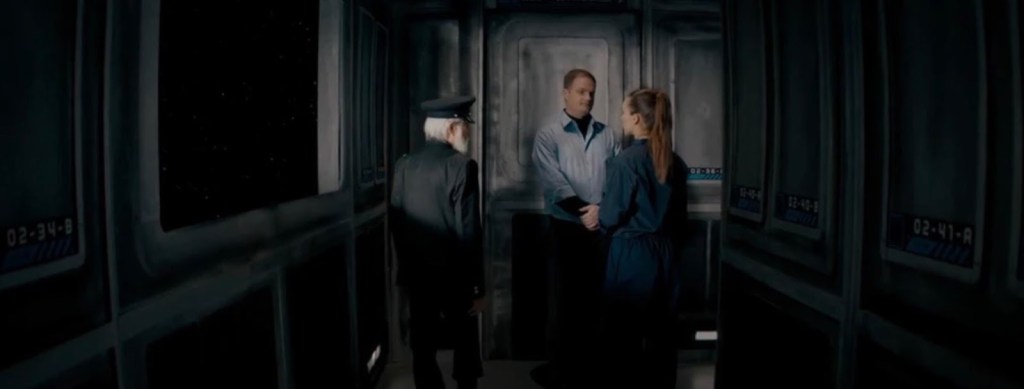
https://www.imdb.com/title/tt36748404/
Still from Eximo (2024). My performance was captured in a digital vacuum, demonstrating what Rodowick calls the loss of ‘perceptual realism’ in the transition from analog to digital.

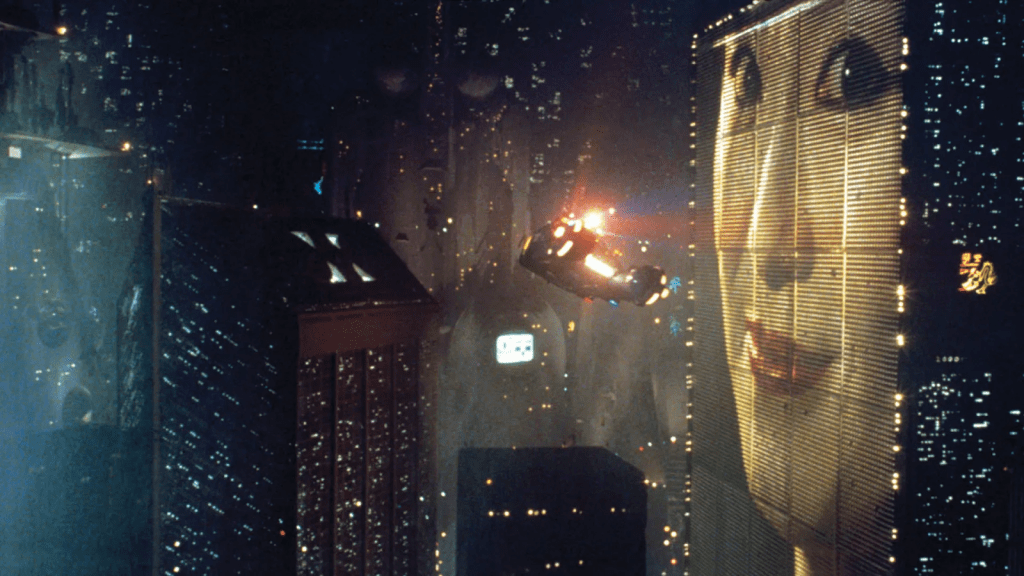
The shift from the physical miniatures of Blade Runner (1982) to the modular CGI of Jurassic Park (1993) marks the birth of the Post-Cinematic era.
Bibliography
- Denson, S. and Leyda, J. (2016) Post-Cinema: Theorizing 21st-Century Film. Falmer: REFRAME Books.
- Manovich, L. (2001) The Language of New Media. Cambridge, MA: MIT Press.
- Rodowick, D.N. (2007) The Virtual Life of Film. Cambridge, MA: Harvard University Press.
- Vernallis, C. (2013) Unruly Media: YouTube, Music Video, and the New Digital Cinema. Oxford: Oxford University Press.
- IMDb (2024) Eximo. Available at: https://www.imdb.com/title/tt36748404/ (Accessed: 22 January 2026).
Post by: Rocío Cerqueiro
 Digital Audiovisual Media Class Blog
Leave a comment