Ever watch a film and felt completely unsettling, even if you couldn’t explain the plot at all? That’s what Steven Shaviro calls ‘post-cinematic affect.’
In a world filled with digital screens and excessive editing, films have shifted from telling stories to creating ‘vibes’. Shaviro argues that we aren’t just looking at images differently, we’re feeling them differently.
Emotion vs Affect
Emotion: It’s logical, it’s tied to the plot and makes sense. For example: When a dog dies in a film, the audience feels sad.
Affect: It’s a physical reaction, an intensity or a mood that hits the audience before your brain can even process it. A skin-crawling feeling, dread, or a sudden rush of adrenaline.
Affect in David Lynch’s ‘Mulholland Drive’
David Lynch’s masterpiece, ‘Mulholland Drive’ is the ultimate example of this. If you try to understand the plot 100% the first time you’re watching it, you’ll probably end up with a headache. But if you just watch it, you start to feel it.
Take the famous Club Silencio scene. It doesn’t provide a clear answer to the mystery. Instead, it overwhelms the audience with haunting music and dreamlike visuals. The audience isn’t sad for the characters in a traditional way, they’re experiencing a deep, atmospheric sense of yearning and confusion.
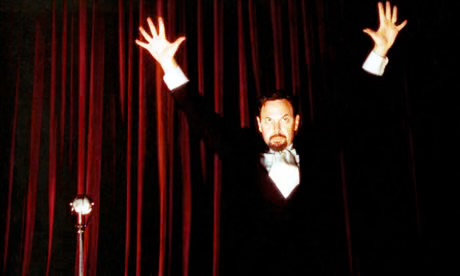

Shaviro’s point is that modern media acts like an ‘affective machine’. It doesn’t just want to tell the audience a story, it wants the audience to feel it deep inside. We remember these films not necessarily for what happenstance, but for what feeling it provoked in us.
References
Steven Shaviro, ‘Post-Cinematic Affect: On Grace Jones, Boarding Gate and Southland Tales’, Film Philosophy 14.1, 2010.
Returning, Recycling and Remixing: Cut-up and Collage in Twin Peaks: The Return (2017), [Video Essay], Dir. Andreas Halskov, 16:9: http://www.16-9.dk/2017/11/twin-peaks-the-return/
 Digital Audiovisual Media Class Blog
Leave a comment