
In Ready Player One (2018), the narrative constantly switches between two spaces: one is the dystopian real world in which Wade Watts is located, and the other is the virtual space where he assumes an active, empowered role in the OASIS. This repeated movement between reality and simulation profoundly shapes the viewing experience. Although the real world is more restricted than the OASIS, it still delivers visual excitement and tension through computer-generated imagery (CGI), dynamic action sequences, and immersive environments. The game world, however, is faster, more colorful, and provides heightened sensory stimulation. For the viewer, this contrast is not only narratively structured but also sensory in effect.

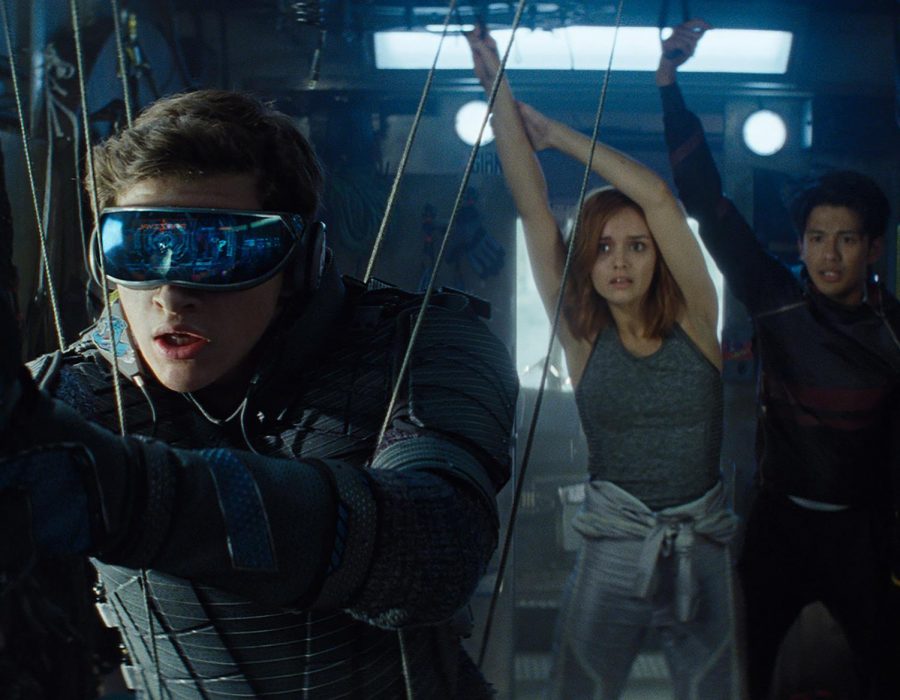
The narrative structure of the film resembles a video game, composed of a series of game-like levels. Wade and other players must go through different challenges to move on. Each level references real-world video games, films, and elements of popular culture. These moments are highly reliant on the viewer’s capacity for recognition. Viewing the film becomes similar to playing games: viewers are “rewarded” by recognizing cultural references, activation of memory and rapid cognitive responses. Meaning is frequently generated through acts of identification rather than interpretive analysis.
This structure makes Ready Player One closely linked to the concept of “post-cinema” proposed by Denson and Leyda (2016). The film does not focus on the psychological depth or slow narrative development of the characters, but adopts game-based logic. Speed, motion, and interactivity become the core elements. The viewer is encouraged to engage with the film in a manner analogous to “playing a game”, rather than as a passive spectator Here, cinema no longer functions as a self-contained medium, but becomes entwined with game culture and digital media.
The emotional impact of the film also reflects what Steven Shaviro (2010) called post-cinematic affect. Affective responses such as excitement, tension and immersive engagement often appear before the viewer achieves clear comprehension. The continuous switching between the real world and the OASIS generates continuous affective intensity, leaving the viewer with little time to pause and reflect. The film does not construct emotional meaning through the solution of the narrative, but produces intensity through sensory overload and rapid visual transitions. The body responds first, while cognitive comprehension is a secondary role.
Ultimately, Ready Player One presents a world where reality and simulation are deeply intertwined. Daily life can no longer be separated from digital media, and identity and value increasingly need to be recognized in virtual space. As depicted in the film, for Wade Watts, his life will only be “complete” only when he enters the game. From this perspective, the film not only depicts the future, but also reflects a post-cinematic condition: media, games and daily life are intertwined with each other, and viewing the film becomes analogous to progressing through a game-like experience. At the same time, the film offers a subtle and restrained cautionary note: although the OASIS provides freedom, meaning and possibility, excessive immersion in it may replace real social relations and real responsibilities, encouraging the viewer to reflect on how virtual worlds should coexist with real life.
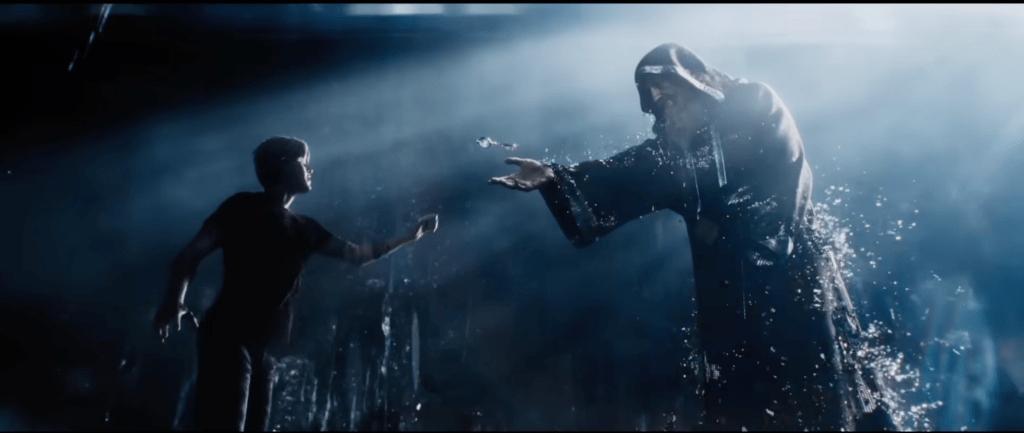

By Wenjing Tao 33878276
Reference:
Denson, S. and Leyda, J. (2016) ‘Post-cinema: An introduction’, in Denson, S. and Leyda, J. (eds.) Post-Cinema: Theorizing 21st-Century Film. REFRAME Books, pp. 1–19.
Shaviro, S. (2010) ‘Post-cinematic affect: On Grace Jones, boarding gates and Southland Tales’, Film-Philosophy, 14(1), pp. 1–102.
Spielberg, S. (2018) Ready Player One. Film. Warner Bros.
 Digital Audiovisual Media Class Blog
Leave a comment