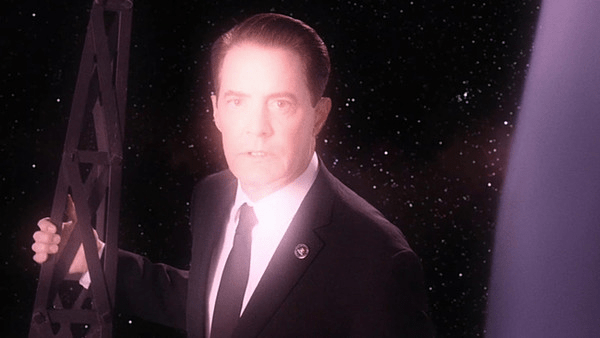
David Lynch’s Twin Peaks: The Return is a classic example of the shift to Shaviro’s post-cinematic theory in film. When the original Twin Peaks series came out in 1990, the show was structured differently than the third season, which was released in 2017. Although the first two seasons are surreal and unpredictable, there is still a defined narrative and overarching question; Who killed Laura Palmer? The episodes follow a more linear and recognizable pattern. In the original Twin Peaks, each episode feels like a piece of one whole story, whereas each of The Return’s episodes are like their own separate film.
In The Return, Lynch uses time as a way to elicit emotions in the audience. Nothing feels consistent, and some scenes, like when Dale Cooper is floating in space, are drawn out for what feels like hours. A lot of unrecognizable, digitally constructed figures have roles, like “the arm.” Additionally, The Return is more difficult to decode. For example: the owls in season 1 and 2 represent warning, but there are rarely images in season 3 that translate into clues or meaning. A lot of audiovisual media is felt, or causes “affect” as Shaviro suggests, rather than understood.
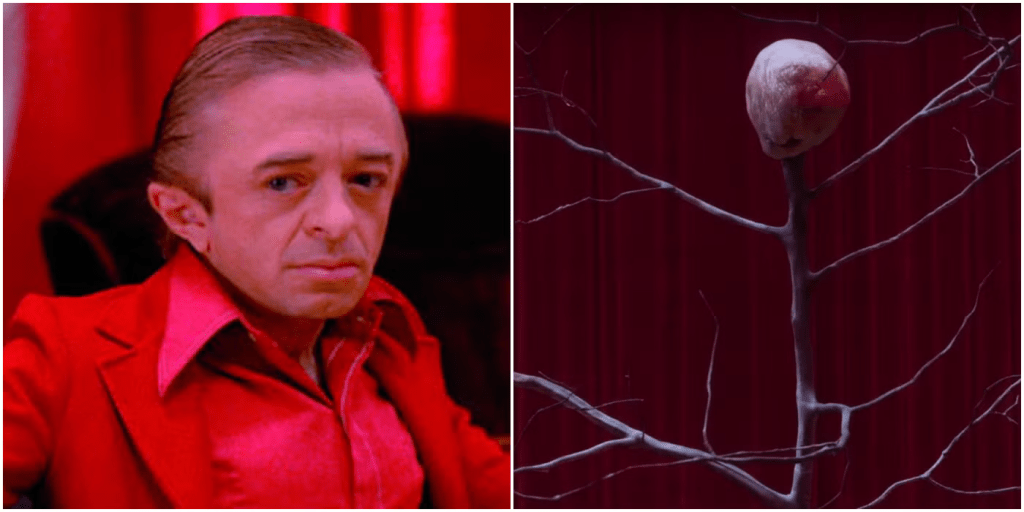
The Return does not feel catered to a mass audience like Twin Peaks, due to its unsettling and abstract design. It feels more like artwork than a TV show aired weekly. The Return can be watched over a great period of time since it is so fragmented and indigestible. Twin Peaks ensures that the audience will know who killed Laura Palmer by the end, but The Return promises no answers, and no prize for reaching the end.
IY 33799808
References:
Shaviro, Steven. Post-Cinematic Affect. Zero Books, 2010.
Twin Peaks. Created by David Lynch and Mark Frost, performances by Kyle MacLachlan, Michael Ontkean, and Mädchen Amick, ABC, 1990–1991.
Twin Peaks: The Return. Created by David Lynch and Mark Frost, performances by Kyle MacLachlan and Laura Dern, Showtime, 2017.
 Digital Audiovisual Media Class Blog
Leave a comment