By Emma Bogue
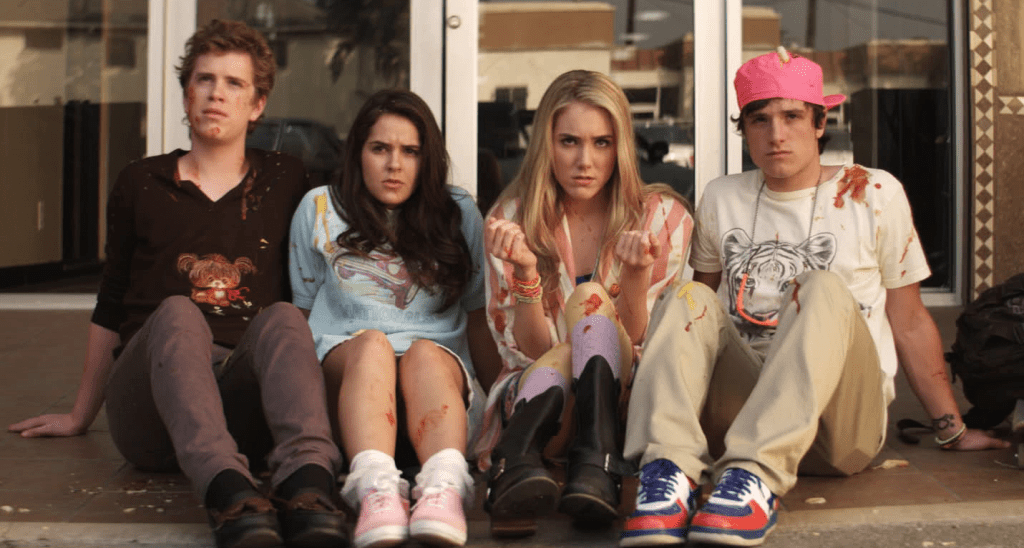
From time travelling taxidermy bears, to iPod wielding hipsters, Joseph Kahn’s 2011 teen slasher melodrama is a violent, kaleidoscopic assault on the senses saturated with iconic references of 20th century horror and sci-fi. In the early 2010s, digital technology was becoming household, with booming sales for apple and android alike. Naturally, cinema adapted and transformed itself during this sign of the times.
Steven Shaviro uses ‘Post Cinematic Affect’ in his blog, ‘The Pinocchio Theory’ as a way to make us think about how animation, special effects and storytelling has changed during cultural shifts, particularly the move from analogue to digital media. Detention is oozing with CGI, special effects and animation, the core of Shaviro’s argument. He feels that cinema doesn’t imitate life; rather, life increasingly imitates cinema. This is the structure of feeling, this is the post-cinematic affect. Rather than adhering to classic Hollywood film making, Detention has rapid, fragmented scenes that awaken us before we can even begin to digest.
As mentioned above, Detention is generously sprinkled with references to films like The Fly (1986), Scream (1996), The Breakfast Club (1985), as well as a handful of slang and cultural references to the 80s, 90s and 2000s, combining old with new. The opening scene is a satirical monologue by cheerleader Taylor Fisher in a pop art style. The film is satire, but self aware and places itself in a time period which illustrates everything we understand about ‘post-cinema.’ It’s just so bad… that its good.
References:
Steven Shaviro, ‘Detention’, The Pinocchio Theory
Steven Shaviro, ‘Post-Cinematic Affect: On Grace Jones, Boarding Gate and Southland Tales’, Film Philosophy 14.1, 2010.
 Digital Audiovisual Media Class Blog
Leave a comment