Netflix’s Stranger Things was a juggernaut of a TV show that recently came to an end on New Years Day 2026. While I have not watched the final episode (or Final Season for that matter) I don’t think it is necessary for the topic I will be discussing in this post. That being: How are Modern Shows formatted around the affordances of streaming services as a platform?
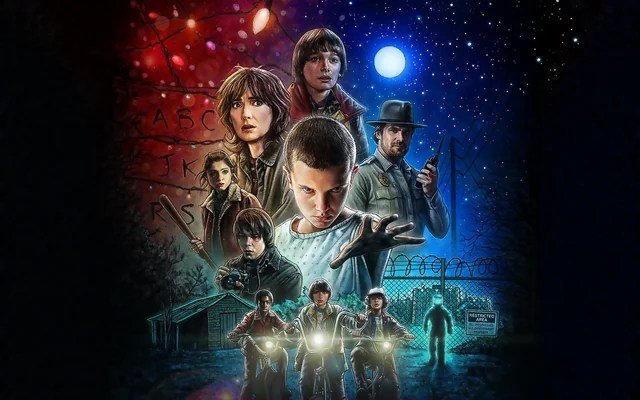
The example I will be using is Netflix with Stranger Things. If that was not already apparent.
It’s interesting that the term “binge” generally means: a period of excessive indulgence in an activity such as eating, drinking, or taking drugs. Not exactly the most healthy of practices.
While it is true that viewers have been “binge-watching” since television on demand became a thing, never before has it been so integral to the identity of so many TV shows. Netflix actively encourages the practice, with the “5 second window” to stop the next episode of a show auto-playing feature, as well as the overall layout of the website as we discussed in the lecture and seminar. The search bar being relegated to the top right corner (as a small icon) as another example.
Something we didn’t discuss however was how this actually effects the contents of the shows themselves! The answer is: to mixed results.
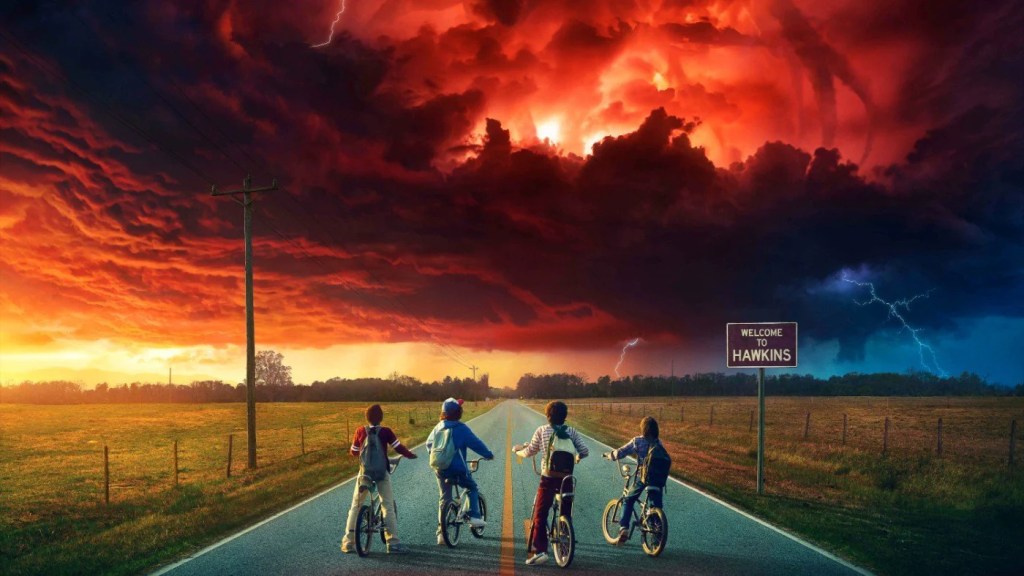
Stranger Things though, typically, is a rather good example of the practice working as intended. Each season is generally 8 episodes long; marketed as a ‘prestige event’ and features overarching story threads with cliffhangers leading one episode into the other. While ‘cliffhangers and story threads’ are hardly new to the 2010s, the extent to the interconnectedness is. Stranger Things is not afraid to expect its audience to remember brief lines of dialogue from episodes prior, as it is running under the assumption that the episodes are being watched in quick succession. Each season only takes place over the course of a few days. Season 1’s story takes place just over the course of a week. Season 2 takes place over of 7 days on the dot. While Season 3 technically begins on the night of June 28th (with it’s finale on July 4th) the action only begins the day after, making it 8 episodes telling the story of 6 days. And those 6 days are packed.
The sheer pace of Stranger Things is something to behold. The show eats up story at an unprecedented rate. It’s not uncommon for 3-4 story threads to be being told concurrently. Not only would such a thing not have been usual in earlier eras of television, the cinematic scale of the programme would also have been unheard of.
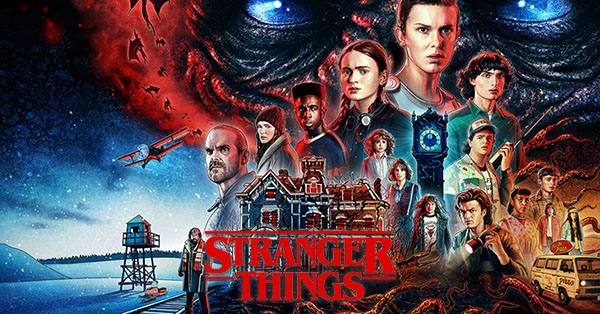
Streaming ushered in a new age (a new way) to making television. With it’s primary focus? Keeping you engaged enough to not click off the website.
Each story is centred entirely around keeping you watching until the next one. When there is no next one… Well perhaps this explains the general sentiment towards the show’s ultimate finale.
Arthur 7/2/26
 Digital Audiovisual Media Class Blog
Leave a comment