In the age of ‘Post-Cinema,’ the screen is no longer a window into a story; it’s a feedback loop. Whether it’s the constant interruptions of a choose-your-own-adventure game or the relentless first-person chaos of a digital-action flick, modern media has moved beyond simple storytelling. It is now designing how we watch, not just what we watch. By looking at Bandersnatch and Hardcore Henry, we can see how editing has evolved from a narrative tool into a mechanism of pure sensory management.
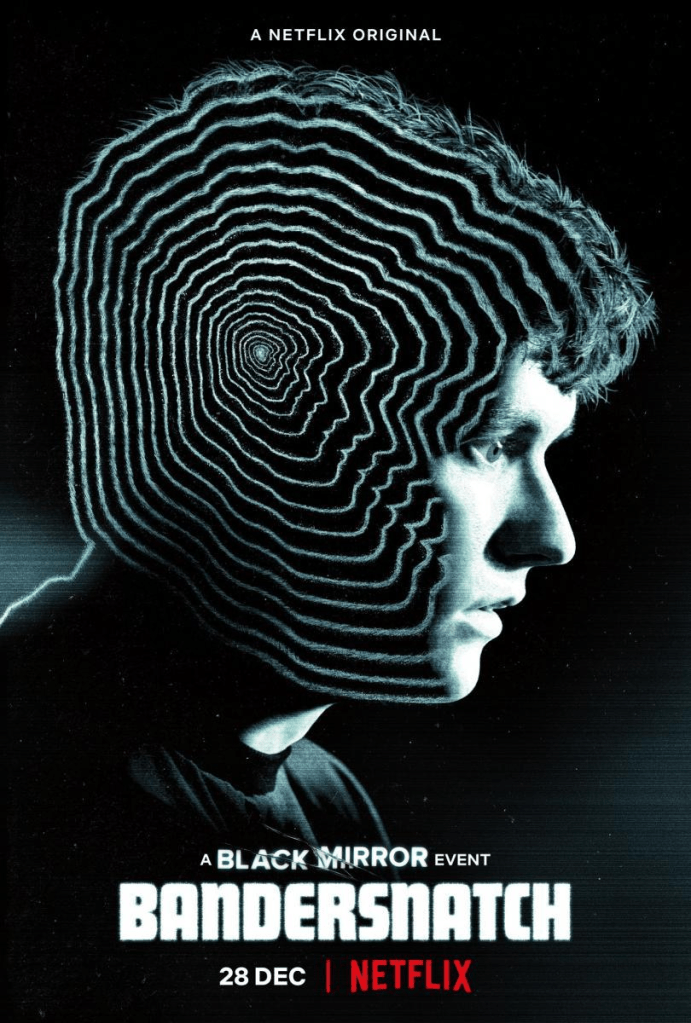
In Bandersnatch, viewing is repeatedly interrupted by moments of choice. Especially in the trailer, rapid cuts, sudden pauses, and the insertion of on-screen decision prompts disrupt narrative continuity. Action does not flow smoothly from one moment to the next; instead, it is constantly suspended and redirected. These interruptions prevent passive viewing and force the spectator into a heightened state of awareness. Attention is no longer something that naturally follows the image but becomes a condition that must be continually renewed. In this sense, the trailer foregrounds structure over story, reminding viewers that their engagement depends on remaining alert to the system that governs the image.
BLACK MIRROR: Bandersnatch Trailer (2018) Netflix
This shift resonates with what Steven Shaviro describes as post-cinematic affect, where images operate directly on perception rather than narrative meaning.
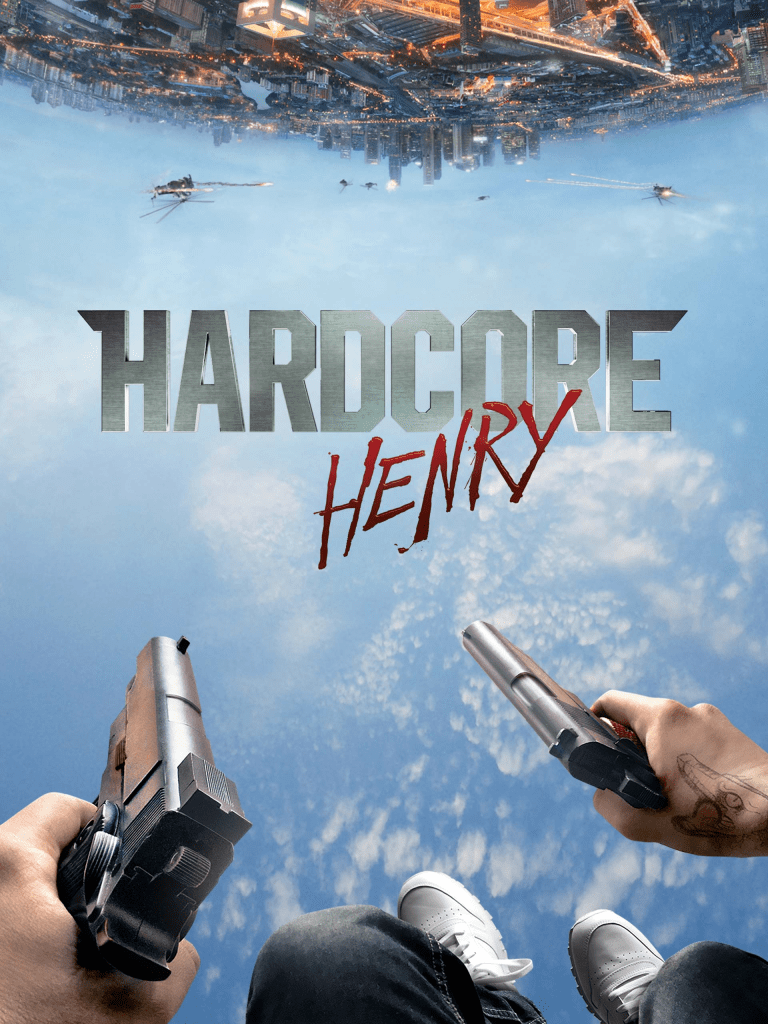
By contrast, Hardcore Henry relies on an almost opposite method. Shot entirely from a first-person perspective, the film maintains extreme kinetic continuity through extensive use of match on action and sustained bodily movement. Despite its rapid pace, spatial and directional coherence is preserved, allowing the viewer to follow the protagonist’s motion without repeatedly reorienting themselves. Sound design—such as breathing, gunfire, and impact noises—further reinforces this continuity by anchoring perception to the body in motion. Rather than producing confusion, this intensified continuity draws the viewer into a state resembling the “flow” commonly associated with videogame play.
Hardcore Henry | Official Trailer | Own It Now on Digital HD, Blu-ray & DVD
Placing these two examples side by side demonstrates that post-cinema is not defined simply by fragmentation or chaos. Instead, it encompasses multiple strategies for shaping attention. Bandersnatch uses interruption and structural visibility to keep viewers mentally alert, while Hardcore Henry uses continuous motion and embodied perspective to sustain immersion. In both cases, editing functions as a mechanism that actively designs how watching takes place.
Ultimately, these examples suggest that post-cinematic images are less concerned with telling stories than with organising perceptual experience. Whether through disruption or continuity, they train viewers in new ways of watching, making attention itself a central site of audiovisual design.
Post by: Yanlin Wang
Bibliography:
- Slade, D. (2018) Black Mirror: Bandersnatch. Netflix.
- Naishuller, I. (2015) Hardcore Henry. STX Entertainment.
- Shaviro, S. (2010) Post-Cinematic Affect. Winchester: Zero Books.
- Bordwell, D. (2006) The Way Hollywood Tells It: Story and Style in Modern Movies. Berkeley: University of California Press.
 Digital Audiovisual Media Class Blog
Leave a comment